Tesla Preconditioning Benefits for Battery Longevity: The 2026 Owner’s Guide
| Quick Answer: Tesla preconditioning protects long-term battery health by warming or cooling the pack to its ideal temperature window before charging or driving, reducing lithium plating risk and slowing degradation. Using Tesla preconditioning regularly, especially before DC fast charging, can help your battery retain more usable capacity over years of ownership. Tesla Preconditioning Benefits for Battery Longevity |
If you own a Model Y, Model 3, or Cybertruck, the small countdown timer before a fast charge matters more than it looks. Preconditioning isn’t just a comfort feature; it’s one of the easiest ways to protect your pack from the cold-weather stress that quietly eats into long-term range. This guide breaks down exactly how Tesla preconditioning works in 2026, why it matters for battery longevity, and how to use it the right way.
1. What Is Tesla Preconditioning and Why It Matters for Battery Longevity

Tesla preconditioning is the process of actively heating or cooling the battery pack to its optimal operating temperature before you start driving or fast charging. Cold battery cells have higher internal resistance, and pushing high charging currents into a cold pack accelerates lithium plating, one of the leading causes of permanent capacity loss.
When preconditioning brings the pack into its ideal range, usually between roughly 20°C and 40°C depending on the charging session, the battery management system allows faster, cleaner charging with far less stress on individual cells. Over hundreds of charge cycles, this difference compounds into a measurable gap in long-term capacity retention.
The Science Behind Cold Charging Damage

Lithium-ion chemistry simply doesn’t like the cold. Below a certain temperature, lithium ions can’t insert into the graphite anode fast enough during charging, so some of them deposit as metallic lithium on the surface instead. This is called lithium plating, and it’s largely irreversible. Tesla preconditioning exists specifically to avoid this scenario by warming the pack before high current flows into it.
2. How Tesla Preconditioning Works in 2026 Software

The underlying logic has evolved significantly over recent OTA updates, and the 2026 experience is far more automatic than it was even two years ago.
Universal Third-Party Fast Charger Preconditioning

Previously, US owners had to trick the car by navigating to a distant Supercharger just to trigger preconditioning before visiting an Electrify America or EVgo station. With software updates from the 2025.2 cycle onward, this workaround is gone.Tesla’s navigation system now recognizes prominent third-party networks like EVgo and Ionna, automatically initiating the battery warming process as you drive toward the station This matters for longevity because it removes the human error factor. Owners who forget to manually trigger warming no longer arrive at a fast charger with a cold pack, which means fewer high-stress charging sessions over the life of the vehicle.
The On-Screen Heating Countdown (Update 2024.44.3)
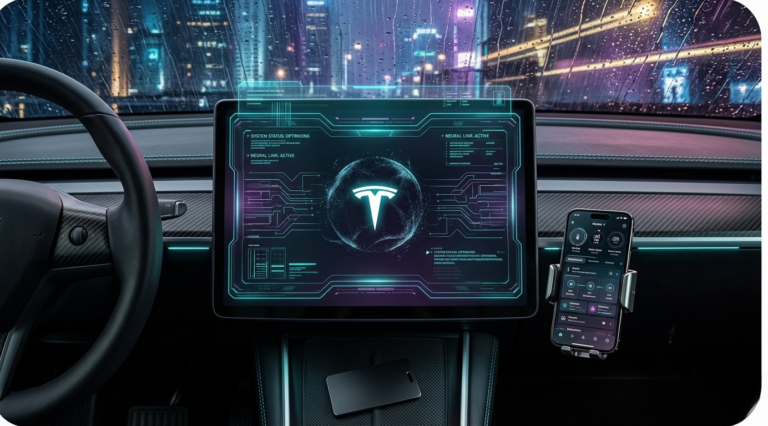
When you plug a deeply cold car directly into a DC fast charger, the touchscreen now displays an exact countdown showing how long until the pack reaches the temperature needed for full-speed charging. This transparency helps owners understand that the wait is intentional and protective, not a malfunction.
Octovalve Heat Pump vs. Cybertruck’s 48V Architecture

Model Y and Model 3 vehicles use an Octovalve-based heat pump system that redirects waste heat from the motors and electronics into the battery pack during preconditioning, making the process highly energy efficient. Cybertruck takes a different approach: its structural battery pack and 48V low-voltage architecture allow it to bring cells from sub-zero temperatures to room temperature roughly twice as fast as the Octovalve system in older platforms.
3. Tesla Preconditioning and the ‘Jet Engine’ Noise: Is It Normal?

One of the most common questions on Reddit’s r/TeslaLounge and Tesla Motors Club forums is about the loud whirring noise that kicks in during preconditioning before a Supercharger stop. New owners often describe it as sounding like a jet engine spooling up and worry something is breaking.
This noise is the compressor and high-power cooling fans running at full capacity to rapidly move heat into or out of the battery pack. It is completely normal and is actually a sign that Tesla preconditioning is working as designed. The louder the system runs, the faster your pack reaches the temperature window needed for efficient, low-stress fast charging.
How Preconditioning Gets Triggered

Tesla preconditioning doesn’t run constantly, it activates under specific conditions. Here’s a quick reference for the most common triggers and what each one means for your battery.
| Trigger | How It Starts | Impact on Battery Longevity |
| Navigation to Supercharger | Automatic, begins as you approach | Pack reaches optimal temp before fast charging |
| Navigation to third-party DC charger (2025.2+) | Automatic | Eliminates the hassle of manual overrides, ensuring the pack rarely faces cold-charging stress |
| Scheduled Departure | Automatic, time-based | Warms cabin and pack before daily drive on Level 2 |
| Manual (app or touchscreen) | User-initiated | Useful for unplugged cold-soak situations before long trips |
4. Unplugged Cold Soak: Should You Precondition Before Leaving?

A frequent forum question goes something like this: “My car sat unplugged overnight and I have a road trip in the morning. Should I run Tesla preconditioning for 30 minutes before I leave, or just drive off?”
The answer depends on your trip distance. For short commutes under roughly 15 miles, preconditioning an unplugged car often wastes more energy than it saves, since the motors will warm the cabin and battery naturally during a short drive anyway. For longer trips, especially ones ending at a fast charger, preconditioning before departure is worth the energy cost because it sets up a faster, gentler first charging session and protects long-term battery health.
5. LFP vs NMC: Does Preconditioning Matter Differently by Chemistry?

Not all Tesla batteries behave the same way in cold weather. Standard Range Model 3 rear-wheel-drive vehicles use LFP (lithium iron phosphate) cells, while Long Range and Performance variants typically use NMC (nickel manganese cobalt) chemistry.
LFP Thermal Sensitivity

LFP cells are generally more tolerant of high state-of-charge storage but tend to be more sensitive to charging speed in cold conditions. Tesla preconditioning is especially valuable for LFP packs because cold LFP cells can show a sharper drop in usable charging power, making the warm-up step disproportionately impactful for daily fast-charging routines.
NMC Thermal Sensitivity

NMC cells generally accept higher charging currents at lower temperatures than LFP, but they are more vulnerable to the long-term degradation effects of repeated cold-charging stress. For NMC-equipped Model Y, Model 3 Long Range, and Cybertruck owners, consistent use of Tesla preconditioning before fast charging is one of the simplest habits for preserving long-term capacity.
6. Level 1 vs Level 2 Charging: Why Your Home Outlet Affects Preconditioning

Many owners plug into a standard 110V/12A wall outlet at home and set a Scheduled Departure time, expecting the car to be warm and ready in the morning. The problem is that a 110V outlet simply can’t deliver enough power for the thermal system to fully precondition the battery while also charging.
The result is often a car that still shows the snowflake icon in the morning, meaning the battery is cold and charging or driving performance will be temporarily reduced. For Tesla preconditioning via Scheduled Departure to work effectively, a Level 2 (240V) home charger is recommended, and if you’re curious how this extra overnight energy use adds up over years of ownership, our guide on calculating your Tesla’s lifetime energy and charging costs breaks down the real numbers. A Level 2 setup gives the thermal system enough headroom to bring the pack to temperature without competing with the charging current.
7. Best Practices: Using Preconditioning to Protect Battery Health Long to Term

Before DC Fast Charging
Plotting your route through the onboard display ensures the vehicle initiates thermal prep, regardless of whether you choose an official Supercharger or an alternative network plug. This lets Tesla preconditioning start automatically and ensures the pack is warm before high-current charging begins.
Before Cold-Weather Road Trips
If your car has been sitting unplugged overnight in freezing temperatures and you’re heading out on a longer drive, running a short preconditioning cycle before departure reduces the cold-charging stress your battery experiences at the first stop.
At Home Overnight
Use Scheduled Departure paired with a Level 2 charger so Tesla preconditioning can complete before your morning drive, keeping daily charging sessions within the battery’s preferred temperature range.
8. Frequently Asked Questions About Tesla Preconditioning
Does Tesla preconditioning use a lot of energy?
It uses some energy, but the amount is small compared to the long-term battery health benefit. While plugged in, most of that energy comes from the wall rather than the battery itself, so the impact on your usable range is minimal. If you’re already tracking smaller background drains, our breakdown of Tesla Sentry Mode energy usage is a useful comparison for understanding how different features quietly affect your battery over time.
Can I manually trigger Tesla preconditioning?
Yes. You can manually start preconditioning from the climate controls in the touchscreen or the Tesla app, in addition to the automatic preconditioning triggered by navigation to a fast charger.
Does preconditioning wear out the compressor faster?
No. The thermal system is engineered for frequent cycling, and using Tesla preconditioning as intended does not meaningfully shorten compressor lifespan. The battery longevity benefits far outweigh this concern.
Is preconditioning more important in winter?
Yes. Cold ambient temperatures make the battery pack colder, which increases the risk of lithium plating during fast charging. Tesla preconditioning becomes especially important during winter months for protecting long-term capacity.
9. At a Glance: Preconditioning Behavior by Platform

| Platform | Thermal System | Cold-to-Optimal Speed | Best Practice |
| Model Y / Model 3 | Octovalve heat pump | Standard | Navigate to charger to auto-trigger preconditioning |
| Cybertruck | 48V structural pack architecture | Roughly 2x faster | Benefits from preconditioning even on short cold-soak trips |
| LFP (Standard Range 3) | Octovalve heat pump | Standard, more sensitive | Precondition before most fast-charging sessions |
| NMC (Long Range / Performance) | Octovalve heat pump | Standard | Precondition consistently in cold climates |
10. Final Thoughts: Make Tesla Preconditioning a Habit

Battery longevity isn’t determined by one dramatic decision, it’s the result of small habits repeated over thousands of miles. Letting Tesla preconditioning do its job before fast charges, road trips, and even routine morning departures is one of the lowest-effort, highest-impact habits an EV owner can build. With 2026 software making the process largely automatic, the main thing left for owners to do is simply navigate to their charger and trust the system.