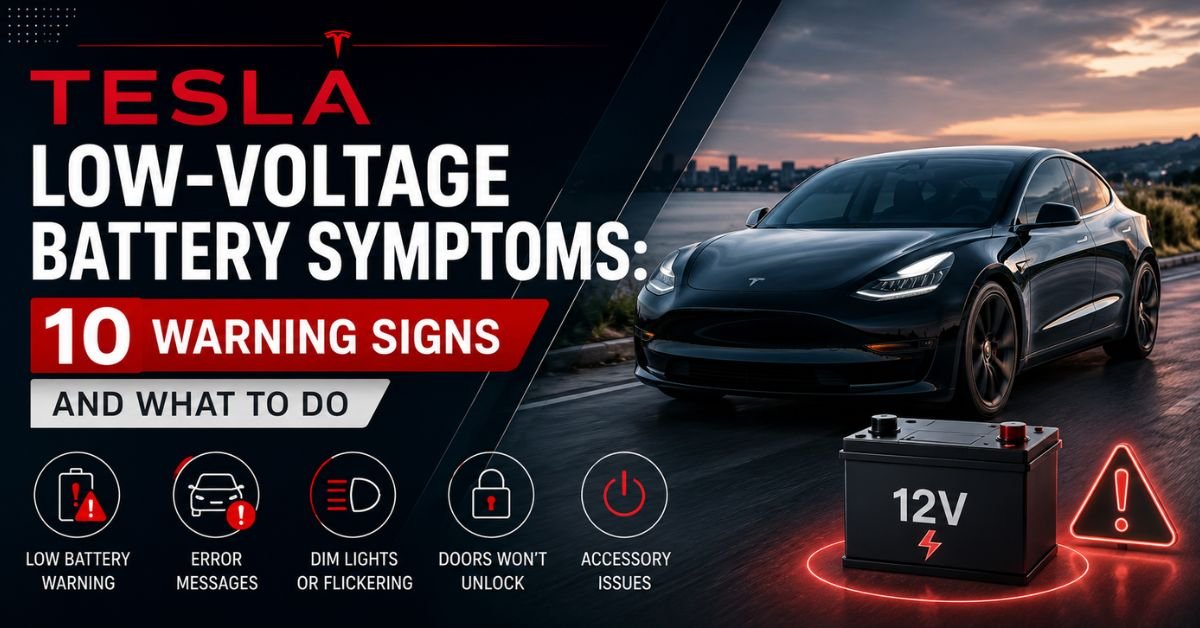
Tesla Low-Voltage Battery Symptoms: 10 Warning Signs and What to Do
A Tesla can have plenty of energy in its main high-voltage battery and still develop electrical problems when the low-voltage battery is weak. The low-voltage system powers critical electronics, communications, control modules, locks, displays, and other vehicle functions. That is why Tesla low-voltage battery symptoms can sometimes appear as strange software behavior rather than a traditional battery failure. Tesla now uses both lead-acid and lithium-ion low-voltage batteries, depending on model, production period, and configuration. The exact battery type therefore matters when diagnosing a problem.
This guide explains the most common warning signs, what they mean, how Tesla alerts you, when driving is unsafe, and when professional service is the right choice. It also separates low-voltage battery problems from high-voltage battery issues, because the two systems have very different roles.
Quick Answer
Common Tesla low-voltage battery symptoms include repeated electrical warnings, difficulty waking the vehicle, doors or locks behaving unexpectedly, unavailable vehicle features, software updates that will not complete, unexpected shutdown warnings, and a car that may not restart. Tesla specifically lists alerts indicating degraded low-voltage battery performance and warnings that the electrical system cannot support vehicle features. If these alerts persist, schedule service rather than assuming the main traction battery is failing.
What Is the Tesla Low-Voltage Battery?
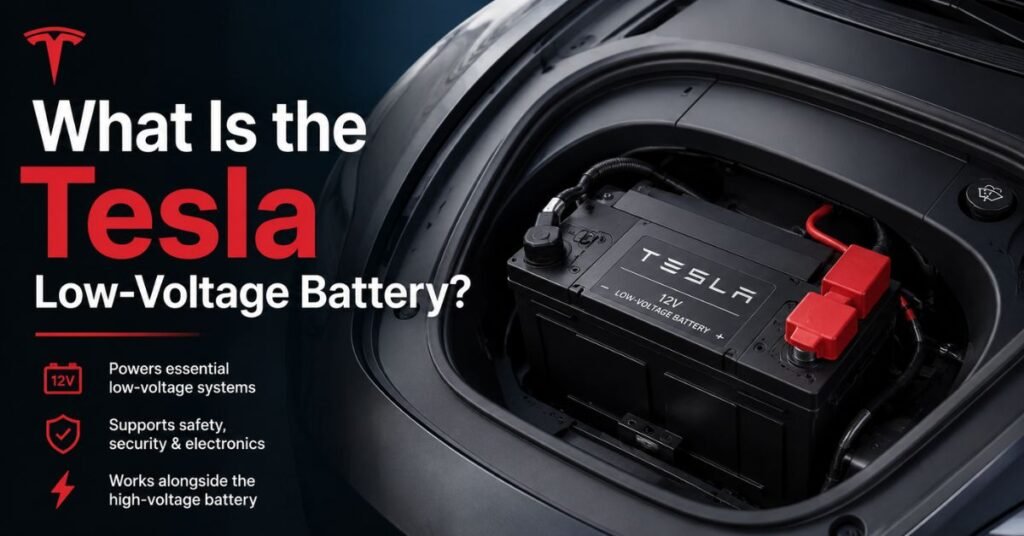
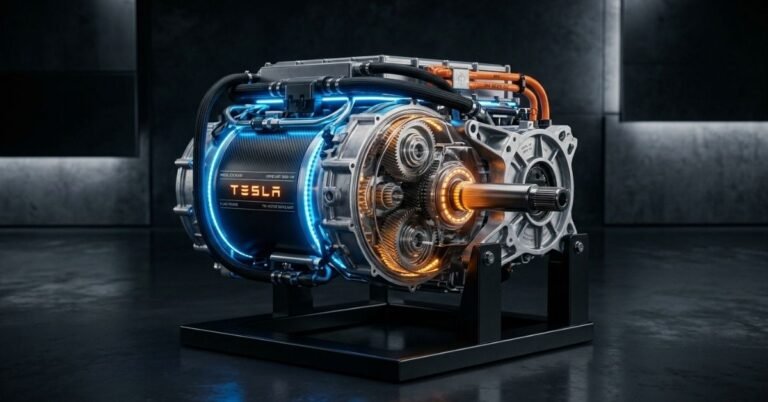
The low-voltage battery is a smaller electrical energy source used by the vehicle’s low-voltage systems. It is separate from the large high-voltage traction battery that stores energy for propulsion. Tesla vehicles use the low-voltage system for many electronic functions, while the high-voltage battery supplies the primary energy used for driving.
The battery technology is not identical across every Tesla. Some earlier vehicles use lead-acid batteries, while newer configurations use lithium-ion low-voltage batteries. Tesla documentation shows that battery type can vary by production date, factory, model, and configuration. For example, Tesla’s Model Y documentation distinguishes lead-acid and lithium-ion systems, and the service documentation instructs owners to identify the installed battery before service.
Tesla Low-Voltage Battery Symptoms to Watch
1. Low-Voltage or Electrical System Alerts
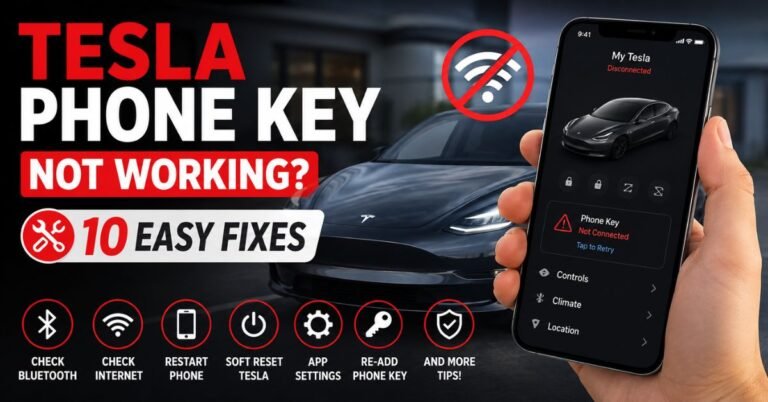
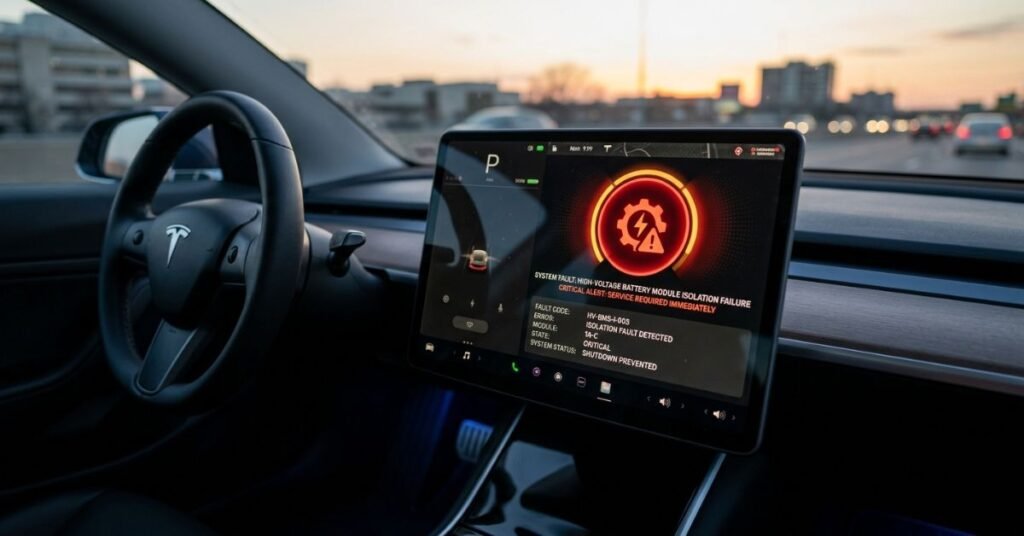
The clearest warning sign is an alert on the touchscreen or in the Tesla app telling you that the low-voltage battery is degraded, unavailable, or unable to support vehicle features. Tesla’s current troubleshooting documentation includes alerts such as “Schedule service to replace low voltage battery” and warnings that the electrical system cannot support all features.
A specific Tesla alert can be more useful than a general symptom because it reflects the vehicle’s own diagnostic system. Record the exact alert and follow Tesla’s recommended action rather than clearing it repeatedly.
2. Vehicle Features Become Unavailable
A weak low-voltage battery may cause nonessential features to become unavailable as the vehicle protects power for essential functions. Tesla says this can occur when the low-voltage battery cannot provide sufficient electrical support.
You may notice that certain comfort, convenience, or electronic functions are temporarily restricted. This does not necessarily mean those individual features have failed. The underlying issue can be insufficient low-voltage power.
3. The Tesla Will Not Wake Normally
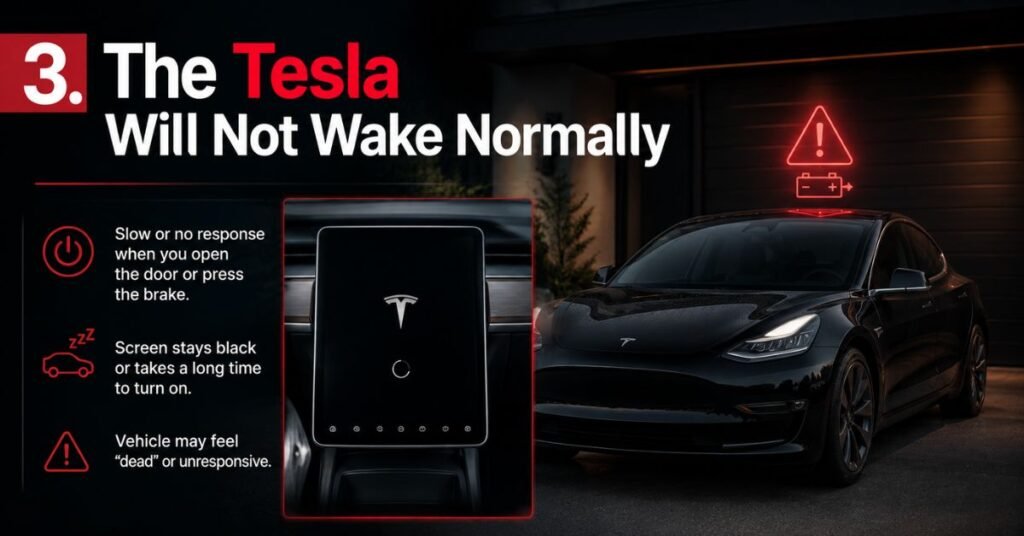
Another important symptom is difficulty getting the vehicle to wake or respond normally. The touchscreen may remain unavailable, the vehicle may fail to respond as expected, or access and electronic functions can become difficult when low-voltage power is severely depleted.
A vehicle that appears completely dead does not automatically have an empty high-voltage battery. Low-voltage failure can prevent the systems needed to access or operate the car from functioning normally.
4. Doors, Locks, or Access Behave Abnormally
Electronic locks and vehicle access depend on the car’s electrical systems. If low-voltage power becomes critically low, normal access behavior can be affected.
This is particularly important if the vehicle is parked and the battery condition deteriorates while unattended. Do not repeatedly force electronic functions or experiment with improvised wiring. Use Tesla’s documented emergency-access and low-voltage procedures for your specific model.
5. Software Updates May Not Complete
Tesla documents a particularly useful symptom: a degraded low-voltage battery can trigger an alert stating that software will not update until the battery is replaced. This is a strong clue because the problem can appear to be software-related even though the underlying issue is electrical.
If an update repeatedly fails and the vehicle displays a low-voltage warning, treat the battery alert as the priority. Do not assume that reinstalling software will solve a hardware-related low-voltage problem.
6. Unexpected Shutdown or Restart Problems
As low-voltage performance worsens, Tesla may warn that the electrical system cannot support driving or may shut down unexpectedly. Tesla’s documentation says that a severely compromised low-voltage battery can leave the vehicle unable to continue driving or restart.
This is no longer a “watch it for a while” symptom. If the vehicle displays an alert saying it is shutting down, pull over safely as soon as possible and arrange assistance according to Tesla’s instructions.
7. The Car Uses More Energy While Parked
A low-voltage problem can sometimes be associated with unusual parked energy behavior. Tesla explains that when the low-voltage backup source is unavailable, the high-voltage battery may continue supporting vehicle functions while the car is idle, which can increase energy consumption.
However, parked energy loss has many possible causes. Sentry Mode, climate features, preconditioning, aftermarket equipment, and other active systems can increase consumption. A higher-than-normal battery drain alone is not proof of low-voltage battery failure.
8. Battery Replacement Is Requested by the Vehicle
If Tesla specifically tells you to replace the low-voltage battery, that is one of the strongest indicators available to an owner. Tesla’s troubleshooting guidance says that when the low-voltage battery shows degraded performance, replacement should be scheduled at the earliest convenient opportunity.
The vehicle’s diagnostic system is more reliable than guessing from battery age alone. Battery lifespan varies with chemistry, climate, usage, and vehicle configuration, so there is no universal replacement interval that applies to every Tesla.
9. A Dead Vehicle After Being Left Unplugged
Tesla warns that leaving a vehicle unplugged for an extended period after the high-voltage battery reaches zero can eventually make it impossible to charge or use the car without low-voltage assistance, and prolonged neglect can damage the high-voltage battery.
This is different from ordinary low-voltage battery aging, but the result can look similar to an electrically dead car. Keeping the main battery from reaching a deeply depleted state is therefore part of good long-term ownership.
Low-Voltage Battery vs. High-Voltage Battery Symptoms
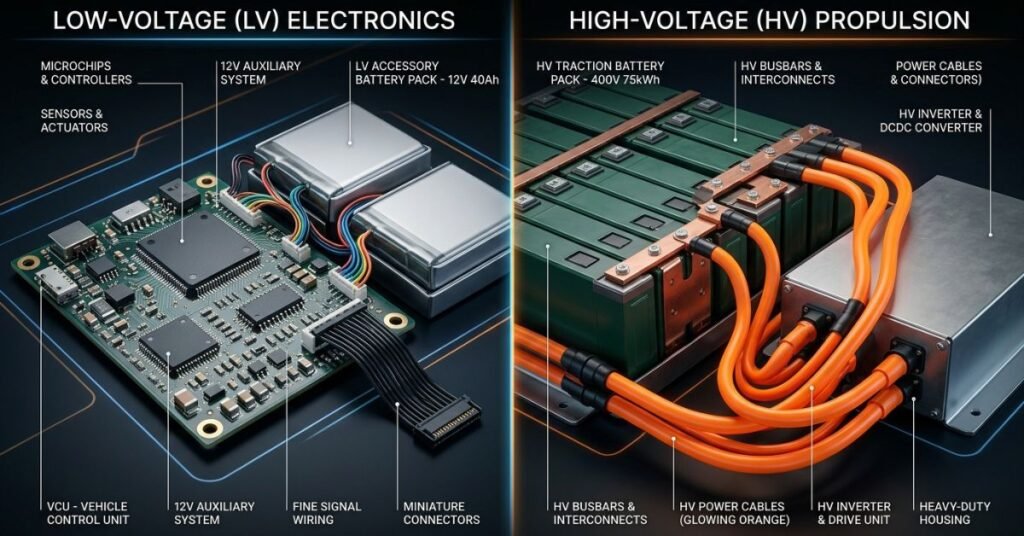
The two battery systems should not be confused.
| Area | Low-Voltage Battery | High-Voltage Battery |
|---|---|---|
| Main role | Powers low-voltage electronics and vehicle systems | Stores propulsion energy |
| Typical warning | Electrical-system or low-voltage alert | Battery performance, charge, or range alert |
| Possible symptom | Features unavailable or vehicle may not wake | Reduced range, charging performance, power, or acceleration |
| Service approach | Low-voltage diagnosis or replacement | High-voltage diagnosis by trained technicians |
Tesla’s manuals warn owners not to open, remove, or tamper with high-voltage components. If a problem appears to involve the high-voltage battery, use Tesla service or another appropriately qualified professional rather than attempting high-voltage repairs.
What Causes Low-Voltage Battery Problems?
Several factors can contribute to low-voltage battery degradation or discharge. Battery chemistry and age matter, but so do environmental conditions and vehicle usage. Extremely hot or cold conditions can affect batteries and vehicle electrical systems.
Aftermarket devices can also matter. Tesla warns that aftermarket equipment connected to the low-voltage system, as well as third-party applications that access vehicle data, can increase parked energy consumption and reduce battery lifespan.
The important point is that symptoms do not identify the cause by themselves. Proper diagnosis should determine whether the battery, charging circuitry, wiring, or another component is responsible.
What Should You Do When Symptoms Appear?

Start by reading the exact warning on the touchscreen and Tesla app. Take a screenshot or note the alert code if possible. Check whether the vehicle remains drivable and follow the instructions displayed by Tesla.
If the car is operating normally and the alert recommends service, schedule service promptly rather than waiting for a complete failure. If Tesla warns that electrical power is insufficient to continue driving or that the vehicle is shutting down, move to a safe location and seek assistance.
Do not probe high-voltage cables or attempt high-voltage repairs. Even low-voltage jump-start procedures vary according to the battery type and model, so use the correct Tesla Owner’s Manual for your vehicle. Tesla explicitly warns against incorrect connections and short circuits during jump-starting.
Can You Prevent Low-Voltage Battery Failure?
You cannot prevent every battery failure, but sensible habits can reduce avoidable stress. Keep the vehicle sufficiently charged, avoid unnecessary long periods of deep discharge, and remove or disable unnecessary aftermarket equipment. If you regularly use features that keep the vehicle awake, such as Sentry Mode or climate functions, understand that they increase energy consumption.
Pros and Cons of Early Diagnosis
Pros
- Reduces the chance of being stranded by an electrical failure.
- Gives Tesla service an earlier opportunity to diagnose the cause.
- Can prevent secondary inconvenience from access, software, or feature restrictions.
- Helps distinguish low-voltage problems from high-voltage battery concerns.
Cons
- A warning does not always identify the exact failed component.
- Service requirements vary by model and battery type.
- A replacement may be unnecessary if another electrical fault is causing the symptom.
Who Should Seek Service Immediately?
Any Tesla displaying a persistent low-voltage warning should be evaluated according to Tesla’s instructions. Immediate attention is especially appropriate when the vehicle reports reduced electrical support, shutdown risk, inability to restart, or a battery replacement requirement.
Drivers who depend on their Tesla for long trips should take intermittent symptoms seriously rather than waiting for complete failure. The same applies to vehicles that have been modified with aftermarket electrical equipment.
Frequently Asked Questions
How do I know if my Tesla low-voltage battery is bad?
The strongest clues are a Tesla low-voltage alert, degraded-battery warning, unavailable electrical features, or instructions to replace the battery. Symptoms alone cannot confirm the diagnosis.
Does a weak low-voltage battery affect driving range?
It can indirectly affect parked energy consumption or vehicle operation, but a low-voltage warning is not the same as high-voltage battery degradation. Tesla’s high-voltage battery systems are responsible for propulsion energy and range.
Can a Tesla drive with a low-voltage battery problem?
It depends on the severity and the specific alert. Some conditions are considered drivable temporarily, while others can cause shutdown or prevent restarting. Follow the vehicle’s displayed instructions.
Is every Tesla low-voltage battery 12 volts?
No. Tesla uses different low-voltage battery technologies across models and production periods, including lead-acid and lithium-ion systems. Always identify the battery type for your exact vehicle.
Can I jump-start a Tesla myself?
Tesla provides model-specific low-voltage jump-start procedures, but the procedure differs between battery types. Incorrect connections can cause damage. Follow the applicable Owner’s Manual or use qualified assistance.
How long does a Tesla low-voltage battery last?
There is no single lifespan that applies to every Tesla. Battery chemistry, age, climate, usage, and vehicle configuration can affect service life. A vehicle warning or diagnostic result is more useful than relying on a fixed mileage or age.
Does a low-voltage warning mean the main battery is bad?
No. The low-voltage and high-voltage batteries perform different roles. A low-voltage warning should not automatically be interpreted as traction-battery failure.
Conclusion
Tesla low-voltage battery symptoms can range from subtle electrical glitches to serious warnings about shutdown or failure to restart. The most important clues are Tesla’s own low-voltage alerts, unavailable vehicle functions, software-update restrictions, and evidence that the electrical system cannot maintain required power.
Because Tesla uses different low-voltage battery technologies across models and production periods, diagnosis and replacement should follow the documentation for the exact vehicle. Do not confuse a low-voltage problem with degradation of the main traction battery, and do not attempt high-voltage repairs yourself.
If a low-voltage warning appears, document the message and arrange service when Tesla recommends it. Acting before the battery becomes completely depleted is usually the simplest way to reduce disruption and protect reliable day-to-day operation.
{ “@context”: “https://revtesla.com”, “@graph”: [ { “@type”: “Article”, “@id”: “https://revtesla.com/#organization”, “name”: “RevTesla”, “url”: “https://revtesla.com/”, “logo”: { “@type”: “ImageObject”, “@id”: “https://revtesla.com/#logo”, “url”: “https://lh3.googleusercontent.com/pw/AP1GczOZMYbm6vY4sp2fsW-bWnF64lVo6X0hBo4UUzzOzuI5FGoptrIKNf4wMwsOXhnJZpcbuuCpoL6cSK3ErMNVuiRtktuBp0KJGemjwCdPWRLVBVdDYZk=w1920-h1080-rw-nu-e365”, “caption”: “RevTesla Logo” } }, { “@type”: “Person”, “@id”: “https://revtesla.com/#author-tom”, “name”: “Tom”, “worksFor”: { “@id”: “https://revtesla.com/#organization” } }, { “@type”: “TechArticle”, “@id”: “https://revtesla.com/tesla-low-voltage-battery-symptoms/#article”, “isPartOf”: { “@type”: “WebPage”, “@id”: “https://revtesla.com/tesla-low-voltage-battery-symptoms/” }, “headline”: “Tesla Low-Voltage Battery Symptoms: 10 Warning Signs and What to Do”, “description”: “Learn the most common Tesla low-voltage battery warning signs, how to distinguish 12V/16V issues from high-voltage battery failures, and what steps to take when alerts appear.”, “url”: “https://revtesla.com/tesla-low-voltage-battery-symptoms/”, “mainEntityOfPage”: “https://revtesla.com/tesla-low-voltage-battery-symptoms/”, “author”: { “@id”: “https://revtesla.com/#author-tom” }, “publisher”: { “@id”: “https://revtesla.com/#organization” }, “image”: [ “https://lh3.googleusercontent.com/pw/AP1GczOZMYbm6vY4sp2fsW-bWnF64lVo6X0hBo4UUzzOzuI5FGoptrIKNf4wMwsOXhnJZpcbuuCpoL6cSK3ErMNVuiRtktuBp0KJGemjwCdPWRLVBVdDYZk=w1920-h1080-rw-nu-e365”, “https://lh3.googleusercontent.com/pw/AP1GczPzPdV4HBZSUZ_Zk1jiNY1lFASG7PvQX0shRK0-FMWMaKOkl4aiiKOXvgxe8k2JdJ1GcWLG9-mXDgpCNJUTw264p5Db_OtqppYRWuUoiIlaPLCAPaY=w1920-h1080-rw-nu-e365”, “https://lh3.googleusercontent.com/pw/AP1GczPwzLaLI1FWfd8_Nsna85Jp5QL1AvkZOPYweIq4JYKZZwoQqnDRx8Msedqw_xlbHrOiYjxZhRYOsK1EYx4_uxe0P2PzfMlumBJaW1JHJ6aN7YtppcY=w1920-h1080-rw-nu-e365”, “https://lh3.googleusercontent.com/pw/AP1GczN856oOGrOLMUnK7192QtXQA1CtPe8pHZO528RZlskNhi8H8Jimooqk5A9sqhemE2o2v6d9kZVzMv0QkITslFPMkx9lCce_nD-H8Ua6Yse5FMusE7M=w1920-h1080-rw-nu-e365”, “https://lh3.googleusercontent.com/pw/AP1GczOzvTnQLNpRw4THxlGeF2ZkwBokZ1TJtNnFt5tMihQqws4yDZPOpYNzD3JialXDwAEtL4Q9tcv1wC1CFA79TT4HtvZQBIjfBQPoXTTO4N-Ykv-WvpE=w1920-h1080-rw-nu-e365”, “https://lh3.googleusercontent.com/pw/AP1GczO9ptnQoCflUbvOBOllybU07PPsiGl-s_aNpKz71ZAxGLOoS2QGGlrc8VUyeQ5191v07j0B0FM2D267_FGcGV73vZIYDAqc8FVMHaUqLBdmsY92Ygw=w1920-h1080-rw-nu-e365”, “https://lh3.googleusercontent.com/pw/AP1GczOG7y_NkbXCeTW6Oe58gqsJv9jmklPbHHZx1wPb4O7Q-JWRh5rTnFzlEIfe7Z25p9lPMhgrLWA0A2JjxbZYROIF69NfB3fG3QMnRcQgLDuY-2KZDhk=w1920-h1080-rw-nu-e365”, “https://lh3.googleusercontent.com/pw/AP1GczP8g9aWw4F5glITdm1upocbfLtd5-SziqV9EZtcx8ehWz_pNOxQeCcQjYO_AFJUwhDkLub9rcA43cZs3mgdgcOpaqlPE0NqzHU9Hx935XGl0A7DYeY=w1920-h1080-rw-nu-e365”, “https://lh3.googleusercontent.com/pw/AP1GczOHyt9_UqzrE0Z96z16Kd6tHsEQ8vWh9S3HbFW0m-8yWcLjWFyo57tPHvbL88_xg7bpv29UQbvVN1pET9G1u5X-ky_w3Yvde3QUP-9jnhf_lbnkFwE=w1920-h1080-rw-nu-e365”, “https://lh3.googleusercontent.com/pw/AP1GczOTh9PTwg0k3hvtm2Ws-MNJW0wDRjuLzgYSGpV6TxrU1fQGVDHUdkf_I0-ppino6rA5BspVUu4v_bO3D19pOuELOF6szVXWaGBT99-FIPoA0fKmIhQ=w1920-h1080-rw-nu-e365”, “https://lh3.googleusercontent.com/pw/AP1GczMGntRV-PNQq6TVbVU_jH0x9I1yUPUmPWKT3z2m0Yh1b-zH30GKspv90GLeP8UKZM3Llr00RXiquPz_BAzoRRYjzLdRyT4eHVjp68OUVpKevWY50sI=w1920-h1080-rw-nu-e365”, “https://lh3.googleusercontent.com/pw/AP1GczNPjS_9FYo6dA2BXnrdNjHAsSnQHRHz1MsFDaAGqvjV_boCcrjuZ-o3a1v6rvSFYTt9_dlOFHgpYCrYTEJ9dLTHfkPacCwG6mRUW9lzSsnixNkDX88=w1920-h1080-rw-nu-e365”, “https://lh3.googleusercontent.com/pw/AP1GczMh_p884J-xwuhcrxAAdN2zYhGBiKfuG7phfHoGvqNR9PINZYXsyFhKhhFxHWrC4m4r3Ro-iw-2cDCkE2fVoP9wy-w9rFj_Nc39T2oHrH9ZukNDaGM=w1920-h1080-rw-nu-e365” ] }, { “@type”: “BreadcrumbList”, “@id”: “https://revtesla.com/tesla-low-voltage-battery-symptoms/#breadcrumb”, “itemListElement”: [ { “@type”: “ListItem”, “position”: 1, “name”: “Home”, “item”: “https://revtesla.com/” }, { “@type”: “ListItem”, “position”: 2, “name”: “Tesla Low-Voltage Battery Symptoms”, “item”: “https://revtesla.com/tesla-low-voltage-battery-symptoms/” } ] }, { “@type”: “FAQPage”, “@id”: “https://revtesla.com/tesla-low-voltage-battery-symptoms/#faq”, “mainEntity”: [ { “@type”: “Question”, “name”: “How do I know if my Tesla low-voltage battery is bad?”, “acceptedAnswer”: { “@type”: “Answer”, “text”: “The strongest clues are a Tesla low-voltage alert, degraded-battery warning, unavailable electrical features, or instructions to replace the battery. Symptoms alone cannot confirm the diagnosis.” } }, { “@type”: “Question”, “name”: “Does a weak low-voltage battery affect driving range?”, “acceptedAnswer”: { “@type”: “Answer”, “text”: “It can indirectly affect parked energy consumption or vehicle operation, but a low-voltage warning is not the same as high-voltage battery degradation. Tesla’s high-voltage battery systems are responsible for propulsion energy and range.” } }, { “@type”: “Question”, “name”: “Can a Tesla drive with a low-voltage battery problem?”, “acceptedAnswer”: { “@type”: “Answer”, “text”: “It depends on the severity and the specific alert. Some conditions are considered drivable temporarily, while others can cause shutdown or prevent restarting. Follow the vehicle’s displayed instructions.” } }, { “@type”: “Question”, “name”: “Is every Tesla low-voltage battery 12 volts?”, “acceptedAnswer”: { “@type”: “Answer”, “text”: “No. Tesla uses different low-voltage battery technologies across models and production periods, including lead-acid and lithium-ion systems. Always identify the battery type for your exact vehicle.” } }, { “@type”: “Question”, “name”: “Can I jump-start a Tesla myself?”, “acceptedAnswer”: { “@type”: “Answer”, “text”: “Tesla provides model-specific low-voltage jump-start procedures, but the procedure differs between battery types. Incorrect connections can cause damage. Follow the applicable Owner’s Manual or use qualified assistance.” } }, { “@type”: “Question”, “name”: “How long does a Tesla low-voltage battery last?”, “acceptedAnswer”: { “@type”: “Answer”, “text”: “There is no single lifespan that applies to every Tesla. Battery chemistry, age, climate, usage, and vehicle configuration can affect service life. A vehicle warning or diagnostic result is more useful than relying on a fixed mileage or age.” } }, { “@type”: “Question”, “name”: “Does a low-voltage warning mean the main battery is bad?”, “acceptedAnswer”: { “@type”: “Answer”, “text”: “No. The low-voltage and high-voltage batteries perform different roles. A low-voltage warning should not automatically be interpreted as traction-battery failure.” } } ] } ] }