Are All Tesla Cars Electric?
Editor’s Note: As traditional legacy automakers scale back their EV targets and lean heavily into gas-electric hybrids, Tesla remains an absolute purist. This deep dive breaks down why Tesla refuses to build a hybrid backup system and how their single-powertrain focus gives them a massive structural safety, cost, and manufacturing edge over the rest of the industry.
QUICK ANSWER
Yes, every vehicle manufactured by Tesla is 100% battery-electric (BEV). As of 2026, Tesla does not produce any gasoline, diesel, hybrid, or plug-in hybrid (PHEV) models. From the Model 3 and Model Y to the new Cybercab, the entire lineup runs exclusively on electric power. Are All Tesla Cars Electric?
When you see a Tesla silently gliding down a US highway, you might wonder, are all Tesla cars electric? With so many brands launching hybrids in 2026, it’s easy to get confused. People often ask if Tesla has finally added a gas backup or a hybrid system, but this guide will clarify everything about their current 2026 strategy.
The All-Electric Mission

Tesla has never built a car with a traditional internal combustion engine. Their mission from day one was to accelerate sustainable energy transition. Unlike brands like Toyota or Ford, Tesla completely skipped the “hybrid phase.” They believe that hybrids are a distraction from the ultimate goal of zero emissions. Every Tesla produced from the 2008 Roadster to the latest 2026 Cybercab is powered by large battery packs and efficient electric motors.
Why Tesla Only Builds Electric Vehicles

Many people ask why Tesla won’t just make one hybrid for convenience. The answer lies in engineering simplicity and focused innovation. Hybrids are complex because they carry two different powertrains. They need a gas engine, an electric motor, a fuel tank, and a battery pack. Tesla prefers simplicity to maximize efficiency and interior space. By removing the gas engine, they can offer more storage like the famous “frunk.” Electric cars also require much less maintenance over their lifetime. You never have to worry about oil changes, spark plugs, or smog tests with a Tesla.
The Current 2026 Tesla Lineup
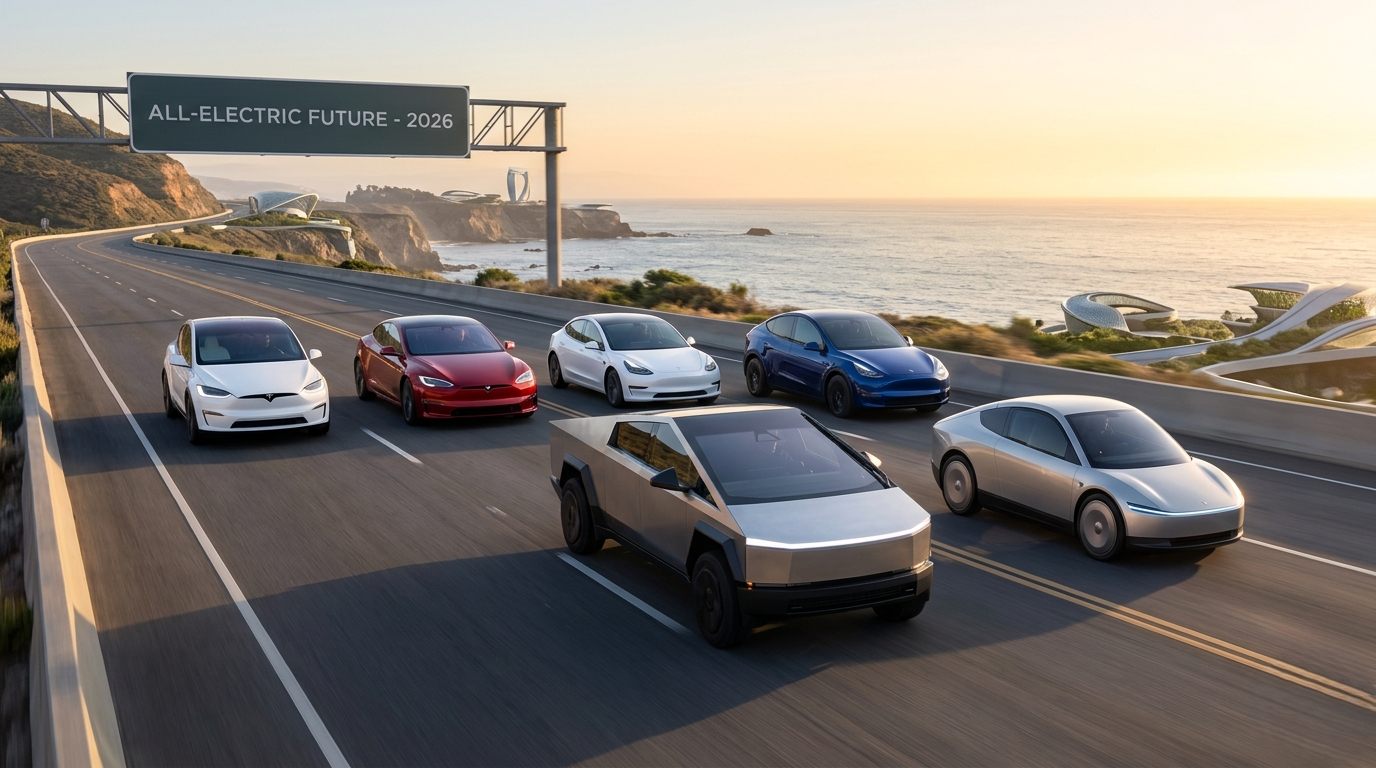
As of April 2026, Tesla’s lineup is the most diverse it has ever been. Every single model below is 100% battery-electric ==The Model 3 and Model Y==: In 2026, these two models continue to dominate the US market as the primary choice for drivers switching from gas to electric..

Model X: These are the high-end luxury flagships of the brand. They feature the famous “Plaid” speed and advanced falcon-wing doors. The Cybertruck: Tesla’s stainless steel pickup truck is now in full production. It remains a 100% electric powerhouse with unmatched durability.

The Cybercab (New for 2026): Production officially started this month at Giga Texas. This is a two-seater EV designed specifically for autonomous ride-hailin The 2026 Supercharger Expansion:
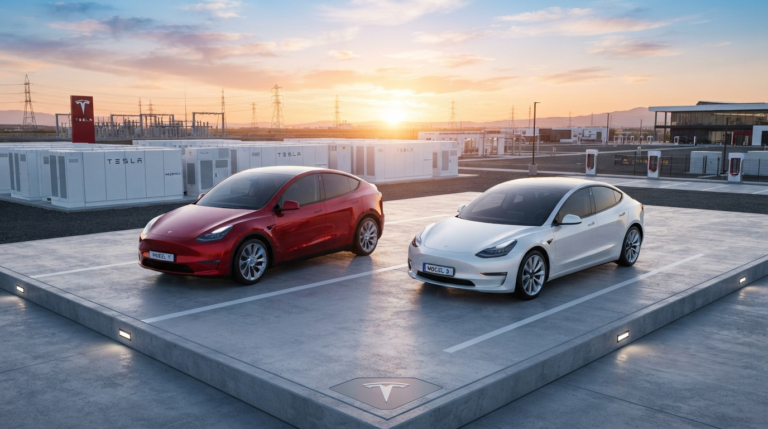
In 2026, charging a Tesla is easier than it has ever been. Tesla has recently introduced the “Folding V4” Supercharger design. These new chargers are faster and can gain 170+ miles of range in just 15 minutes. They are being deployed rapidly across underserved US regions. The network is now a public utility, serving brands like Ford, GM, and Rivian. However, Tesla owners still enjoy the most seamless “plug and charge” experience.

4680 Battery Technology Updates
Tesla has recently reinstalled its in-house 4680 battery cells in certain Model Y versions.This shift is a key component of their 2026 logistics and production roadmap. These cells are designed to be cost-effective while offering high energy density. They help make Teslas more affordable for the average consumer. New dry-electrode production at Giga Austin has also improved battery longevity. This means 2026 models are built to last even longer than previous years.
Software Predictability in 2026
Tesla’s 2026 software updates have made “range anxiety” a thing of the past. The car now predicts battery usage with extreme accuracy.

It calculates range based on real-time wind, tire pressure, and passenger weight. You always know exactly how much charge you will have at your destination. Over-the-air updates continue to improve the car’s efficiency while you sleep. Your Tesla literally gets better and smarter every : The Saftey and craft Ratings : Safety remains a core reason why Tesla sticks to an all-electric design. Without a heavy engine in the front, the car has a massive safety “crumple zone.

In recent 2026 IIHS tests, the Model 3 and Model Y received top safety marks. Their low center of gravity makes them nearly impossible to roll over.
The latest FSD (Full Self-Driving) hardware acts as a digital safety shield. It works 24/7 to monitor surroundings and prevent accidents before they happen.
Tesla vs. Gas Cost Analysis

With US gas prices fluctuating in 2026, the savings from going electric are huge. Charging a Tesla at home averages only about $626 per year. In comparison, a typical gas-powered SUV can cost over $1,500 annually in fuel. This makes Tesla the smarter long-term financial choice. Maintenance costs for a Tesla are also significantly lower. A Model 3 typically costs about $980 for total maintenance over five years.
Don’t Be Misled by “Range Extender” Myths
Lately, rumors have surfaced about Tesla using “range extenders” like gas generators. However, Elon Musk has stayed firm on his EV-only vision. Tesla’s version of “extending range” is purely through better software and battery tech. They have no plans to ever add a combustion backup. If you hear someone say a Tesla has a backup gas tank, they are wrong. Every Tesla is “All-In” on the electric future.
The Bottom Line
If you want to move away from gas stations forever, Tesla is the leader. They have proven that 100% electric cars are superior in every way. With the 2026 Cybercab now in production and a $30,000 model coming next year, the future is electric. Tesla’s commitment to zero gas is stronger than ever.
Latest Updates:
Tesla’s engineering updates move fast. Here is where the technology stands right now:
- The “Complete Form” 4680 Cell: Following a landmark manufacturing breakthrough, Tesla is now mass-producing both the anode and cathode of its 4680 cells using a fully dry-electrode process at Giga Texas. This eliminates massive drying ovens, slashes factory energy use by up to 80%, and delivers stabilized yield rates exceeding 90% for the entry-level 2026 Model Y.
- Cybercab Hitting the Streets: Following its initial manufacturing run, production of the two-seat Cybercab is gradually ramping up at Giga Texas. Active fleets are already gathering at Robotaxi staging hubs across Texas (including Houston and Dallas) as public-facing autonomous deployment expands.
- Next-Gen Affordable Platform: Tesla’s roadmap remains firmly on track to launch its highly anticipated cheaper EV platform (projected around $25,000 to $30,000) to further dominate the mass market.
Author’s Note
Writing about Tesla means updating your data almost weekly. What fascinates me most about their current strategy is how they use vertical integration to solve massive manufacturing bottlenecks that other companies won’t touch like conquering the dry-electrode coating process for batteries.