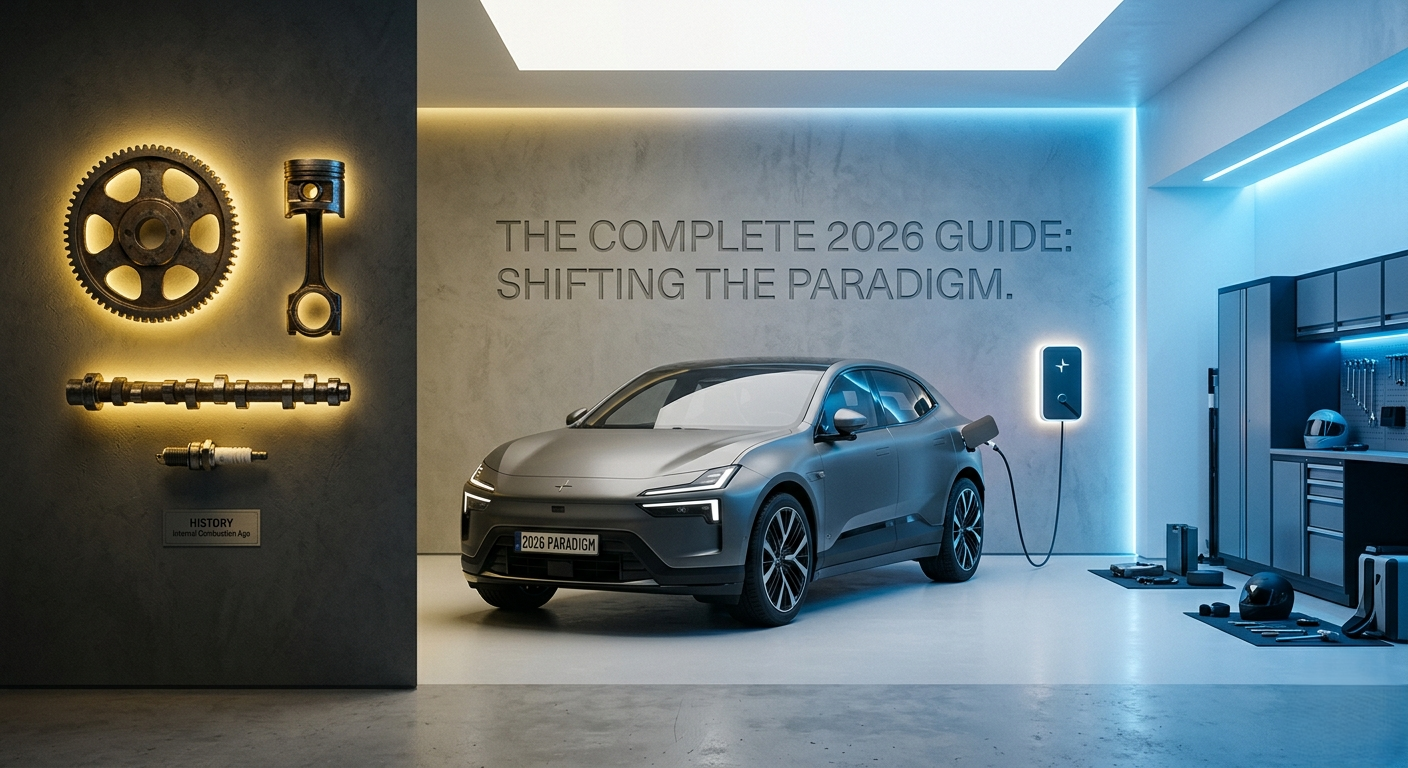
ICE to EV Transition: The Complete 2026 Guide Should You Make the Switch?
| Quick AnswerWhat Is the ICE to EV Transition?The ICE to EV transition is the global shift from Internal Combustion Engine vehicles (gasoline/diesel) to Battery Electric Vehicles (EVs). In 2026, global EV market share has reached 25%. In the US, the new OBBBA law offers up to $10,000 in annual loan interest deductions on U.S.-assembled EVs replacing the expired IRA $7,500 credit. NACS is now the universal charging standard, battery costs have dropped to $80/kWh, and the ICE to EV transition is no longer just an environmental statement it is the financially smart move. |
If you have been wondering whether the ICE to EV transition is right for you, you are not alone. In 2026, millions of drivers and fleet managers are asking the same question: “Is this the last time I fill up at a gas station?” The answer, increasingly, is yes. “This guide breaks down every angle of the transition: exploring the NACS network expansion, current OBBBA financing rules, and how these updates replace older federal programs.”. Read through to the end the tax section alone could put thousands of dollars back in your pocket this year.
What Is the ICE to EV Transition? Definition and 2026 Market Reality

ICE stands for Internal Combustion Engine the technology powering gasoline and diesel vehicles for over a century. The ICE to EV transition is the global shift away from combustion powertrains toward Battery Electric Vehicles (BEVs), Plug-in Hybrids (PHEVs), and Hybrid Electric Vehicles (HEVs).
In 2026, global EV sales have reached approximately 25% market share one in four new vehicles sold worldwide is now electric. The United States sits at 6-8%, but the trajectory is steep. The ICE to EV transition is no longer a future forecast. It is the current market reality, and the window for early-mover advantage is closing fast.
Why ICE Vehicles Are Losing Ground

- Fuel cost volatility: Gasoline prices fluctuate with global oil markets. EV charging rates are stable and significantly lower per mile.
- Maintenance burden: ICE engines contain over 2,000 moving parts. EVs have roughly 20. No oil changes, no timing belts, no exhaust system repairs.
- Technology gap: ICE vehicles cannot receive over the-air (OTA) software updates. EVs improve automatically with each update cycle.
- Tightening regulations: Cities and states are imposing stricter emissions standards, making ICE ownership increasingly expensive and restricted in urban zones.

2026 Tax Benefits: The Financial Case for Starting Your ICE to EV Transition Now
Here is the update that most competitor articles are still missing: the standard IRA $7,500 EV tax credit expired in September 2025. Any article still citing that figure is providing outdated guidance. The landscape for the ICE to EV transition changed significantly at the start of 2026.

Under the OBBBA (One Big Beautiful Bill Act), U.S.-assembled EVs now qualify for up to $10,000 in annual loan interest deductions. This is deducted from your taxable income based on the interest paid on your EV loan a meaningful saving for buyers financing a $40,000+ vehicle through the ICE to EV transition. Fleet operators benefit additionally from Bonus Depreciation on commercial vehicles over 6,000 lbs, accelerating tax write-offs and reducing the effective cost of fleet electrification. Section 179 expensing also remains available for qualifying business EVs.
2026 US Tax Benefits Summary
- OBBBA Loan Interest Deduction:“U.S. EV incentives continue to evolve through federal and state-level programs, so buyers should always verify current eligibility requirements before making a purchase decision.”
Bonus Depreciation: Accelerated depreciation on commercial EVs over 6,000 lbs - Section 179: Immediate full-cost expensing for qualifying business EVs
- State incentives: California, Colorado, New York, and others offer additional rebates of $2,000–$7,500
Types of Electric Vehicles: BEV, PHEV, and HEV Which Fits Your ICE to EV Transition?
Not everyone takes the ICE to EV transition in a single leap and 2026’s market data proves it. PHEV sales have surged as buyers use them as a low-risk bridge between gasoline and full electrification.

| Feature | ICE Vehicle | Electric Vehicle (EV) |
| Monthly Fuel Cost | $180 – $250 | $40 – $70 |
| Maintenance | Oil, exhaust, transmission | Minimal — no engine parts |
| Range (2026) | 350 – 500 miles | 250 – 400 miles |
| Refueling Time | ~5 minutes | 20–45 min (fast charge) |
| 2026 Tax Benefit | None | Up to $10,000 (OBBBA) |
| Emissions | High CO2 + particulates | Zero tailpipe emissions |
Your Three Options in Detail
BEV (Battery Electric Vehicle): Fully electric, zero tailpipe emissions, no gasoline engine. Best for drivers with reliable home or workplace charging who travel predictable daily routes under 150 miles. Popular models: Tesla Model 3, Chevrolet Equinox EV, Rivian R1T. One of the standout BEV features is the in-vehicle technology Tesla’s large touchscreen interface has redefined what drivers expect from a car’s display system. If you are considering a Tesla as part of your ICE to EV transition, read to understand the full scope of in-vehicle display technology before you buy.
PHEV (Plug-in Hybrid Electric Vehicle): The smart compromise in the ICE to EV transition. A PHEV delivers 30–60 miles on pure electric power, then switches automatically to gasoline. Ideal for drivers who want EV efficiency for daily commutes but need gasoline backup for longer trips. No charging anxiety, no range anxiety. Popular models: Toyota RAV4 Prime, Ford Escape PHEV, Jeep Wrangler 4xe.
HEV (Hybrid Electric Vehicle): Self-charging no plug required. The electric motor assists the gasoline engine to improve fuel economy. A meaningful step up from pure ICE, but not a full participant in the ICE to EV transition. Popular models: Toyota Camry Hybrid, Honda Accord Hybrid.
EV Range and Charging Infrastructure: The Full 2026 Picture

Range anxiety has historically been the biggest psychological barrier to the ICE to EV transition. In 2026, that barrier has largely been dismantled thanks to one pivotal development:“NACS has become widely adopted across North America.”
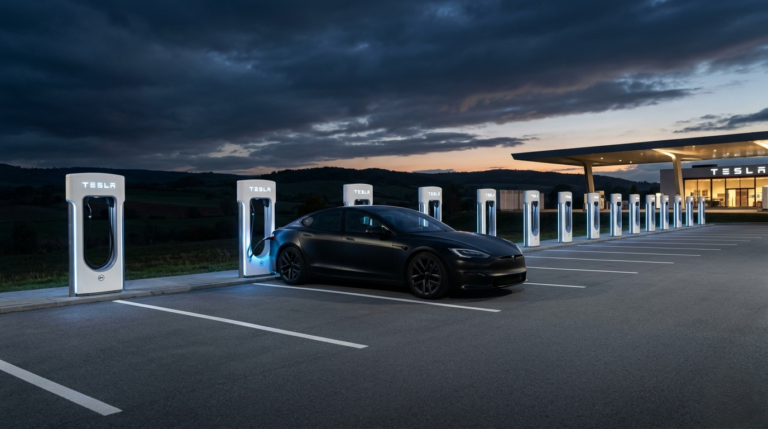
Ford, GM, Rivian, Honda, and virtually every major automaker have adopted Tesla’s NACS connector standard. Non-Tesla EVs can now access Tesla’s 12,000+ Supercharger stations across North America — the most reliable fast-charging network in existence. Public charging for the ICE to EV transition has never been more accessible.
2026 EV Range and Charging Facts
- Standard EV range: 250–350 miles per charge
- Premium EV range: 400+ miles (Tesla Model S Long Range, Mercedes EQS, BMW i7)
- DC fast charge: 20–45 minutes to 80% at high-power stations
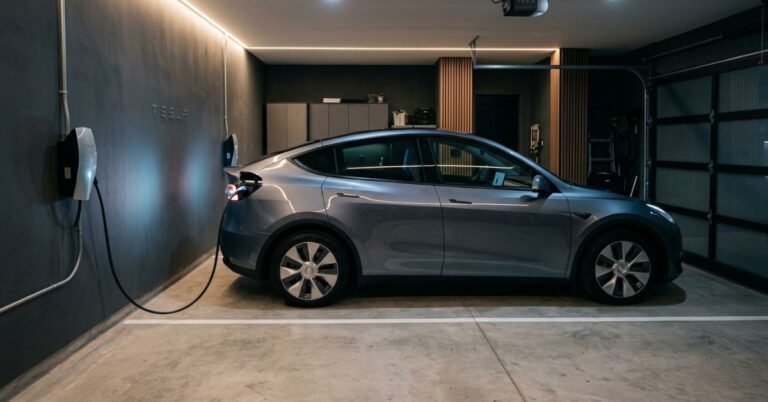
- Home Level 2 charging: Adds 25–30 miles per hour a full charge overnight
- Cold weather impact: Expect 15–25% range reduction in winter conditions
One pain point remains: Electrify America (EA) charging reliability still lags behind Tesla Superchargers. For long road trips, use PlugShare or A Better Routeplanner to verify charger availability before depending on EA stations.
As EV technology advances rapidly, Tesla continues to lead with autonomous driving features but these come with important safety responsibilities. Before completing your ICE to EV transition to a Tesla, read WARNING: Sex And Tesla Car Autopilot Do Not Mix a serious look at how Autopilot misuse has contributed to 65 confirmed deaths and why responsible use is non-negotiable for any Tesla owner.
Environmental Impact: The 3 Ways ICE Vehicles Damage the Planet
For many drivers, the ICE to EV transition begins with an environmental awakening. ICE vehicles harm the environment through three distinct and measurable pathways Over a full vehicle lifetime, an EV produces 50–80% less carbon than a comparable ICE vehicle even accounting for electricity generation. The ICE to EV transition is one of the highest-impact environmental actions an individual can take
.
Fleet Electrification: The Business Owner’s Roadmap for the ICE to EV Transition

For fleet operators, the ICE to EV transition requires strategic planning rather than a simple vehicle swap. In 2026, the framework is clear: electrify what makes financial sense now, phase in the rest.
Last-Mile Delivery Fleets: Act Now
Local delivery operations daily routes of 80–150 miles, vehicles returning to a depot nightly are the ideal first candidates. Real-world fleet data shows 60–70% fuel savings per mile compared to equivalent gasoline vans. Payback on the higher upfront cost typically lands between 3–5 years, after which the savings are pure margin improvement.
Long-Haul Trucking: A Mixed Strategy for Now
Commercial EV trucks carry heavier battery packs, which reduces payload under the US Federal 80,000 lb weight limit. For cross-country operations, a mixed-fleet strategy is the pragmatic 2026 answer: EVs on regional and hub-and-spoke routes, diesel or CNG on long-haul runs until charging infrastructure matures further.
Understanding the company behind the vehicles that are leading the ICE to EV transition matters for fleet procurement decisions. Read Who Owns Tesla Car Company? a detailed breakdown of Elon Musk’s stake (~13%), institutional holders like Vanguard (7.6%) and BlackRock (6.2%), and what the ownership structure means for Tesla’s long-term direction and reliability as a fleet partner.
Recommended Fleet Transition Roadmap
- Phase 1: Deploy EVs on last-mile delivery routes lowest risk, fastest ROI
- Phase 2: Install depot charging (Level 2 minimum, DC fast preferred)
- Phase 3: Analyze medium-range routes using telematics data
- Phase 4: Evaluate PHEVs for routes where full EV range is insufficient
EV Battery Life and Long-Term Value: What to Know Before You Commit

The single most common question buyers ask before making the ICE to EV transition: “How long will the battery last, and what does replacement cost?” In 2026, the answers are far more reassuring than they were five years ago and the data is clear.
Modern EV batteries typically retain 85%+ of original capacity after 200,000 miles of real-world driving they degrade gradually, not suddenly. LFP (Lithium Iron Phosphate) battery packs, used in Standard Range Teslas, degrade 30% less than older NMC chemistry packs. Most manufacturers back their batteries with an 8-year / 100,000-mile warranty. Replacement cost, when needed, runs $10,000–$15,500 but most owners never reach that threshold before the vehicle’s end of life.
For a full analysis built on real owner data including degradation curves across 200,000 miles and complete replacement cost breakdowns read Life Span of a Tesla Battery:. This is essential reading before committing to any Tesla as part of your ICE to EV transition.
Key Takeaways: 5 Reasons 2026 Is the Best Year for the ICE to EV Transition

- New federal tax incentives: OBBBA offers up to $10,000 in annual loan interest deductions on U.S.-assembled EVs a benefit most buyers do not yet know exists
- Universal charging access: NACS adoption means any EV can now use Tesla’s 12,000+ Supercharger stations the strongest charging network argument yet for the ICE to EV transition
- Battery costs at a tipping point: At $80/kWh, EVs are now genuinely cost-competitive with ICE vehicles over a 5-year ownership window
- The PHEV bridge: For range-anxious buyers, PHEVs offer a zero-compromise entry into the ICE to EV transition EV efficiency daily, gasoline range when needed
- Fleet ROI is proven: Last-mile delivery operations are achieving 3–5 year payback periods, after which electrification delivers pure bottom-line savings
Frequently Asked Questions About the ICE to EV Transition
Is fleet electrification practical for trucking companies?
For local and regional delivery routes: yes, highly practical in 2026. For cross-country long-haul operations: infrastructure and payload challenges remain. A mixed-fleet strategy EVs for short routes, conventional powertrains for long haul is the recommended approach for most trucking companies in the ICE to EV transition.
What EV tax credits or deductions are available in 2026?
The IRA $7,500 EV tax credit expired in September 2025. In 2026, the primary federal incentive is the OBBBA loan interest deduction of up to $10,000 annually on U.S.-assembled EVs. State-level programs vary — check your state energy office for current offers. This is one of the most misunderstood aspects of the current ICE to EV transition landscape.
Will auto mechanics lose their jobs because of the ICE to EV transition?
Not those who adapt. EV battery diagnostics, high-voltage safety certification, and EVSE installation are all growing specialties with strong demand and limited supply of trained technicians. The ICE to EV transition eliminates some service lines but creates new ones with higher skill premiums.
Should I buy a BEV or a PHEV?
If you have reliable home or workplace charging and your daily commute is under 60 miles: BEV is the better long-term choice. If you take frequent long trips or cannot guarantee charging access: a PHEV is the smarter, lower-risk ICE to EV transition path. There is no universally right answer match the vehicle to your actual driving patterns.
How does NACS change the EV ownership experience in 2026?
NACS standardization means non-Tesla buyers of Ford, GM, Rivian, Honda, and most other brands can now plug directly into Tesla Superchargers. Access to the most reliable fas charging network in North America is now universal arguably the single most important infrastructure development supporting the ICE to EV transition in 2026.
Conclusion: Making Your ICE to EV Transition With Confidence

The ICE to EV transition in 2026 is no longer a question of “if” it is a question of “when and how.” Battery costs have hit $80/kWh. NACS has unified the charging landscape. OBBBA has introduced meaningful new tax incentives. PHEVs offer a risk-free on-ramp for drivers not yet ready to go fully electric. The financial, environmental, and practical case has never been stronger.