Will Tesla Dry Cathode Batteries Lower Car Prices in 2026?
| QUICK ANSWER |
| Will Tesla dry cathode batteries lower car prices in 2026?Partially. Tesla confirmed its 4680 cell now uses a fully dry electrode process at Gigafactory Texas, saving $1,800–$5,000 per vehicle in battery pack cost.”Musk clarified that although the process won’t halve overall battery costs, it will drive a major reduction in cathode production expenses.” |
The question will Tesla dry cathode batteries lower car prices in 2026 has a real but limited answer. Tesla confirmed in January 2026 that its 4680 cell now uses a fully dry electrode process, cutting estimated manufacturing costs by $1,800–$5,000 per vehicle. However, Elon Musk clarified that only part of that saving reaches the buyer.
This article gives you the full data-backed answer to will Tesla dry cathode batteries lower car prices in 2026 covering the technology, the cost math, Musk’s exact words, and what it means for buyers right now. For context on Tesla’s premium pricing, see our guide on the most expensive Tesla car in 2026 the opposite end of Tesla’s cost story.
What Is Tesla’s Dry Cathode Battery Technology?


Understanding will Tesla dry cathode batteries lower car prices in 2026 starts with the manufacturing shift itself. Tesla replaced a solvent-heavy, oven-dependent process with a clean, direct dry coating method and no major competitor has replicated it at production scale yet.
Dry vs. Wet Coating Process


Conventional battery manufacturing dissolves electrode powders in toxic NMP solvents to form a wet slurry, which is then coated onto metal foil and baked in 100-meter industrial ovens. The process is slow, energy-intensive, and generates hazardous chemical waste at every stage.
Tesla’s dry process bonds electrode powder with a composite PTFE-PVDF binder and presses it directly onto metal foil no liquid solvents, no baking ovens. Factory footprint shrinks significantly, and throughput per square meter of floor space increases substantially.
The Spider Web Patent (US 2025/0364562)


US Patent 2025/0364562 reveals Tesla’s solution: a fibrous microscopic binder architecture informally called the ‘spider web’ that combines PTFE with PVDF polymers to hold brittle cathode particles onto metal foil without any solvents, even at high production speed. No major competitor has replicated this structure at comparable production scale as of mid-2026.
The specific polymer combination and micro-geometry represent six years of materials science iteration a technical moat that cannot be quickly reverse-engineered.
The Financial Reality: Will It Actually Lower Car Prices?


The core of will Tesla dry cathode batteries lower car prices in 2026 requires separating two things companies rarely connect directly: manufacturing cost savings versus retail pricing decisions. Tesla faces pressure from both investors wanting margin recovery and consumers expecting lower prices.
The Per-Vehicle Cost Math


Dry electrode 4680 cells reduce battery pack costs by an estimated 20–35% per vehicle compared to conventional wet-process cells roughly $1,800–$5,000 in manufacturing savings on a typical 60–80 kWh pack.
Tesla VP Bonne Eggleston confirmed at the Q4 2025 earnings call that 4680 cells are now the lowest-cost cells per kWh in Tesla’s entire portfolio surpassing third-party suppliers Panasonic and LG Energy Solution for the first time. Tesla also set a 15% internal cost reduction target specifically for 4680 cell production.
| Factor | Wet Process | Dry Process 2026 |
| Solvents | Toxic NMP | Eliminated |
| Drying Ovens | 100+ meters | Not needed |
| Energy Use | Very high | Much lower |
| Pack Saving | Baseline | $1,800–$5,000/vehicle |
Consumer Price Cut vs. Margin Recovery
Tesla’s gross margins were severely impacted by aggressive price cuts made throughout 2023 and 2024 to defend market share. Investors are pushing hard for margin recovery meaning a significant portion of the per-vehicle battery saving will be absorbed as profit improvement rather than passed on to buyers as a lower sticker price.
The realistic answer to will Tesla dry cathode batteries lower car prices in 2026 is a blend of both outcomes. Expect modest, targeted price reductions on new models like the Cybercab where competitive pricing drives volume targets, and margin recovery on existing premium models like Model Y Long Range and Model X.
The Cybercab is the one model where dry cathode savings will most directly determine retail price its case depends entirely on being the most affordable Tesla ever.
Elon Musk’s Real-Time Clarification
No honest answer to will Tesla dry cathode batteries lower car prices in 2026 is complete without Musk’s own words from May 2026 because his direct statement on X corrects the narrative that has been building since his original Battery Day 2020 promise of a 56% battery cost reduction.
What Musk Said on X (May 26, 2026)
On May 26, 2026, Musk posted on X: “It will not cut battery costs in half, but will significantly reduce the cost of battery cathode production.” This directly corrects the popular interpretation that the dry cathode alone would deliver the 56% cost reduction he outlined in 2020.
That 56% cost roadmap depends on multiple stacked improvements: dry cathode, domestic cathode material supply in Texas, LFP chemistry in Nevada, and unboxed manufacturing integration. The dry cathode is a critical layer of that stack not the entire answer on its own.
4680 Program Status: Austin and California
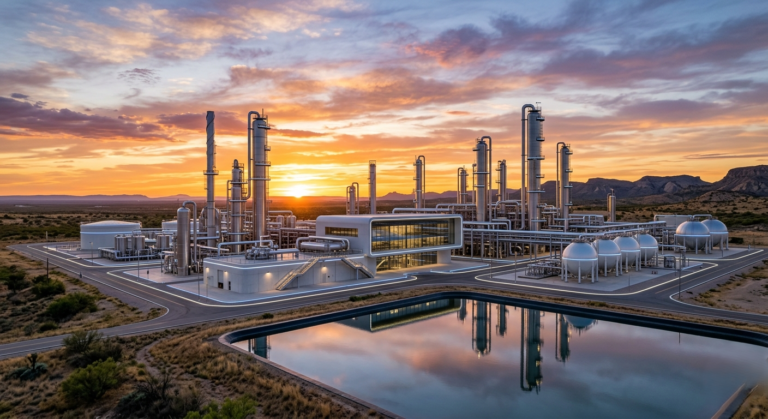
Gigafactory Texas now runs both electrodes dry at volume production. Select Austin-built Model Y vehicles already contain Gen 2 dry-electrode cells, with broader rollout to Cybertruck, Cybercab, and Semi planned across 2026 and 2027.
A critical supply chain signal: external cathode supplier L&F Co. wrote down its $2.9 billion Tesla supply agreement by over 99% in December 2025, citing a change in supply quantity. This confirms Tesla is rapidly shifting to in-house domestic cathode material production in Texas, reducing supplier dependency but also adding a new ramp timeline risk.
Strategic Implications for the EV Industry


Beyond immediate pricing, will Tesla dry cathode batteries lower car prices in 2026 has strategic consequences that extend across the entire EV industry. The breakthrough reshapes Tesla’s competitive position and forces rivals to rethink their manufacturing roadmaps for the next three to five years.
Tariff Shield: Domestic Manufacturing as Defense
In-house battery production in Texas removes Tesla’s largest supply chain vulnerability as U.S.–China trade tensions continue to intensify through 2026. Domestic manufacturing means zero exposure to import duties on battery cells or cathode materials sourced from Asia.
Full alignment with the Inflation Reduction Act domestic content requirements means Tesla buyers retain their full federal EV tax credit. This is a direct and immediate pricing advantage over competitors who still rely on imported battery components and cells.
No Competitor Has This at Scale
BYD and CATL lead global battery volume but continue to run conventional wet-process manufacturing lines. As of mid-2026, no major competitor in China, Europe, Japan, or South Korea has replicated Tesla’s full dry electrode process at comparable production scale.
If will Tesla dry cathode batteries lower car prices in 2026 is the consumer question, the industry question is whether BYD, CATL, and European rivals can close this manufacturing gap before Tesla’s cost advantage translates into a pricing floor that competitors simply cannot match through conventional wet-process approaches.
Real-World Impacts for Buyers


For anyone actively shopping for a Tesla in 2026, will Tesla dry cathode batteries lower car prices in 2026 plays out very differently depending on which model you are considering. The impact of the dry cathode breakthrough is not uniform it varies significantly by vehicle, price tier, and production timeline.
Model Y and Cybercab: Where Savings Land First


Austin-built Model Y production already uses Gen 2 dry-electrode cells as of early 2026. However, these manufacturing savings are currently being absorbed as margin recovery current Model Y buyers will not see an immediate sticker price reduction as a result.
The Cybercab is where will Tesla dry cathode batteries lower car prices in 2026 gets its clearest and most direct answer. Expected to use the NC05 variant of the 4680D dry cathode cell, the Cybercab’s retail price is fundamentally dependent on how low Tesla can push battery cost per kWh through the dry process.
For the full 2026 Tesla price spectrum, see: most expensive Tesla car in 2026 Model X Plaid and Cybertruck Cyberbeast at $99,990.
Battery Life and Cold Weather Reality
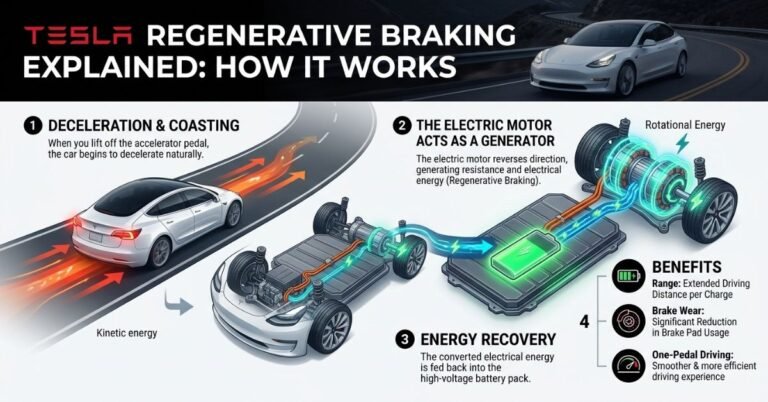
Dry electrode manufacturing produces more chemically uniform, stable cells by eliminating solvent exposure during production. Fewer micro-defects in the electrode structure means better long-term longevity and more consistent aging behavior compared to conventional wet-process cells.
Cold-weather range loss typically 20–40% in extreme temperatures is a fundamental property of lithium-ion chemistry, not a specific dry cathode issue. Tesla’s thermal management system and Battery Management Software address this through continuous over-the-air updates, independent of cell manufacturing method.
Tesla’s 2026 Impact Report confirms approximately 15% capacity loss after 200,000 miles on Model 3 and Model Y Long Range packs. Gen 2 dry-electrode cells are expected to match or outperform this benchmark, though real-world long-term data will take several more years to fully confirm.
Challenges and Future Outlook


A complete and honest answer to will Tesla dry cathode batteries lower car prices in 2026 must acknowledge what remains unresolved. Tesla’s 4680 program has a well-documented history of hitting technical milestones later than originally announced and the dry cathode breakthrough does not eliminate the remaining bottlenecks overnight.
Production Yield and Scaling Gaps
Leading battery manufacturers lose fewer than 2% of cells to defects at scale. Tesla’s internal target is 90%+ yield on 4680 dry cathode production lines a figure that is still being refined and optimized at sustained high volume as of mid-2026.
- Dry cathode yield must sustain 90%+ at high coating speed
- Domestic Texas cathode material supply still ramping
- Nevada LFP line planned 2026 still in development
- Unboxed manufacturing integration targeted late 2027
Environmental Gains
Eliminating NMP solvents removes hazardous waste streams, cuts factory energy consumption by removing massive drying ovens, and lowers the battery’s lifecycle carbon footprint. As the EU mandates battery carbon disclosure requirements, Tesla’s solvent-free process becomes a measurable regulatory and branding advantage a real dimension of will Tesla dry cathode batteries lower car prices in 2026 that goes well beyond the sticker price.
While Tesla advances battery tech, hydrogen Tesla claims remain fiction. See: is the Tesla hydrogen car real why Musk calls hydrogen ‘fool cells.’
Frequently Asked Questions
Q: will Tesla dry cathode batteries lower car prices in 2026?
A: Partially and selectively. Musk confirmed on May 26, 2026 that dry cathode significantly reduces cathode costs but will not halve them. Savings of $1,800–$5,000 per vehicle exist but Tesla absorbs part as margin. Cybercab is the first model to reflect savings in its sticker price directly.
Q: How much does the dry cathode process save per vehicle?
A: 20–35% pack cost reduction roughly $1,800–$5,000 on a 60–80 kWh pack. Tesla’s internal target is 15% cost reduction on 4680 production. As Musk noted when asked will tesla dry cathode batteries lower car prices in 2026, the saving is real but one layer of a multi-stage roadmap.
Q: What is the dry cathode and why did it take six years?
A: It replaces toxic NMP solvents and 100-meter ovens with a solvent-free PTFE-PVDF binder pressed directly onto foil. Brittle cathode powders crack without liquid support at speed Tesla’s spider web patent (US 2025/0364562) solved this. No competitor has matched it at scale.
Q: Which Tesla benefits most from the dry cathode breakthrough?
A: The Cybercab using NC05 dry cathode 4680D cells is the first vehicle where battery cost directly sets the sticker price. Model Y in Austin already uses Gen 2 cells but current savings go to margin recovery, not price cuts.
Conclusion


will Tesla dry cathode batteries lower car prices in 2026? The answer is yes but incrementally and selectively. The dry electrode milestone is a proven engineering achievement, and Musk’s May 2026 clarification confirms it represents a meaningful and real cost reduction step. It is not, however, a single leap that puts $25,000 Tesla in showrooms overnight.
The full answer to will Tesla dry cathode batteries lower car prices in 2026 will be written across 2026 and 2027 as production yield scales, domestic cathode material supply comes online in Texas, and the Cybercab launches as the first Tesla where every cost reduction variable converges into a single sticker price. The cost foundation behind will Tesla dry cathode batteries lower car prices in 2026 is actively and measurably getting stronger with each production quarter. The price cut that buyers are waiting for is genuinely coming it is one or two product cycles away, not one announcement away.