Is the Tesla Hydrogen Car Real? The Truth Behind “Model H” Rumors
| Quick Answer Tesla Hydrogen Car Is the Tesla hydrogen car real? No. There is no official Tesla hydrogen car not even close. The viral ‘Model H’ images are AI-generated renders, not real vehicles. Elon Musk has called hydrogen fuel cells ‘fool cells ‘Is and Tesla’s entire roadmap is built around batteries. We break down the full truth below. |
You almost got fooled and so did millions of others.
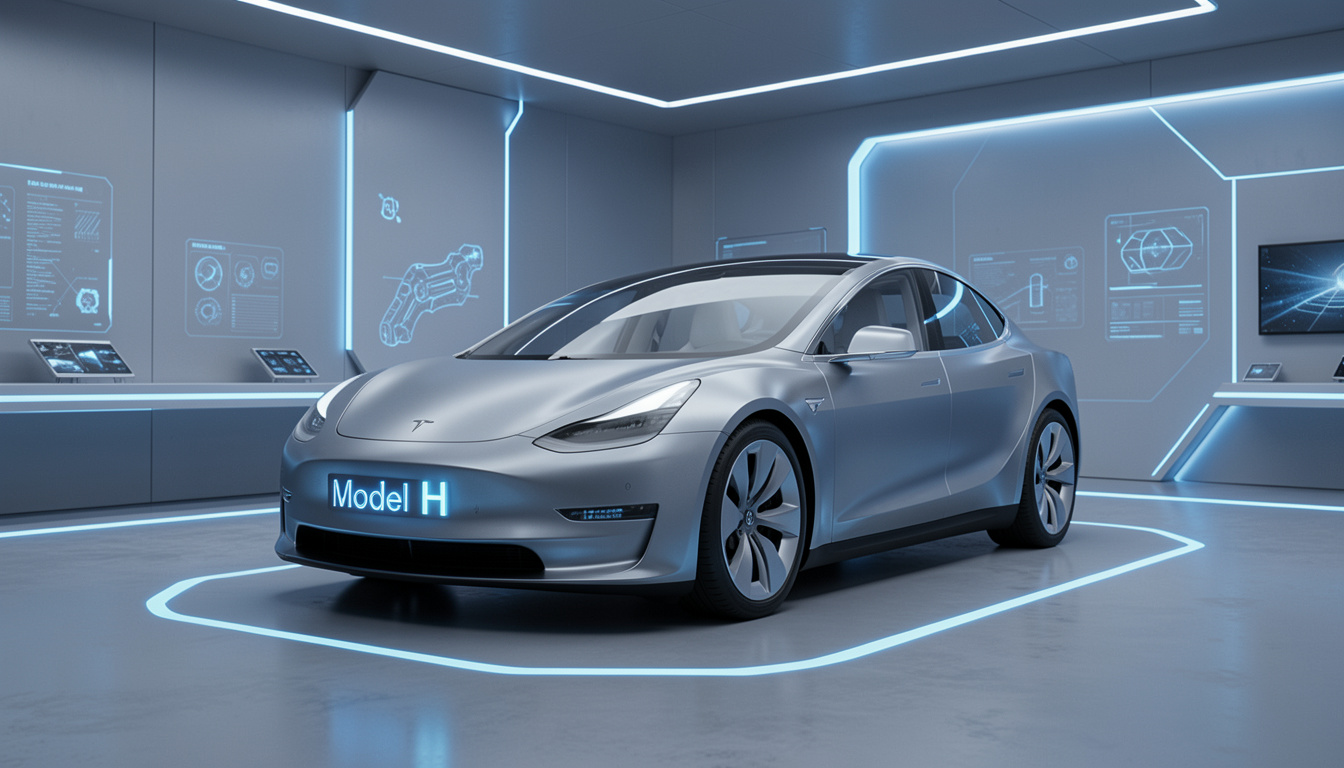
A stunning render of a sleek hydrogen Tesla goes viral. The headline screams: “Model H Unveiled.” Your finger hovers over the share button. But before you do read this. The tesla hydrogen car does not exist. Not as a prototype, not as a concept, not as an internal project. Every image circulating online is AI-generated art and the articles behind them have zero official sources. We break down exactly how this rumor started, what Elon Musk really thinks, and why the physics of hydrogen make a Tesla fuel cell car almost impossible.
The Anatomy of a Rumor: Where Did the Tesla Model H Come From?


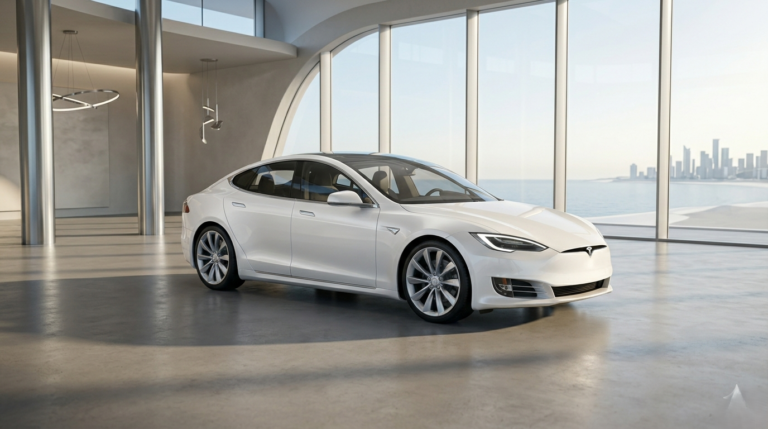
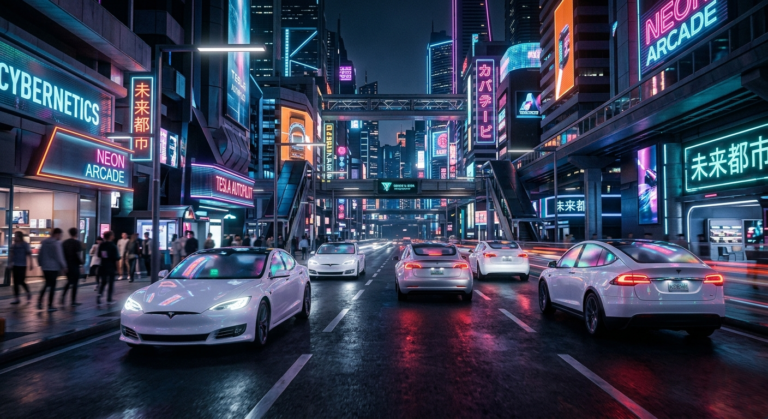
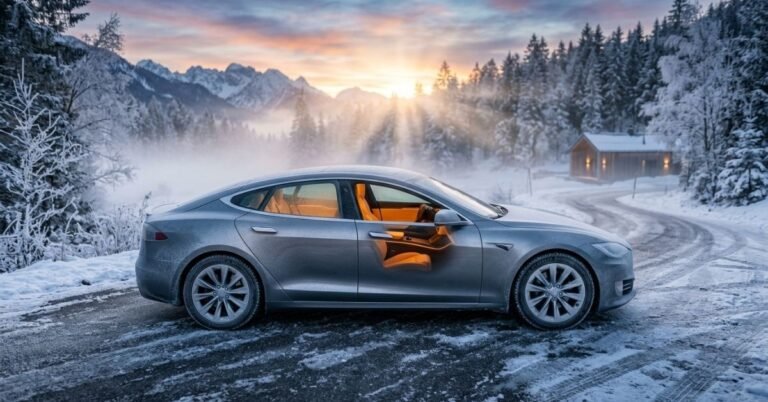
The tesla hydrogen car rumor did not come from Tesla. It came from the internet.It started with AI-generated images posted on design forums and Reddit. Tools like Midjourney and Flux can produce stunning, photorealistic vehicle concepts in minutes. Someone created a sleek hydrogen-powered Tesla render, labelled it “Model H,” and the internet did the rest.Within days, anonymous tech blogs republished the image dropping the word “concept” from the caption. YouTube channels built entire videos around it. Headlines evolved from “fan concept” to “leaked prototype” to “Tesla unveils hydrogen car.”
Not a single one of these articles links to an official Tesla source because no official source exists.
How to Spot a Fake Tesla Announcement


- Check tesla.com/news all real Tesla announcements live here
- Check SEC EDGAR major product launches require regulatory filings
- If the only “source” is another blog or a YouTube thumbnail, it is not real
- AI-generated vehicle images have telltale signs: mismatched panel gaps, floating logos, unnatural reflections
Tesla Hydrogen Car: Myths vs. Facts at a Glance


| ❌ The Myth | ✅ The Fact |
| Tesla unveiled a hydrogen prototype in 2025 | False. No prototype, no event, no Tesla press release. |
| Elon Musk changed his mind about hydrogen | False. Musk still publicly calls H₂ fuel cells ‘fool cells.’ |
| The Model H images are official Tesla renders | False. All images are AI-generated (Midjourney/Flux) or fan art. |
| Hydrogen is cheaper to run than electricity | False. H₂ costs $16–$35/kg 2-4× more per mile than charging. |
| Hydrogen cars will replace Tesla’s BEVs | False. Hydrogen has a role in heavy industry, not personal cars. |
Did Tesla Actually Unveil a Hydrogen Car? A Direct Answer


No. Tesla has not unveiled any hydrogen car. Full stop.There has been no launch event, no prototype reveal on a stage, no official press release, and no credible automotive journalist who has seen or driven a tesla hydrogen car prototype.Articles claiming otherwise are either deliberately misleading or are lazily recycling AI concept art as journalism.
| 🔍 The Logical Loophole Competitors IgnoreThink about it: if Tesla had genuinely unveiled a hydrogen car, Elon Musk who posts on X (formerly Twitter) multiple times per day would be the loudest voice in the room. Instead, he is completely silent on the topic.That silence is not suspicious. It is simply because there is nothing to announce. The ‘Elon Musk remains silent on Model H’ framing is a manufactured mystery built on a fictional product. |
Elon Musk’s Stance: From “Fool Cells” to Master Plan Part 3


Elon Musk has one of the most consistent and public positions on the tesla hydrogen car debate: he thinks hydrogen fuel cells are a poor choice for personal vehicles.He coined the term “fool cells” as a deliberate play on “fuel cells.” The joke has a serious point behind it hydrogen’s round-trip efficiency for powering a car is dramatically worse than simply charging a battery.
His view has not changed. As recently as mid-2024, Elon Musk directly dismissed the tech on X (formerly Twitter), stating that “hydrogen is silly for cars” due to its terrible energy storage efficiency compared to batteries. . This is not a secret internal position it is something he has said publicly, on stage, in interviews, and on social media, repeatedly.
What Tesla’s Master Plan Part 3 Actually Says About Hydrogen


Tesla Master Plan Part 3, published in 2023, does mention hydrogen but not for cars. The document identifies hydrogen as a potential tool for decarbonising heavy industry: sectors like steel manufacturing, cement production, and long-haul shipping, where electrification is extremely difficult or impossible with current technology.
For personal vehicles, the plan is clear: batteries. There is zero mention of a hydrogen-powered consumer car in Tesla’s official roadmap. The rumor that “Musk’s mind has changed” on the tesla hydrogen car has no basis in any document, interview, or SEC filing. It is a narrative created by people who misread or deliberately misrepresent what Master Plan Part 3 actually says.
BEVs vs. FCEVs: The Physics That Make a Tesla Hydrogen Car Unlikely


Before understanding why Tesla will not build a hydrogen car, it helps to understand the two types of hydrogen vehicles because most viral articles get this completely wrong.
Two Types of Hydrogen Cars (Most Articles Confuse These)
- HICEV Hydrogen Internal Combustion Engine Vehicle: Burns hydrogen in a modified petrol engine. Produces water vapour as the main exhaust. Toyota has experimented with this in motorsport.
- FCEV Fuel Cell Electric Vehicle: Uses a hydrogen fuel cell to generate electricity on board, which powers an electric motor. This is how the Toyota Mirai and Hyundai Nexo work.
These are entirely different technologies. Most “tesla hydrogen car” articles use them interchangeably which is the first sign you are reading something that was not written by someone who understands the subject.
The Efficiency Problem: Why Hydrogen Loses to Batteries
This is the core reason why a tesla hydrogen car makes no engineering sense for Elon Musk’s company.


- Step 1 Electrolysis: You start with electricity and use it to split water into hydrogen. This process is about 70% efficient meaning 30% of your energy is already gone.
- Step 2 Compression & Transport: Hydrogen must be compressed to 700 bar for vehicle storage. This requires more energy. Then it is trucked to stations, losing more.
- Step 3 Fuel Cell Conversion: Inside the car, the fuel cell converts hydrogen back into electricity to power a motor. This step is 50–60% efficient.
- Net Result: By the time energy reaches the wheels, you have used only about 25–35% of your original electricity. A Tesla battery EV uses 80–90% of that same starting electricity.
| Factor | Battery EV (Tesla) | Fuel Cell EV (Hydrogen) |
| Grid-to-Wheel Eff. | 80–90% | 25–35% |
| Refuel / Recharge | 15–30 min (Supercharger) | 3–5 min (station needed) |
| Infrastructure | Supercharger network ✓ | ~60 stations (CA only) |
| Cost per Mile | Lower | 2–4× higher |
| CO₂ (green energy) | Near zero | Near zero (if green H₂) |
| Real Tesla option? | Yes Model 3, Y, S, X | No does not exist |
Tesla’s Supercharger network now the largest and most reliable fast-charging network on the planet is a multi-billion dollar asset. Building a tesla hydrogen car would mean abandoning every Supercharger in existence and starting a brand-new hydrogen infrastructure from zero.There are currently fewer than 60 hydrogen refuelling stations in theAmerica’s hydrogen refueling stations are almost exclusively located in California. A national battery charging network already exists. The business case for hydrogen in a passenger car simply does not stack up.If you want to understand how a real Tesla performs in the real world, check out our detailed Tesla Model Y Premium AWD range test it shows exactly why battery range is the metric that actually matters for everyday drivers.
The Efficiency Problem: Why Hydrogen Loses to Batteries


Here is something the clickbait articles will not tell you: genuine hydrogen cars already exist. They are just not made by Tesla and their sales numbers reveal a lot about hydrogen’s real-world challenges.
Toyota Mirai
The Mirai is a production FCEV sedan now in its second generation. It has a real-world range of around 400 miles and refuels in approximately five minutes. It looks good, drives smoothly, and is genuinely hydrogen-powered.The catch: it is practically only usable in California, where a limited network of hydrogen stations exists. Toyota has struggled to sell it anywhere else because drivers cannot refuel.
Hyundai Nexo
The Nexo is a hydrogen-powered SUV with a five-star safety rating and impressive range. Hyundai is genuinely committed to hydrogen but primarily for commercial vehicles, not personal cars.Like the Mirai, Nexo sales are heavily constrained to markets where hydrogen infrastructure exists. In most of the world, it is not a practical daily driver.
Hyundai XCIENT Fuel Cell


This is where hydrogen actually makes sense. The XCIENT is a heavy-duty fuel cell truck already operating commercially in Europe and parts of the US. For long-haul freight where a diesel truck might need to refuel multiple times per day hydrogen’s fast refuelling becomes a genuine advantage over battery charging.
This is the pattern: hydrogen works in heavy transport. It does not work for personal passenger cars. A tesla hydrogen car would be solving a problem that does not exist for Tesla’s customer base.
What Tesla Is Actually Working On Instead
Instead of a tesla hydrogen car that will never exist, here is what Tesla is genuinely investing in:


- 4680 Battery Cell: Tesla’s next-generation battery cell promises lower cost per kWh, higher energy density, and faster production. This is the real future of Tesla efficiency.
- Full Self-Driving (FSD): Tesla’s autonomous driving software continues to improve. FSD capability is now available via a subscription model in multiple markets.
- Cybertruck Production Scale: After years of delays, Cybertruck is now in production. Tesla is ramping up to meet demand for its electric pickup.
- Tesla Semi: A battery-electric heavy truck that directly competes in the space where hydrogen advocates claim fuel cells are necessary.
- Supercharger Expansion: Tesla continues building its global charging network the infrastructure that makes a tesla hydrogen car not just unnecessary but strategically counterproductive.
If you are considering buying into the Tesla ecosystem and wondering whether a used model is worth it, our guide on whether a used Tesla Model Y LFP battery is worth buying covers everything you need to know about battery longevity, degradation, and real-world value.
Should You Care About Hydrogen at All? The Honest Take
The tesla hydrogen car debate is a distraction but hydrogen technology itself is not worthless.Hydrogen will almost certainly play a role in the global energy transition. But that role is in industrial decarbonisation, long-haul freight, maritime shipping, and aviation not in the car in your driveway. For personal transportation, the charging infrastructure, the efficiency advantage, and the falling cost of batteries all point in one direction: battery electric vehicles win.
That is why Toyota, despite being the world’s largest FCEV manufacturer, is now investing billions in its own battery EV programme. The question was never whether Tesla would make a hydrogen car. The question is whether hydrogen can compete with batteries in passenger vehicles. The answer, based on physics and economics, is no and Elon Musk understood that a decade before most people were paying attention.
Frequently Asked Questions: Tesla Hydrogen Car
Is Tesla making a hydrogen car?
No. Tesla has no hydrogen car in development. Elon Musk has publicly opposed hydrogen fuel cells for passenger vehicles for over a decade, and Tesla’s official roadmap contains zero mention of any hydrogen-powered consumer vehicle.
What is the Tesla Model H?
The Tesla Model H does not exist. It is a fictional concept created from AI-generated renders (Midjourney/Flux) that went viral online. Tesla has never announced, named, or filed any regulatory documents related to a “Model H.
Why does Elon Musk hate hydrogen cars?
Musk calls hydrogen fuel cells “fool cells” because of their poor efficiency. Converting electricity to hydrogen and back again wastes over 60% of the original energy compared to just 10–20% lost in a battery EV. For Musk, it is a physics problem, not a preference.
Which companies actually make hydrogen cars?
Toyota (Mirai) and Hyundai (Nexo) are the main manufacturers of hydrogen fuel cell passenger cars. Both are real, driveable vehicles but their use is almost entirely limited to California due to the lack of hydrogen refuelling infrastructure elsewhere.
Is hydrogen cheaper than electricity for cars?
No. Hydrogen costs $16–$35 per kg at US stations, making it 2–4× more expensive per mile than charging a Tesla. Even with future green hydrogen, the efficiency gap means battery EVs will remain cheaper to run.
Could Tesla ever switch to hydrogen in the future?
It is extremely unlikely. Tesla’s entire infrastructure Supercharger network, battery factories (Gigafactories), 4680 cell development is built around battery technology. Switching to tesla hydrogen car production would mean abandoning billions in existing assets. The business case simply does not exist.
The Verdict: Tesla Hydrogen Car Is Fiction Here Is the Reality


The tesla hydrogen car is a myth built on AI renders, clickbait headlines, and zero official sources. There is no Model H, no prototype, no launch event.What is real: Tesla’s 4680 battery, expanding Supercharger network, and a roadmap focused entirely on BEVs. Hydrogen has a role in heavy industry not in your driveway.The fake stories will keep coming. AI tools will make the renders look more real every year. Your best defence is knowing what Tesla’s actual documents say and they say nothing about hydrogen.