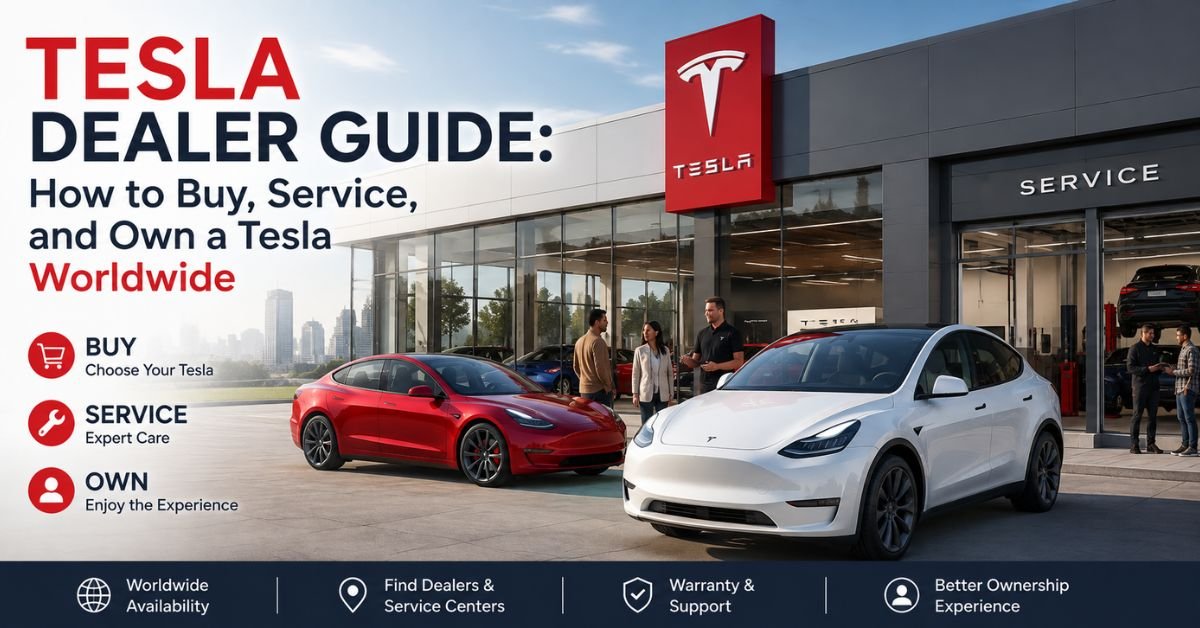
Tesla Dealer Guide: How to Buy, Service, and Own a Tesla Worldwide
Buying a Tesla is different from buying a conventional car, and the phrase “Tesla dealer” can be misleading. Tesla generally uses company-operated stores, galleries, delivery locations, and service centers rather than a traditional franchised dealership network. You can order a vehicle online or visit a Tesla store, while service is handled through Tesla service locations and the Tesla app. Tesla’s official ordering guidance confirms both online ordering and store visits are available, although the exact process depends on your market.
Quick Answer
A Tesla dealer is usually better understood as an official Tesla retail, delivery, or service location rather than a traditional independent dealership. Tesla sells new vehicles directly in many markets through its website and company-operated locations. Before visiting, check Tesla’s official location directory to confirm whether a site is a store, gallery, delivery point, service center, or collision facility. Availability, pricing, financing, taxes, and delivery procedures vary by country.
What Is a Tesla Dealer?
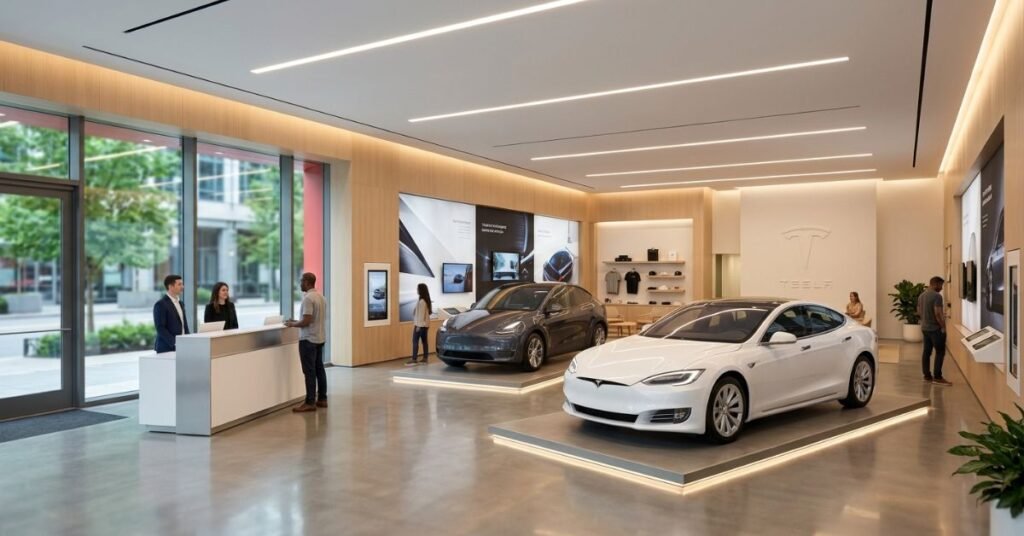
The term “dealer” is commonly used by shoppers searching for a nearby place to see, order, test, or service a Tesla. However, Tesla’s retail model differs from the franchise system used by many automakers. Instead of relying primarily on independently owned dealerships, Tesla operates its own sales and service network in markets where it has an established presence.
Tesla Stores and Galleries
A Tesla store or gallery is primarily a customer-facing retail environment. Depending on the country and location, visitors may be able to view vehicles, discuss configurations, learn about available products, or arrange a demo drive. Tesla says customers can place an order online or visit a Tesla store, and demo-drive availability can be limited, so scheduling ahead is sensible.
Do not assume every location has every model, trim, color, or configuration on display. Inventory and demonstration vehicles change, and local regulations can affect what Tesla can offer.
Tesla Delivery Locations
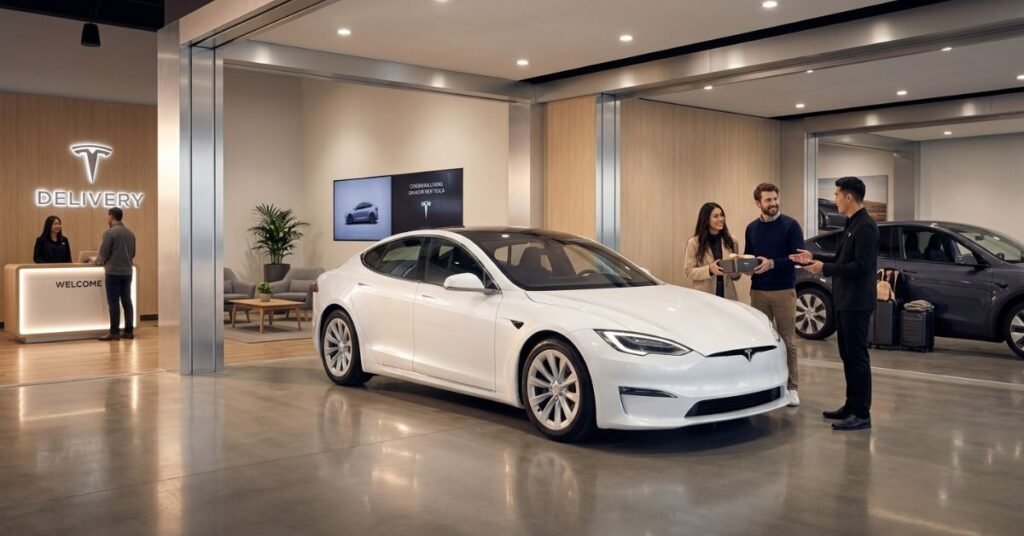
A delivery location is focused on handing over vehicles after an order is completed. Tesla says customers can use the Tesla app to confirm registration and delivery information, complete required tasks, and receive notification when the vehicle is ready. Depending on the market and order, delivery may occur at a Tesla location or through a carrier.
Tesla Service Centers
Service centers handle vehicle repairs and maintenance support. Tesla directs owners to schedule service through the Tesla app, and its support system can provide service information, estimates, and appointment details. Warranty work has specific requirements, so owners should check the warranty terms applicable to their vehicle and region before arranging repairs elsewhere.
Tesla also offers collision-repair resources and, in some markets, authorized service options. The available network differs by country.
How to Find an Official Tesla Dealer
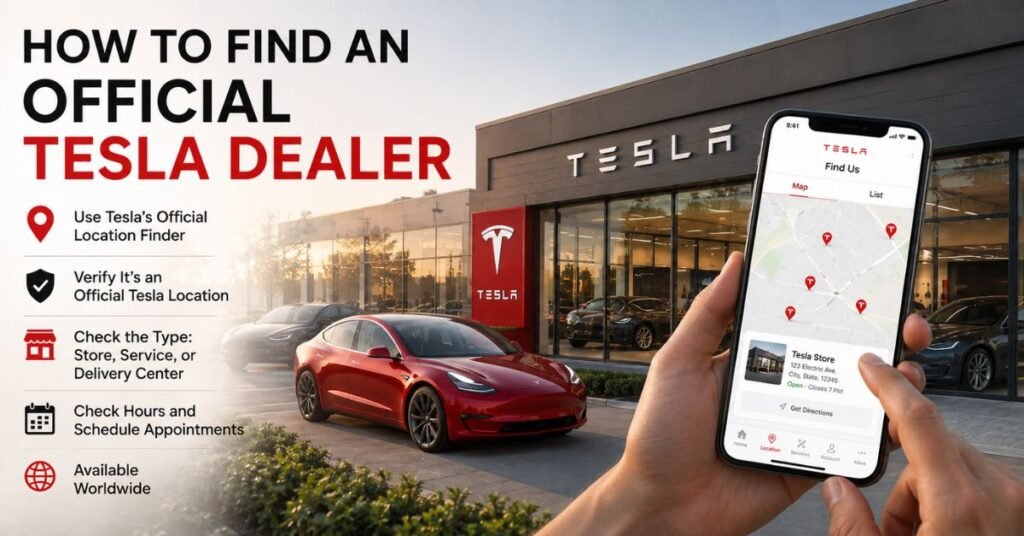
The safest starting point is Tesla’s own location directory. Search by country or region and verify the location type before traveling. Tesla’s official location directory lists different categories, including stores, galleries, service centers, Superchargers, destination charging, and collision centers.
When evaluating a location, confirm:
- Whether it sells or displays new vehicles
- Whether demo drives are available
- Whether it handles delivery
- Whether it provides service
- Whether collision repair is available
- Whether the location supports your vehicle market
- Whether an appointment is required
A genuine Tesla location should be identifiable through Tesla’s official website or Tesla app. Be cautious with websites or advertisements that use Tesla branding but are not connected to Tesla.
Buying a Tesla Through a Tesla Dealer
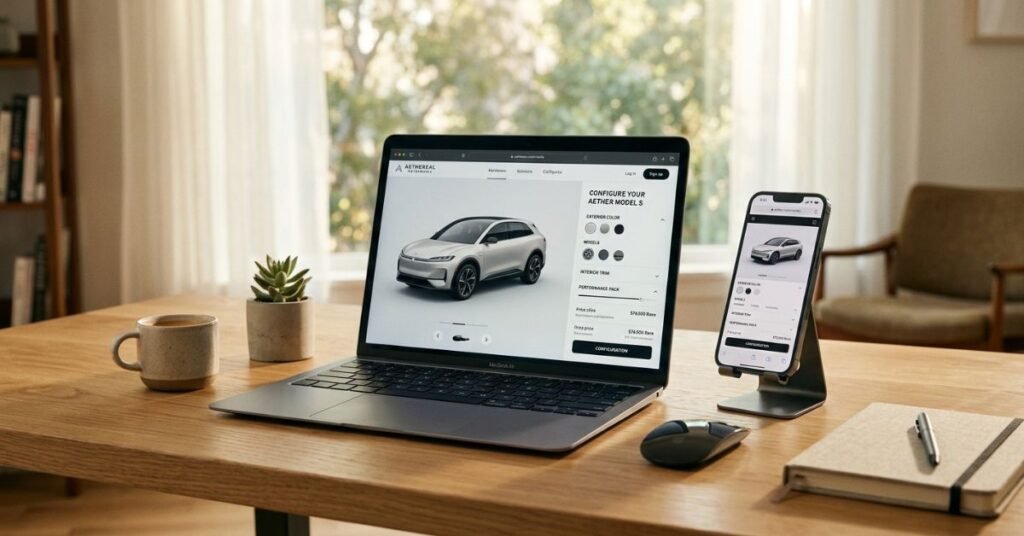
In many markets, the buying journey starts online rather than with a salesperson negotiating a traditional dealership price. Tesla’s ordering process lets customers configure eligible vehicles, review available inventory, place an order, and complete delivery tasks.
Tesla’s U.S. support documentation, for example, explains that customers can design Model 3, Model Y, or Cybertruck vehicles, explore available inventory, and complete delivery preparation in the Tesla app. The models, financing rules, taxes, and payment procedures of other markets may differ.The general process is straightforward:
- Choose a Tesla model available in your market.
- Review configuration, price, taxes, fees, and estimated delivery timing.
- Place the order through the official Tesla website or approved retail channel.
- Complete requested information in the Tesla app.
- Arrange financing, payment, trade-in, registration, and insurance as applicable.
- Confirm your delivery appointment or delivery method.
- Inspect the vehicle and complete final acceptance.
Estimated delivery dates are not guarantees. Tesla states that timing can change according to production, logistics, vehicle availability, and completion of delivery tasks.
Tesla Dealer Prices: What Should You Actually Pay?
There is no single worldwide Tesla price. The amount shown to a buyer can depend on market, configuration, taxes, import duties, registration, delivery charges, financing, and government incentives.
A quoted vehicle price should therefore be evaluated within its local context. A Model Y price in the United States cannot be compared directly with a price in the United Kingdom, Germany, Australia, China, or another market without accounting for taxes and local pricing structures.
Government incentives also vary significantly. Some countries provide purchase rebates or tax benefits for qualifying electric vehicles, while others provide little or no incentive. Eligibility can depend on vehicle price, battery characteristics, income, registration location, or other rules.
For the most accurate figure, use the Tesla website serving your market and check the final order summary before payment.
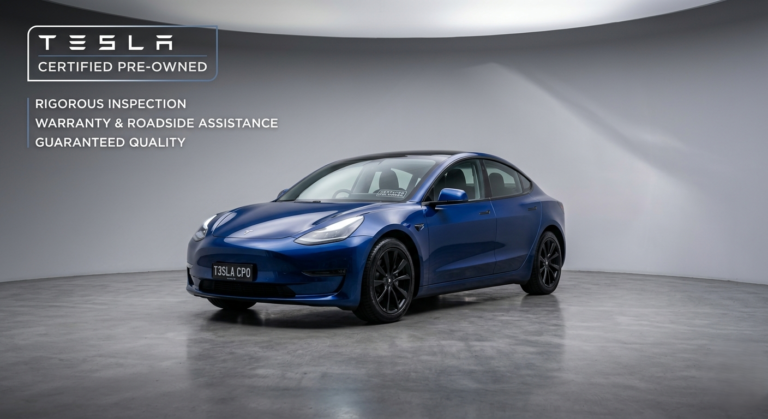
Used Tesla Dealer vs. Tesla
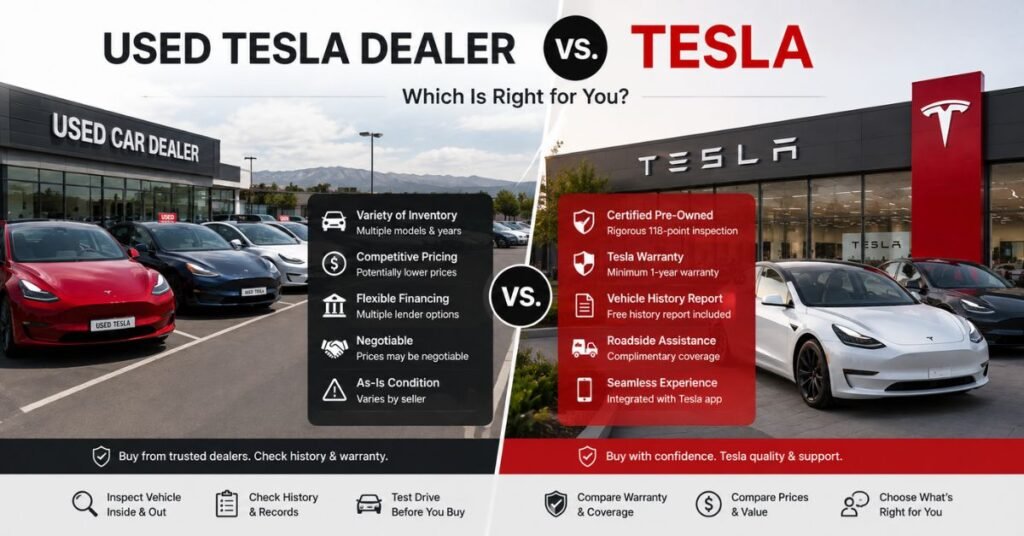
According to the market, Tesla, independent dealers, or private sellers can offer used Teslas for sale.These options are not interchangeable.
An independent dealer may offer more brands, financing choices, or locally available used inventory. However, the seller is not automatically part of Tesla’s official retail network simply because it advertises Tesla vehicles.
When buying used, verify the vehicle identification number, ownership history, accident history, mileage, registration status, warranty eligibility, charging equipment, and software configuration. Ask specifically which warranty remains and whether any coverage depends on the original purchase market.
Tesla’s warranty documentation says warranty coverage is tied to applicable regional terms, and imported vehicles can create additional complications. Tesla service documentation also explains that warranty validity can depend on the region where the vehicle was originally purchased.
Tesla Dealer and Service: What Happens After Purchase?
Ownership does not end at delivery. Before buying a Tesla, consider how easily you can access service in your country.
Tesla’s support system allows owners to schedule service through the Tesla app. Depending on the issue, Tesla may use remote diagnostics, mobile service where available, or an in-person service center. Not every repair can be handled remotely or by mobile technicians.
If you are considering a Tesla in a region with limited service coverage, investigate the nearest official service center before ordering. Distance can matter more than the nearest showroom.
Global Differences You Need to Know
Tesla operates across multiple markets, but the ownership experience is not globally identical.
In the United States and Canada, Tesla uses a large network of stores, service centers, Superchargers, and other facilities. European countries have their own Tesla retail and service networks, local regulations, and charging environment. The United Kingdom has separate regulatory and taxation rules. Australia and other Asia-Pacific markets can have different inventory, delivery, service, and charging considerations.
China is particularly distinct because Tesla has local manufacturing and a market environment with different regulations, vehicle configurations, pricing, and charging conditions.
Importing a Tesla across borders can also create problems. Tesla notes that vehicles outside their original market may have limited support or features, while warranty coverage can be region-specific. Before importing a vehicle, confirm charging compatibility, connectivity, software availability, service support, registration requirements, and warranty terms.
What to Check Before Visiting a Tesla Dealer
A little preparation can prevent a wasted trip.
First, check the official Tesla location and confirm its purpose. Second, verify whether the model you want is available to view or drive. Third, review the current online configuration and inventory because showroom information may not reflect every available vehicle.
If you are preparing for delivery, complete your required Tesla app tasks before the appointment. Tesla recommends submitting registration, payment, insurance, trade-in, and other required information in advance where applicable.
What a Good Tesla Location Should Provide
A useful Tesla location should make the process clear. Staff should explain the buying or service process, direct you to official resources, and tell you which appointment or document is required. If a location cannot be verified through Tesla’s own channels, pause before sharing payment details or information. This check is valuable when searching, where independent sellers and unofficial listings may appear alongside Tesla locations.
Pros and Cons
Pros
- Direct ordering can simplify the purchase process.
- Tesla’s website provides centralized vehicle configuration and inventory information.
- The Tesla app integrates ordering, delivery, service, and ownership tasks.
- Official service centers provide a direct route for warranty support.
- Tesla’s location directory helps separate retail, delivery, service, charging, and collision facilities.
Cons
- Tesla does not operate like a conventional franchised dealer network.
- Some regions have limited physical retail or service coverage.
- Inventory, delivery times, and available models can change.
- Imported vehicles may face regional warranty or software limitations.
- Independent used-car sellers can be mistaken for official Tesla locations.
Who Is a Tesla Dealer Best For?
An official Tesla location is useful for buyers who want to see a vehicle, arrange an eligible demo drive, discuss ordering, or obtain support through Tesla’s own network. It is especially valuable for first-time EV buyers who want to understand charging, software, delivery, and ownership before committing.
A traditional independent dealer may make more sense for shoppers comparing many brands or seeking a used vehicle from local inventory. Buyers in markets without a strong Tesla presence should prioritize service access and warranty conditions before focusing on showroom distance.
Frequently Asked Questions
Is Tesla a traditional dealership?
No. Tesla generally uses company-operated retail, delivery, and service locations rather than the conventional independent franchise dealership model.
Can I buy a Tesla without visiting a dealer?
Yes. Tesla supports online ordering in many markets. The exact ordering and payment process depends on your country.
Can I test-drive a Tesla?
Tesla offers demo drives in eligible locations and recommends scheduling in advance because walk-in availability can be limited.
Can any dealer service a Tesla?
Independent repairers may handle certain non-warranty work, but Tesla recommends its own service network for warranty-covered repairs. Always verify the applicable warranty requirements.
Are Tesla prices the same worldwide?
No. Prices, taxes, incentives, fees, financing, vehicle availability, and regulations vary by market.
Can I import a Tesla from another country?
You can sometimes import one, but warranty coverage, software, connectivity, charging compatibility, registration, and service support may differ from the original market.
Is a used Tesla from an independent dealer covered by Tesla warranty?
Potentially, depending on the vehicle and applicable warranty terms. Verify the remaining coverage directly with Tesla and review the vehicle’s original market and purchase history.
Conclusion
The best way to think about a Tesla dealer is as part of Tesla’s direct retail, delivery, and service ecosystem rather than as a conventional franchised dealership. For a new purchase, start with Tesla’s official website and location directory, then confirm the exact function of the nearest location.
The smartest comparison is not simply showroom versus showroom. Consider vehicle availability, total local price, delivery timing, charging access, service distance, warranty coverage, and regional regulations. If you are buying used or importing a Tesla, add vehicle history and original-market warranty checks to that list.
Tesla’s direct model can make ordering and digital ownership convenient, but the quality of the ownership experience still depends on local infrastructure. Check the official location, understand your market’s rules, and verify current information before paying. That approach will help you find the right Tesla buying or service channel without confusing an independent seller with Tesla itself.