Why Is My Tesla Losing Range? 10 Causes and Fixes
If your Tesla seems to lose range faster than it used to, the number on the screen is not automatically proof that the battery is failing. Tesla’s displayed range is an estimate tied to standardized efficiency data, while real-world consumption changes with speed, temperature, wind, terrain, traffic, climate control, tires, and driving habits. Battery aging can reduce the energy available from a full charge, but many apparent range problems are caused by temporary conditions or higher energy consumption. This guide explains why your Tesla may be losing range, how to separate normal variation from battery degradation, and what you can check before booking service.
Quick Answer
Why Is My Tesla Losing Range? Usually, one of three things is happening: your driving conditions have become less efficient, the battery has naturally lost some usable capacity with age, or the car is consuming energy while parked. Cold weather, high speeds, hills, heating or air conditioning, low tire pressure, heavy loads, and standby features can all reduce range. If the loss is persistent and unusually large after controlling for these factors, investigate battery health and possible vehicle issues.
Why the Tesla Range Number Can Fall
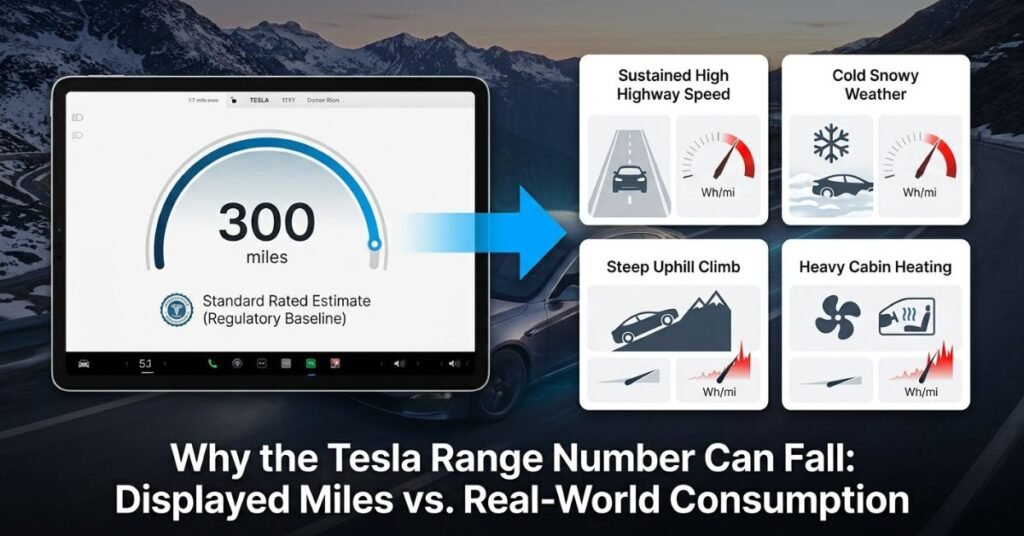
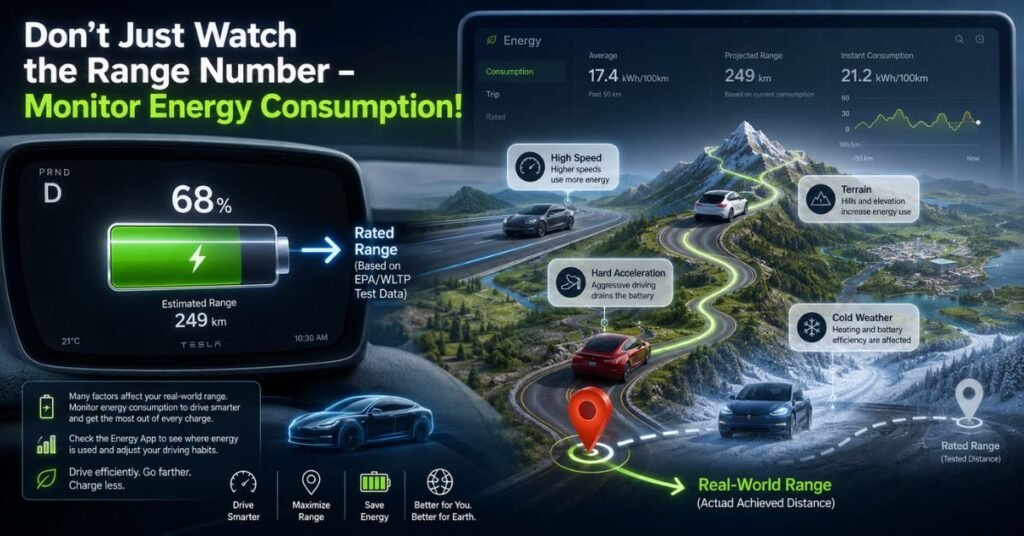
The first thing to understand is that displayed miles are not a promise of how far you will actually drive. Tesla says the distance estimate shown on the vehicle is based on regulatory test data, rather than your personal driving pattern. Your actual range depends on how much energy the car is using.
That explains a common situation: you may drive 20 miles while the displayed estimate falls by 30 miles. It does not necessarily mean the battery lost 30 miles of physical capacity. If your recent driving has been faster, colder, hillier, or more demanding than the conditions behind the rated figure, consumption rises and the estimate can appear to fall quickly.
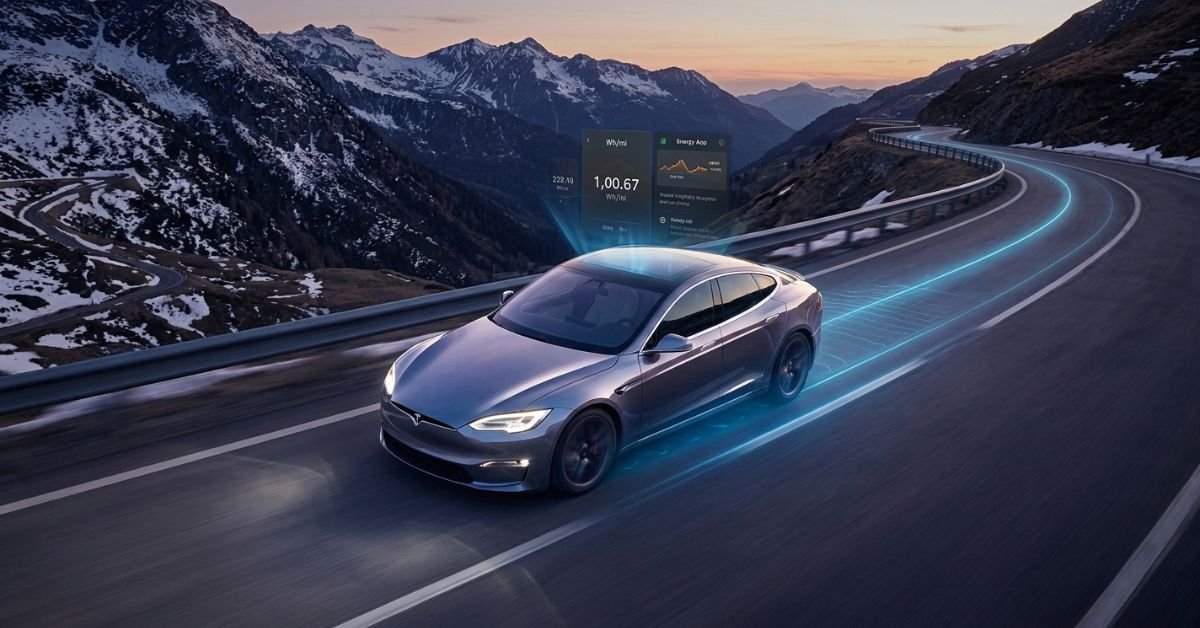
The Energy app is more useful for diagnosing this. Depending on model and software version, it can show consumption while driving and while parked, compare actual usage with projections, and provide range tips. Watch energy consumption in Wh/mi or its regional equivalent rather than judging battery condition from the range number alone.
The Most Common Reasons Your Tesla Is Losing Range
Cold or Hot Weather
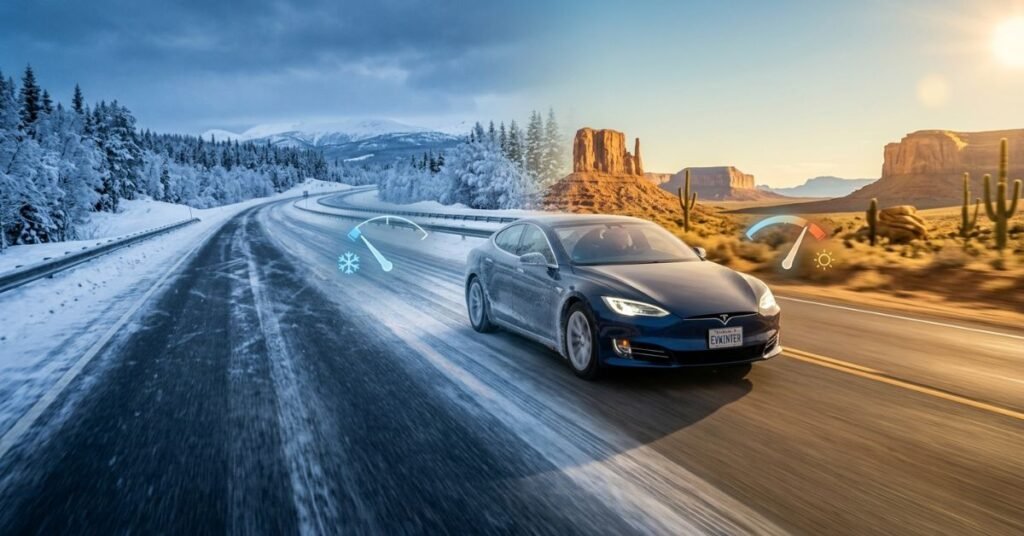
Temperature is one of the biggest variables. Cold weather increases tire rolling resistance and requires energy to heat the battery and cabin. Regenerative braking can also be limited while the battery is very cold. Hot conditions can increase energy use through cabin cooling and battery thermal management.
A short winter trip can look particularly inefficient because energy is spent warming the vehicle before much distance is covered. Preconditioning while plugged in can reduce the amount of battery energy used after departure.
High-Speed Driving
Highway speed can have a major effect because aerodynamic resistance rises rapidly as speed increases. A Tesla that delivers excellent efficiency around town may consume considerably more energy at sustained motorway speeds.
If your range suddenly looks worse after switching from urban driving to long highway trips, compare energy consumption rather than the estimated miles remaining. The change may be normal.
Heating and Air Conditioning
Cabin heating and cooling draw electricity from the battery. Heating can be especially noticeable in cold weather because an EV does not have an engine producing abundant waste heat. Tesla vehicles equipped with heat pumps can recover heat more efficiently, but climate control still consumes energy.
Frequent remote climate use while parked can also reduce the charge level. If you precondition repeatedly without being plugged in, some of that energy comes directly from the battery.
Tires, Wheels, and Alignment
Tire pressure matters. Underinflated tires increase rolling resistance and can reduce efficiency. Cold weather also lowers tire pressure, so a tire that was correctly inflated in warm conditions may need attention after temperatures fall.
Worn tires, incorrect alignment, larger or less aerodynamic wheels, and certain aftermarket wheels can also change consumption. Check pressures against the specification for your exact Tesla rather than using a generic number.
Speed, Traffic, Hills, and Driving Style
Hard acceleration, frequent braking, steep climbs, heavy traffic, and repeated short journeys can increase consumption. Regenerative braking recovers some energy during deceleration, but it cannot return all the energy used to accelerate.
Terrain can make a single trip look terrible even when the battery is healthy. A long uphill section consumes substantial energy, while a later descent can recover part of it. Compare similar routes and conditions before drawing conclusions.
Cargo and Aerodynamic Accessories
Extra weight requires more energy, while roof racks, bike carriers, trailers, and other accessories can increase aerodynamic drag. The effect becomes more noticeable at higher speeds.
If range changed after adding a roof box or carrying equipment, the accessory may be the explanation rather than the battery.
Is Your Tesla Battery Actually Degrading?
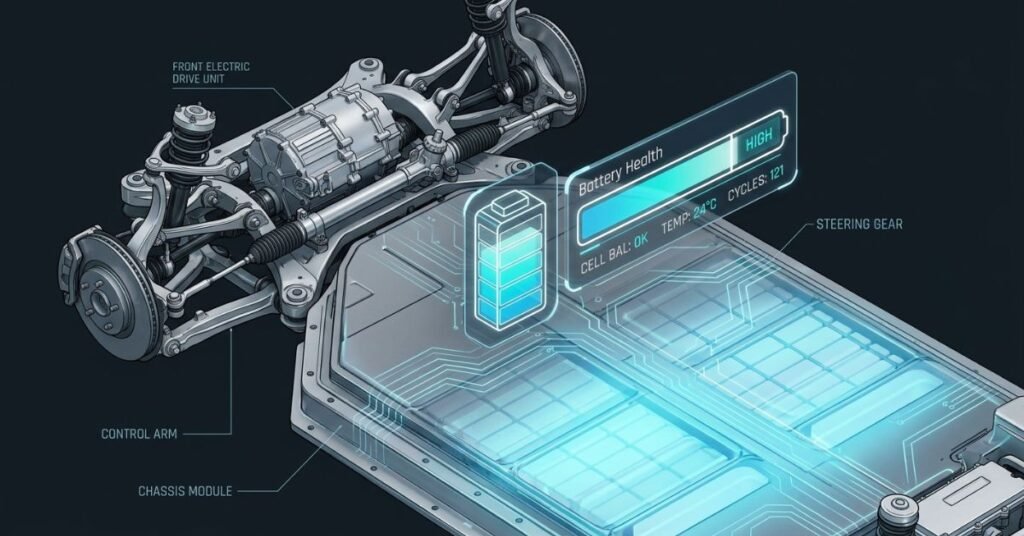
Some loss is normal. Tesla states that a high-voltage battery naturally degrades over time and with energy use, which can gradually reduce maximum available driving range.
The important question is whether the change is gradual and consistent or sudden and abnormal. Battery degradation is better assessed over time than from one charging session. A small difference between today’s displayed full-charge estimate and the number you remember from years ago does not, by itself, establish a fault.
Battery capacity can also be influenced by temperature and the vehicle’s estimation of available energy. Therefore, repeated observations under comparable conditions are more useful than a single reading.
If your vehicle supports Tesla’s Battery Health Test, Tesla says you can access it through Controls > Service > Battery Health.Models and software versions can affect menu paths and availability. The test is designed to assess battery energy retention and can provide better evidence than guessing from the range display.
Parked Range Loss: Why Does a Tesla Lose Charge Overnight?
A Tesla can use energy while parked. Tesla says around 1% of charge per day can be expected in some circumstances, although consumption can be higher depending on features and conditions.
Sentry Mode, Keep Climate On, preconditioning, Cabin Overheat Protection, mobile-app activity, and other standby functions can consume energy. Aftermarket equipment or third-party applications that interact with vehicle data can also contribute to parked consumption.
If you notice unexpected overnight loss, check the Energy app’s parked-energy information where available. Then disable features you do not need and compare several nights. If the loss remains unusually high, especially without obvious features running, contact Tesla service for diagnosis.
A Simple Way to Diagnose Range Loss
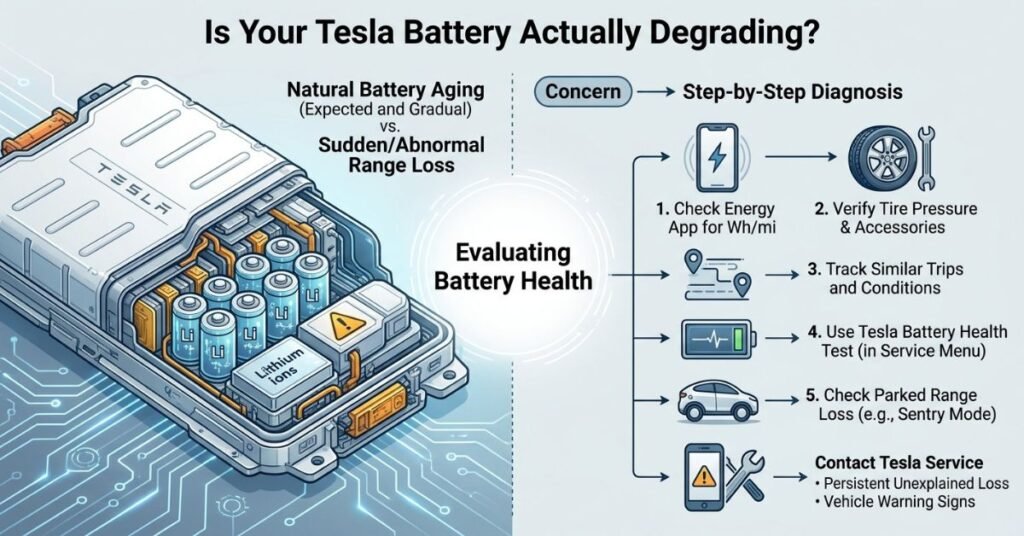
Start with the battery percentage rather than the estimated miles. Charge to a consistent level under similar conditions, then record the percentage, trip distance, average consumption, outside temperature, speed pattern, and climate use.
Next, open the Energy app and look for changes in Wh/mi. Compare similar trips instead of comparing a cold-weather highway journey with a mild-weather city journey.
Check tire pressures, wheel and tire changes, cargo, roof accessories, and alignment concerns. Also review parked-energy consumption and features that may remain active.
Finally, watch the trend over several weeks. A persistent change that cannot be explained by weather, driving, tires, accessories, or parked features deserves further investigation.
Rated Range vs Real-World Range
| Range measure | What it means | Best use |
| Rated range | Standardized test-based estimate | Comparing official figures |
| Displayed range | Vehicle estimate of remaining distance | Quick planning |
| Real-world range | Distance actually achieved | Ownership decisions |
| Energy consumption | Electricity used per distance | Diagnosing efficiency |
Testing standards differ by market. EPA figures are used in the United States, while WLTP is widely used in Europe and other markets. These figures should not be treated as directly interchangeable. A Tesla’s official rated range can therefore differ from the number achieved in everyday driving.
For global owners, local weather, road quality, charging habits, and testing standards can make range comparisons especially misleading.
When Should You Contact Tesla Service?
Consider service if range changes abruptly without an obvious environmental or driving explanation, the vehicle reports a battery or charging warning, charging behavior becomes abnormal, or the car consistently consumes much more energy than expected under comparable conditions.
Do not assume that a lower displayed range automatically means a failed battery. Tesla says the vehicle can notify you if a hardware issue is causing excessive battery or range degradation. If such a warning appears, follow the vehicle’s instructions and arrange professional diagnosis.
Avoid attempting high-voltage battery repairs yourself. The battery system contains high-energy components that require appropriate training and equipment.
Pros and Cons of Using the Range Display
Pros
- Convenient for quick trip planning.
- Useful when combined with battery percentage and navigation.
- Easy to monitor after charging.
- Can help identify broad changes in efficiency.
Cons
- Not a direct battery-capacity measurement.
- Can fall faster than miles driven.
- Sensitive to recent conditions and consumption.
- Rated figures may differ from real-world results.
Who Should Be Concerned About Range Loss?
Most owners should first investigate ordinary efficiency factors, especially after seasonal changes, tire changes, different driving routes, or increased highway use. A vehicle that consumes more energy in winter or during high-speed travel may be operating normally.
Concern is more justified when a noticeable loss persists across similar temperatures, routes, speeds, tire pressures, and driving patterns, or when the car reports a battery-related warning. In those cases, documented energy-consumption data and a Battery Health Test, if supported, can make the service conversation more useful.
Frequently Asked Questions
Does a Tesla lose range every year?
Battery capacity normally declines with age and use, but the amount varies by vehicle, battery, operating conditions, and charging history. Natural degradation is not the same as a sudden fault.
Why does my Tesla lose range when parked?
Features such as Sentry Mode, climate functions, preconditioning, and other standby activity can consume energy. Tesla also notes that parked consumption can be higher in some circumstances.
Does cold weather reduce Tesla range?
Yes. Cold temperatures increase rolling resistance and require energy for battery and cabin heating. Regenerative braking may also be limited while the battery is cold.
Does fast driving reduce Tesla range?
Yes. Higher speeds increase aerodynamic drag and energy consumption, so sustained highway speeds generally reduce real-world range.
Should I trust the miles shown on my Tesla screen?
Use the displayed range as a guide, not a precise prediction. Tesla explains that the estimate is based on standardized efficiency data, while actual range depends on current conditions and consumption.
How can I check Tesla battery health?
If your model supports the feature, Tesla provides a Battery Health Test through the vehicle’s service controls. The exact availability and menu path depend on the vehicle and software.
Can low tire pressure reduce Tesla range?
Yes. Underinflated tires increase rolling resistance and can reduce efficiency. Check and maintain the pressure specified for your vehicle.
When is range loss a serious problem?
Sudden, persistent, unexplained loss, battery warnings, abnormal charging, or unusually high consumption under comparable conditions justify professional diagnosis.
Conclusion
If your Tesla is losing range, do not start by assuming the battery is failing. First separate estimated range from actual energy consumption, then examine temperature, speed, climate use, tires, terrain, cargo, accessories, and parked features.
Some battery degradation is expected as a Tesla ages, but a steady change is very different from an abrupt unexplained loss. Use the Energy app, track comparable trips, maintain correct tire pressure, and investigate parked consumption. If the pattern remains abnormal or the vehicle reports a battery-related warning, use Tesla’s service process and, where supported, the Battery Health Test.
The most useful question is not simply how many miles disappeared from the screen. It is whether the car is using more energy than it should under the same conditions. That distinction can save you unnecessary worry and help identify genuine problems sooner.