Tesla Long-Term Storage Guide
Leaving a Tesla parked for several weeks or months is different from storing a gasoline car. The high-voltage battery, low-voltage system, connected features, tires, brakes, and climate all deserve attention. This Tesla Long-Term Storage Guide explains how to prepare your vehicle, what charge level to use, whether you should keep it plugged in, how to reduce parked energy consumption, and what to check before driving again. The goal is simple: protect the car without creating unnecessary maintenance work.
Quick Answer
For a Tesla stored longer than about two weeks, Tesla recommends leaving the vehicle around 50% charge, setting the charge limit to 50%, and keeping it plugged in if possible. Avoid leaving the battery near 0% or 100% for extended periods. Before storage, disable unnecessary energy-consuming features, secure the car in a suitable location, and plan how you will monitor it.
Why Tesla Storage Needs a Different Approach
A parked Tesla is not completely inactive. Even while stationary, the vehicle can use energy for onboard electronics and selected features. Tesla says parked energy consumption can come from Sentry Mode, climate functions, preconditioning while unplugged, Summon Standby Mode, infotainment, and other connected functions.
That means a car left for months can gradually lose charge. If the state of charge becomes critically low, the vehicle may eventually lose the ability to operate normally. Long-term storage is therefore less about turning everything off mechanically and more about giving the battery enough reserve while minimizing avoidable consumption.
The exact behavior varies by model, battery configuration, software version, temperature, and settings. Your touchscreen and Tesla app should remain the primary references for the charge limit and vehicle alerts applicable to your car.
Preparing a Tesla for long-term storage
1. Set the Battery to About 50%
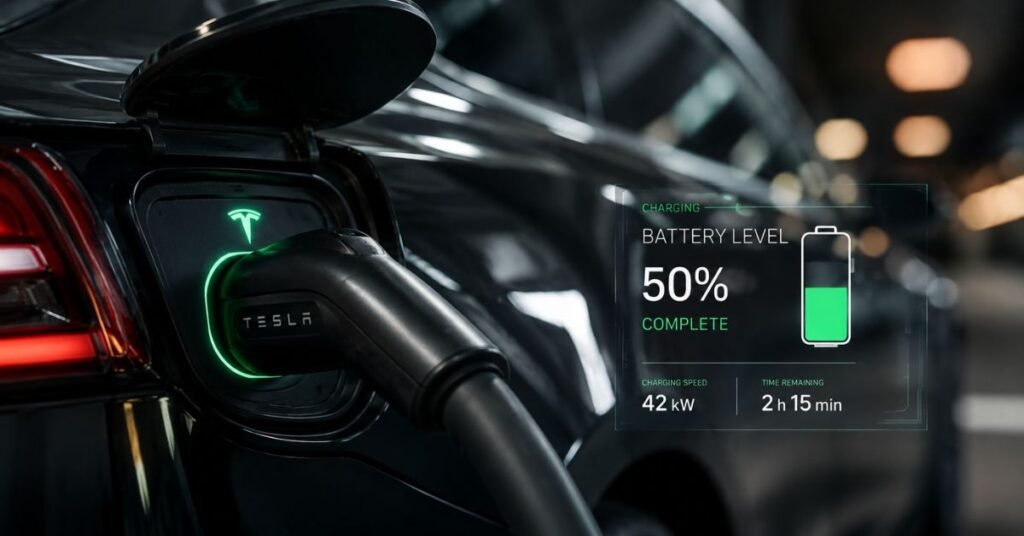
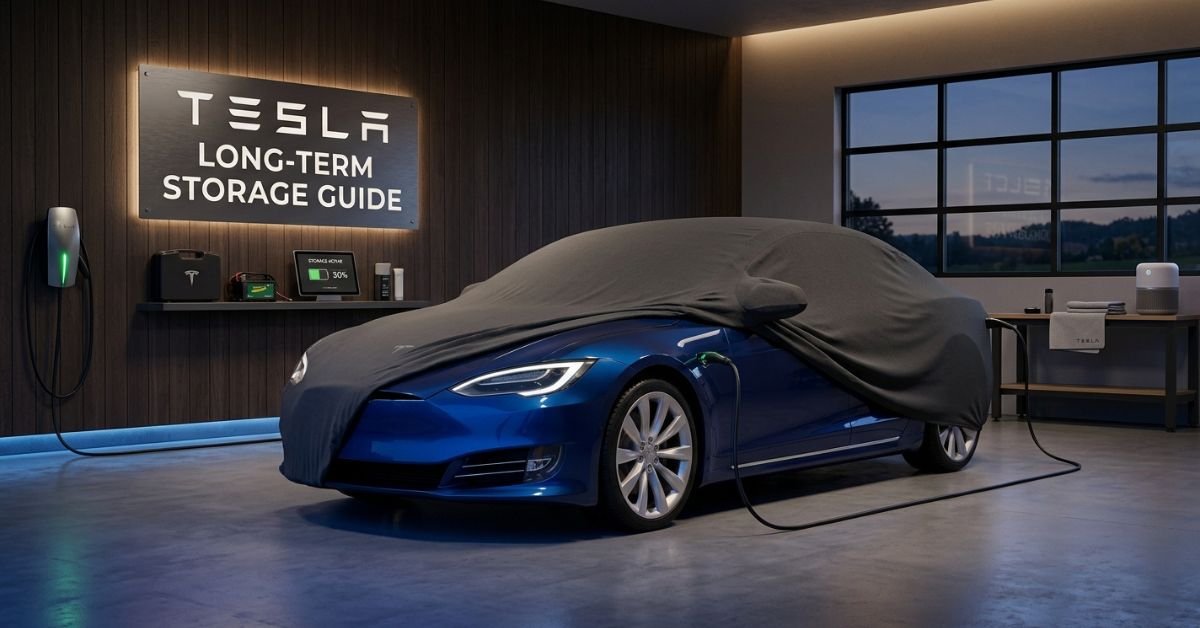
For storage longer than two weeks, Tesla’s current guidance is to leave the battery around 50%, set the charge limit to 50%, and keep the vehicle plugged in if possible. This is a practical middle ground: the battery is not sitting near full charge, yet it has enough reserve for the vehicle’s normal parked energy needs.
Do not assume that 100% is safer because it gives more range. Tesla specifically advises avoiding prolonged periods near 100%, just as it advises avoiding prolonged periods near 0%.
Battery chemistry matters too. Tesla vehicles use different battery configurations, and recommended charge limits can differ. Follow the limit displayed by your vehicle rather than applying one percentage universally to every Tesla.
2. Keep It Plugged In When Practical
A reliable power connection is generally the easiest and most convenient arrangement for extended storage. With the vehicle plugged in and the charge limit configured appropriately, the car can manage its battery level without requiring you to remember frequent charging sessions.
If your storage location has unstable electricity, consider the risk of an extended outage. A plugged-in Tesla is not protected from every possible power interruption. If reliable power is unavailable, leave the vehicle with a sensible charge reserve and arrange periodic checks rather than assuming it can sit unattended indefinitely.
The charging equipment and electrical installation should be suitable for the vehicle and local electrical requirements. Never use damaged cables, improvised wiring, or an unsuitable outlet simply to keep the car connected.
3. Reduce Unnecessary Energy Consumption
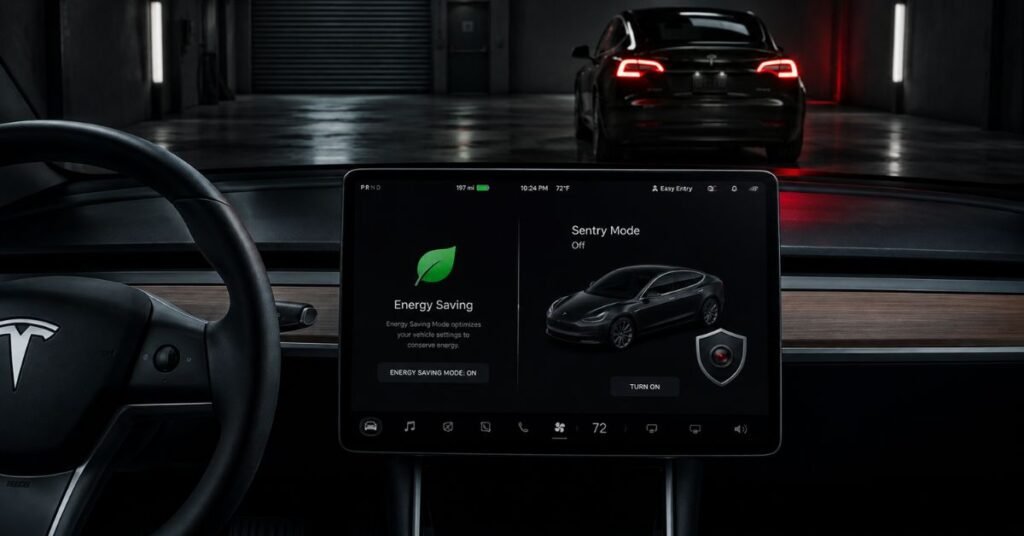
Before leaving, review features that can keep the vehicle awake or consume energy while parked. Sentry Mode is one of the most obvious examples. Climate functions, Cabin Overheat Protection, preconditioning, Summon Standby Mode, and some infotainment or accessory functions can also consume energy.
Turn off features you do not need during storage. This is especially useful if the vehicle will be unplugged.
Avoid repeatedly opening the Tesla app just to check the car. Tesla notes that checking vehicle status can wake the vehicle and increase normal energy consumption. If you have a long storage period, monitoring should be purposeful rather than constant.
4. Choose the Storage Location Carefully
A covered, secure, dry location is preferable. Extreme temperatures can affect battery behavior, charging, tire pressure, and the vehicle’s general condition. A garage is often useful because it reduces direct sun exposure and weather-related contamination.
Do not treat a garage as automatically climate-controlled or safe from extreme heat. In very hot or very cold regions, conditions inside an enclosed structure can still become severe. If the storage environment is unusually hot, cold, humid, or exposed, consult the owner’s manual for your specific model.
5. Clean and Inspect the Car
Wash and dry the exterior before storage, especially if the vehicle has road salt, mud, bird residue, or other contaminants. Leaving corrosive or acidic material on paint for months is avoidable.
Clean the interior and remove food, liquids, and anything that could attract pests. Check the windows, doors, charge port area, and seals for obvious problems.
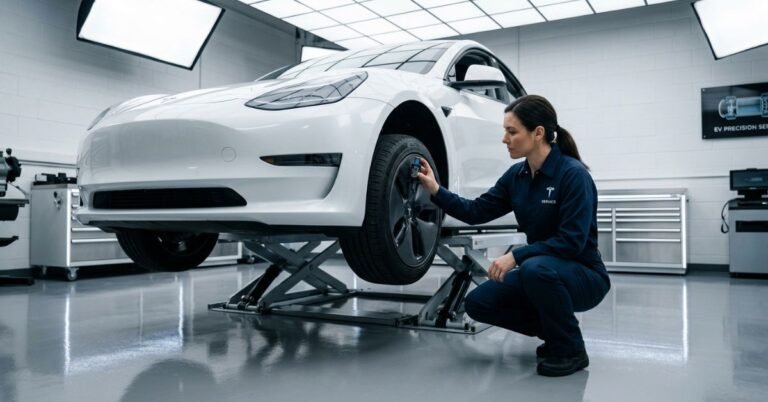
Inspect the tires and note their condition and pressure. Tesla’s recommended tire pressure is vehicle-specific, so use the label or owner’s manual for your car.
What About the Low-Voltage Battery?
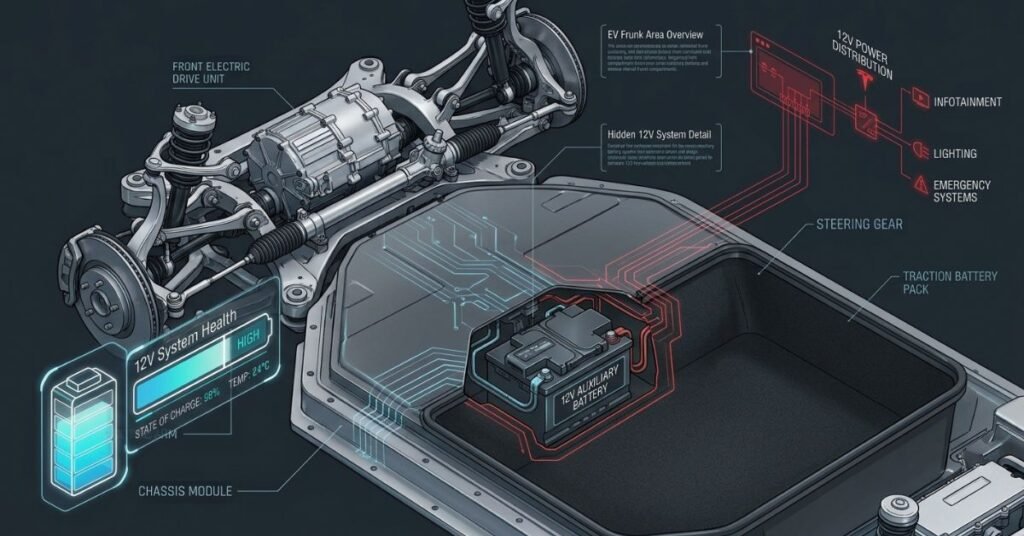
Tesla vehicles also have a low-voltage electrical system that supports essential vehicle electronics. Its battery technology and architecture have changed across model generations, so storage advice should be based on the specific vehicle.
Do not casually disconnect the low-voltage battery as a storage shortcut. Some procedures involve vehicle-specific electrical steps, and high-voltage systems require trained technicians. If the vehicle shows a low-voltage warning before storage, resolve the issue first rather than assuming the main battery will compensate indefinitely.
For long unattended periods, a service visit can be worthwhile if the car already has battery warnings, unusual energy loss, or other faults.
Should You Leave Sentry Mode On?

Usually, not if your priority is maximizing storage duration. Sentry Mode can consume meaningful energy because the vehicle must remain active enough to monitor its surroundings.
If security requirements make Sentry Mode necessary, recognize that it changes the storage plan. A plugged-in vehicle with a stable power source is much better suited to that use than an unplugged vehicle left for months.
Consider the actual security environment instead. A locked garage, secure parking facility, or monitored property may allow you to disable energy-intensive surveillance features while the car is stored.
What Happens If the Tesla Is Unplugged?
Unplugged storage can work, but it requires more planning. Tesla states that the battery slowly discharges even when the vehicle is not driven because onboard electronics continue to use energy. The discharge rate is not a fixed number; it varies with configuration, settings, environmental conditions, and vehicle behavior.
Starting storage with too little charge is risky.
If the vehicle must remain unplugged, minimize energy-consuming features, avoid unnecessary app wake-ups, and arrange a trusted person to inspect or charge the car as needed.
Long-Term Storage in Hot or Cold Weather

Temperature deserves special attention. Extreme heat can increase energy use and accelerate battery aging, while extreme cold can reduce available performance and affect charging behavior.
For hot climates, prioritize shade, a suitable covered location, and ventilation where appropriate. For cold climates, follow Tesla’s model-specific guidance and avoid attempting to charge a battery outside its permitted temperature conditions.
Do not use generic battery-storage rules for a complete Tesla vehicle without checking the relevant owner’s manual. The vehicle’s thermal-management system, battery chemistry, and software controls can differ.
What to Do Before Driving Again
When storage ends, do not immediately begin a long road trip. First inspect the vehicle.
Check the battery state of charge, tire pressures, exterior condition, windshield and wipers, and charging equipment. Look for warning messages in the touchscreen and Tesla app.
If the vehicle has been unplugged for a long time, make sure it has adequate charge before driving. If it will not wake normally, displays a persistent warning, or has a low-voltage issue, contact Tesla or a qualified service provider rather than repeatedly attempting improvised electrical fixes.
A short local drive is useful before a major journey and helps reveal problems early. It gives you an opportunity to confirm normal braking, steering, acceleration, charging, climate operation, and warning-free operation.
Common Storage Mistakes to Avoid
Several storage habits can create more risk than they prevent.
• Leaving the battery at 100% for months when that is not required.
• Letting the battery remain near 0% for an extended period.
• Leaving Sentry Mode or climate functions running without a reason.
• Repeatedly waking the car through the app.
• Storing the vehicle with very low tire pressure.
• Ignoring existing battery or service warnings.
• Using unsuitable charging equipment.
• Assuming every Tesla model has identical battery and storage requirements.
• Parking in an environment with extreme temperatures without checking model-specific guidance.
The key principle is to follow Tesla’s current instructions for your exact vehicle rather than relying on generic EV folklore.
Pros and Cons of Proper Tesla Storage
Pros
• Helps reduce unnecessary battery stress.
• Keeps the vehicle ready for future use.
• Reduces avoidable parked energy consumption.
• Makes long periods of inactivity more predictable.
• Can minimize the chance of returning to a depleted vehicle.
Cons
• Requires suitable charging access for the easiest storage setup.
• Extreme climates may require additional planning.
• Unplugged storage needs periodic monitoring.
• Older vehicles can have different low-voltage systems and procedures.
• Software updates and settings can change how a parked vehicle behaves.
Who Is This Storage Approach Best For?
This approach suits owners leaving a Tesla unused for vacations, seasonal travel, extended business trips, overseas assignments, or other periods longer than normal daily parking.
It is especially useful when a secure, stable charging connection is available for the storage period. Owners without reliable electricity can still prepare the vehicle properly, but they should plan periodic checks and maintain enough battery reserve.
If the Tesla already has unusual battery drain, low-voltage alerts, charging problems, or other faults, normal storage preparation should not replace diagnosis and service.
Frequently Asked Questions
How long can a Tesla sit unused?
There is no single universal maximum because energy consumption varies. Tesla specifically provides storage guidance for vehicles stationary for more than two weeks. Longer periods require greater attention to charge level, power availability, temperature, and vehicle condition.
What percentage should I leave my Tesla at for storage?
For storage longer than two weeks, Tesla recommends around 50%, with the charge limit set to 50%. Battery recommendations can vary by vehicle, so confirm the appropriate settings on your Tesla touchscreen.
Should a Tesla be plugged in while stored?
Yes, if practical. Tesla recommends keeping a vehicle plugged in during extended stationary periods when possible, with the battery around 50% and the charge limit set accordingly.
Should I turn off Sentry Mode during storage?
If security conditions allow, disabling Sentry Mode can reduce energy consumption. If you need continuous monitoring, keeping the Tesla plugged in becomes more important.
Can I store a Tesla outside?
It can be parked outdoors, but a secure, covered, and moderate environment is preferable. Protecting the vehicle from extreme weather and direct sun can make long-term storage easier on the vehicle.
Do I need to disconnect the Tesla battery?
Generally, do not disconnect batteries simply as a storage routine. Vehicle electrical architecture differs by model and year, and some electrical procedures require trained technicians.
Should I check my Tesla during storage?
If the vehicle is unplugged or conditions are uncertain, periodic checks are sensible. With reliable power and appropriate settings, the need for frequent intervention is reduced.
Conclusion
A good Tesla long-term storage plan is straightforward: start with an appropriate charge level, aim for about 50% for storage beyond two weeks, keep the vehicle plugged in when possible, reduce unnecessary energy use, protect it from harsh conditions, and inspect it carefully before returning to normal driving.
The most important detail is not a universal storage trick but following the instructions for your exact Tesla. Battery chemistry, low-voltage hardware, software, climate, and regional conditions can differ. Use Tesla’s current support material and owner’s manual as the final authority, especially when your vehicle displays warnings or will remain unused for an unusually long period.
{ “@context”: “https:/revtesla.com”, “@graph”: [ { “@type”: “Article”, “@id”: “https://revtesla.com/#website”, “url”: “https://revtesla.com/”, “name”: “RevTesla”, “publisher”: { “@id”: “https://revtesla.com/#organization” } }, { “@type”: “Organization”, “@id”: “https://revtesla.com/#organization”, “name”: “RevTesla”, “url”: “https://revtesla.com/”, “logo”: { “@type”: “ImageObject”, “url”: “https://lh3.googleusercontent.com/pw/AP1GczOZMYbm6vY4sp2fsW-bWnF64lVo6X0hBo4UUzzOzuI5FGoptrIKNf4wMwsOXhnJZpcbuuCpoL6cSK3ErMNVuiRtktuBp0KJGemjwCdPWRLVBVdDYZk=w1920-h1080-rw-nu-e365” } }, { “@type”: “Person”, “@id”: “https://revtesla.com/#author-tom”, “name”: “TOM”, “worksFor”: { “@id”: “https://revtesla.com/#organization” } }, { “@type”: “TechArticle”, “@id”: “https://revtesla.com/tesla-long-term-storage-guide/#article”, “isPartOf”: { “@id”: “https://revtesla.com/#website” }, “headline”: “Tesla Long-Term Storage Guide”, “description”: “Learn how to store a Tesla long-term: optimal battery charge levels, plugged vs unplugged advice, energy-saving settings, weather protection, and prep before driving.”, “mainEntityOfPage”: “https://revtesla.com/tesla-long-term-storage-guide/”, “url”: “https://revtesla.com/tesla-long-term-storage-guide/”, “author”: { “@id”: “https://revtesla.com/#author-tom” }, “publisher”: { “@id”: “https://revtesla.com/#organization” }, “image”: [ “https://lh3.googleusercontent.com/pw/AP1GczOZMYbm6vY4sp2fsW-bWnF64lVo6X0hBo4UUzzOzuI5FGoptrIKNf4wMwsOXhnJZpcbuuCpoL6cSK3ErMNVuiRtktuBp0KJGemjwCdPWRLVBVdDYZk=w1920-h1080-rw-nu-e365”, “https://lh3.googleusercontent.com/pw/AP1GczPzPdV4HBZSUZ_Zk1jiNY1lFASG7PvQX0shRK0-FMWMaKOkl4aiiKOXvgxe8k2JdJ1GcWLG9-mXDgpCNJUTw264p5Db_OtqppYRWuUoiIlaPLCAPaY=w1920-h1080-rw-nu-e365”, “https://lh3.googleusercontent.com/pw/AP1GczPwzLaLI1FWfd8_Nsna85Jp5QL1AvkZOPYweIq4JYKZZwoQqnDRx8Msedqw_xlbHrOiYjxZhRYOsK1EYx4_uxe0P2PzfMlumBJaW1JHJ6aN7YtppcY=w1920-h1080-rw-nu-e365”, “https://lh3.googleusercontent.com/pw/AP1GczN856oOGrOLMUnK7192QtXQA1CtPe8pHZO528RZlskNhi8H8Jimooqk5A9sqhemE2o2v6d9kZVzMv0QkITslFPMkx9lCce_nD-H8Ua6Yse5FMusE7M=w1920-h1080-rw-nu-e365”, “https://lh3.googleusercontent.com/pw/AP1GczOzvTnQLNpRw4THxlGeF2ZkwBokZ1TJtNnFt5tMihQqws4yDZPOpYNzD3JialXDwAEtL4Q9tcv1wC1CFA79TT4HtvZQBIjfBQPoXTTO4N-Ykv-WvpE=w1920-h1080-rw-nu-e365”, “https://lh3.googleusercontent.com/pw/AP1GczO9ptnQoCflUbvOBOllybU07PPsiGl-s_aNpKz71ZAxGLOoS2QGGlrc8VUyeQ5191v07j0B0FM2D267_FGcGV73vZIYDAqc8FVMHaUqLBdmsY92Ygw=w1920-h1080-rw-nu-e365”, “https://lh3.googleusercontent.com/pw/AP1GczOG7y_NkbXCeTW6Oe58gqsJv9jmklPbHHZx1wPb4O7Q-JWRh5rTnFzlEIfe7Z25p9lPMhgrLWA0A2JjxbZYROIF69NfB3fG3QMnRcQgLDuY-2KZDhk=w1920-h1080-rw-nu-e365”, “https://lh3.googleusercontent.com/pw/AP1GczP8g9aWw4F5glITdm1upocbfLtd5-SziqV9EZtcx8ehWz_pNOxQeCcQjYO_AFJUwhDkLub9rcA43cZs3mgdgcOpaqlPE0NqzHU9Hx935XGl0A7DYeY=w1920-h1080-rw-nu-e365”, “https://lh3.googleusercontent.com/pw/AP1GczOHyt9_UqzrE0Z96z16Kd6tHsEQ8vWh9S3HbFW0m-8yWcLjWFyo57tPHvbL88_xg7bpv29UQbvVN1pET9G1u5X-ky_w3Yvde3QUP-9jnhf_lbnkFwE=w1920-h1080-rw-nu-e365”, “https://lh3.googleusercontent.com/pw/AP1GczOTh9PTwg0k3hvtm2Ws-MNJW0wDRjuLzgYSGpV6TxrU1fQGVDHUdkf_I0-ppino6rA5BspVUu4v_bO3D19pOuELOF6szVXWaGBT99-FIPoA0fKmIhQ=w1920-h1080-rw-nu-e365”, “https://lh3.googleusercontent.com/pw/AP1GczMGntRV-PNQq6TVbVU_jH0x9I1yUPUmPWKT3z2m0Yh1b-zH30GKspv90GLeP8UKZM3Llr00RXiquPz_BAzoRRYjzLdRyT4eHVjp68OUVpKevWY50sI=w1920-h1080-rw-nu-e365”, “https://lh3.googleusercontent.com/pw/AP1GczNPjS_9FYo6dA2BXnrdNjHAsSnQHRHz1MsFDaAGqvjV_boCcrjuZ-o3a1v6rvSFYTt9_dlOFHgpYCrYTEJ9dLTHfkPacCwG6mRUW9lzSsnixNkDX88=w1920-h1080-rw-nu-e365”, “https://lh3.googleusercontent.com/pw/AP1GczMh_p884J-xwuhcrxAAdN2zYhGBiKfuG7phfHoGvqNR9PINZYXsyFhKhhFxHWrC4m4r3Ro-iw-2cDCkE2fVoP9wy-w9rFj_Nc39T2oHrH9ZukNDaGM=w1920-h1080-rw-nu-e365” ] }, { “@type”: “FAQPage”, “@id”: “https://revtesla.com/tesla-long-term-storage-guide/#faq”, “mainEntity”: [ { “@type”: “Question”, “name”: “How long can a Tesla sit unused?”, “acceptedAnswer”: { “@type”: “Answer”, “text”: “There is no single universal maximum because energy consumption varies. Tesla specifically provides storage guidance for vehicles stationary for more than two weeks. Longer periods require greater attention to charge level, power availability, temperature, and vehicle condition.” } }, { “@type”: “Question”, “name”: “What percentage should I leave my Tesla at for storage?”, “acceptedAnswer”: { “@type”: “Answer”, “text”: “For storage longer than two weeks, Tesla recommends around 50%, with the charge limit set to 50%. Battery recommendations can vary by vehicle, so confirm the appropriate settings on your Tesla touchscreen.” } }, { “@type”: “Question”, “name”: “Should a Tesla be plugged in while stored?”, “acceptedAnswer”: { “@type”: “Answer”, “text”: “Yes, if practical. Tesla recommends keeping a vehicle plugged in during extended stationary periods when possible, with the battery around 50% and the charge limit set accordingly.” } }, { “@type”: “Question”, “name”: “Should I turn off Sentry Mode during storage?”, “acceptedAnswer”: { “@type”: “Answer”, “text”: “If security conditions allow, disabling Sentry Mode can reduce energy consumption. If you need continuous monitoring, keeping the Tesla plugged in becomes more important.” } }, { “@type”: “Question”, “name”: “Can I store a Tesla outside?”, “acceptedAnswer”: { “@type”: “Answer”, “text”: “It can be parked outdoors, but a secure, covered, and moderate environment is preferable. Protecting the vehicle from extreme weather and direct sun can make long-term storage easier on the vehicle.” } }, { “@type”: “Question”, “name”: “Do I need to disconnect the Tesla battery?”, “acceptedAnswer”: { “@type”: “Answer”, “text”: “Generally, do not disconnect batteries simply as a storage routine. Vehicle electrical architecture differs by model and year, and some electrical procedures require trained technicians.” } }, { “@type”: “Question”, “name”: “Should I check my Tesla during storage?”, “acceptedAnswer”: { “@type”: “Answer”, “text”: “If the vehicle is unplugged or conditions are uncertain, periodic checks are sensible. With reliable power and appropriate settings, the need for frequent intervention is reduced.” } } ] } ] }