Does Tesla Need Oil Changes? Complete Maintenance Guide
Tesla owners often ask, does Tesla need oil changes? The short answer is no. Tesla vehicles use electric motors rather than gasoline engines, so they do not need the conventional engine oil and filter service required by internal-combustion cars.Teslas aren’t maintenance-free, however.. Tires, cabin filters, wiper blades, brake systems, fluids, suspension components, and other parts still need attention. The exact schedule varies by model, year, market, driving conditions, and Tesla’s latest recommendations. This guide explains what replaces an oil-change routine, which fluids matter, when drive-unit fluid may be serviced, and how to keep a Tesla healthy for the long term.
Quick Answer
No, Tesla vehicles do not need traditional engine oil changes because they have no gasoline engine. Tesla’s official maintenance guidance says its vehicles require no traditional oil changes, fuel-system maintenance, spark-plug replacement, or emission checks. However, Teslas still require scheduled maintenance and inspections, including tire care, cabin-air-filter replacement, wiper replacement, and brake-related service where applicable. Some older or specific drive units also contain gearbox fluid that can be serviced when required; this is not the same thing as an engine oil change.
Why Teslas Do Not Need Engine Oil Changes
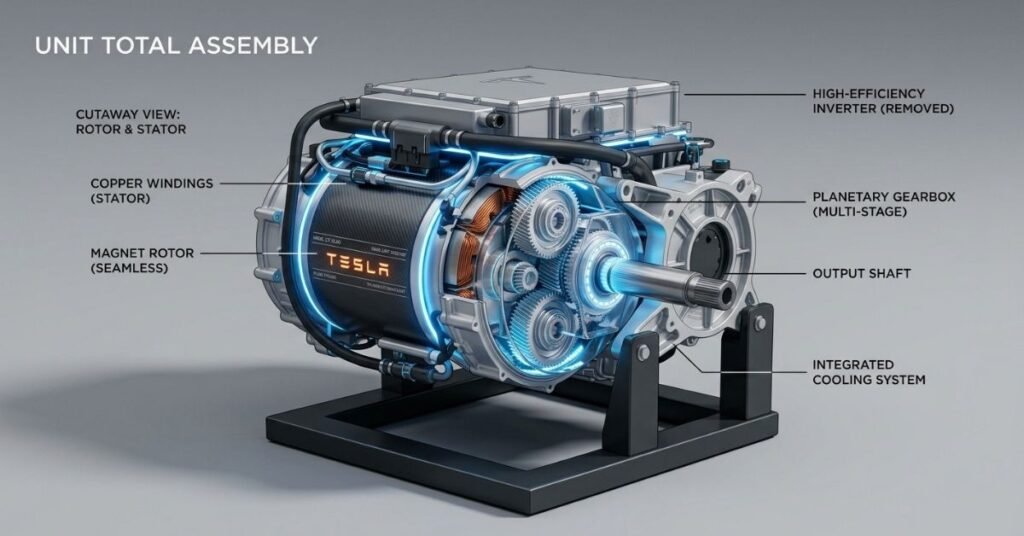
A gasoline engine contains many moving components that rely on engine oil for lubrication, cooling, cleaning, and protection. That oil gradually becomes contaminated and loses useful properties, so conventional cars require periodic oil and filter replacement.
A Tesla’s propulsion system works differently. Its electric motor converts electrical energy into mechanical motion without combustion, pistons, spark plugs, or an engine crankcase filled with motor oil. Because there is no internal-combustion engine, there is no engine oil reservoir that needs routine draining and refilling.
That distinction matters. Saying a Tesla does not need oil changes is correct; saying a Tesla never needs maintenance is not.
Does a Tesla Have Any Oil or Fluid?
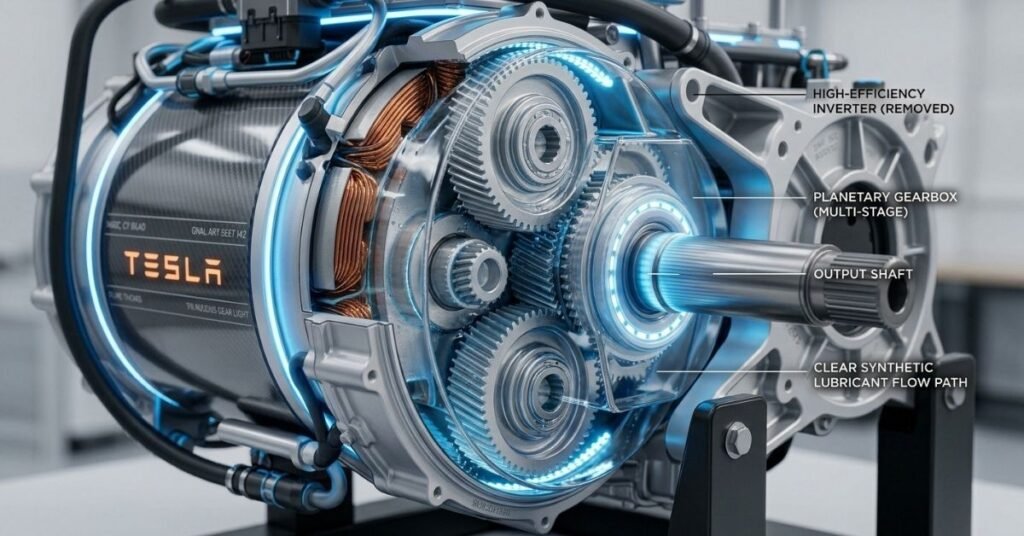
Yes. The word oil can cause confusion because electric vehicles can contain lubricating fluid even though they do not use engine oil.
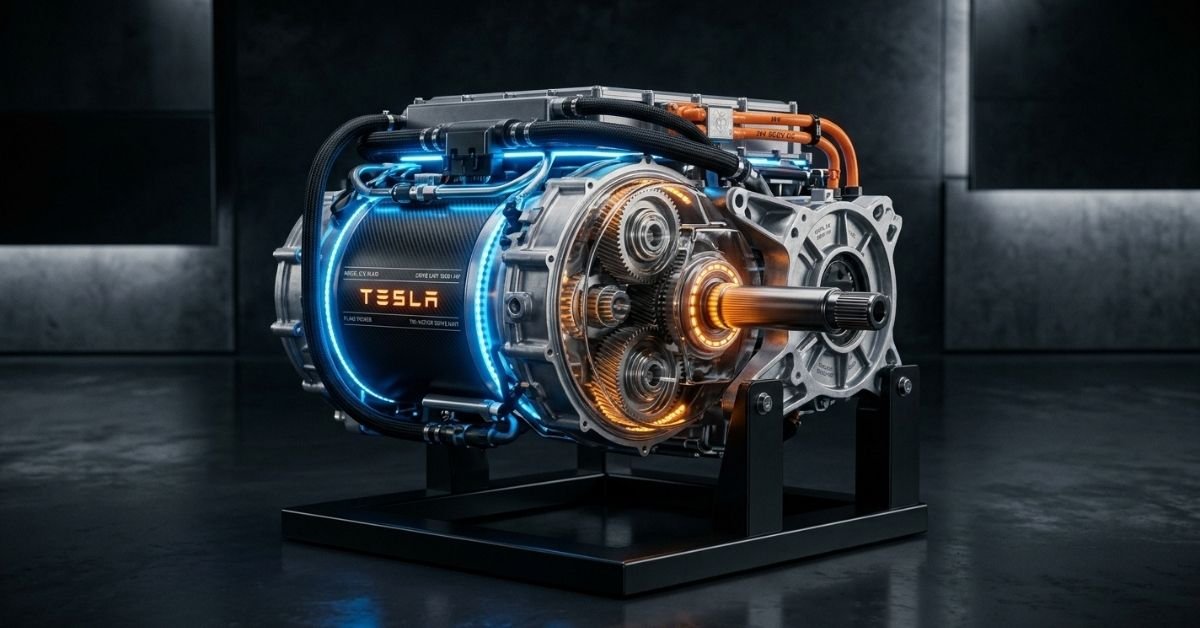
Tesla drive units contain specialized gearbox fluid. Depending on the vehicle and drive-unit design, service procedures can involve draining and refilling this fluid and, on some units, replacing a fluid filter. Tesla’s service documentation contains specific procedures for different Model 3, Model Y, Model S, Model X, and Cybertruck drive units.
This fluid lubricates and protects gears, bearings, and related components inside the drive unit. It is not equivalent to the engine oil found in a gasoline car, and owners should not assume it needs the same fixed interval as an engine oil change.
The practical rule is simple: do not pour conventional motor oil into a Tesla drive unit, and do not schedule a routine engine oil change for a Tesla that has no engine.
What Maintenance Does a Tesla Need?
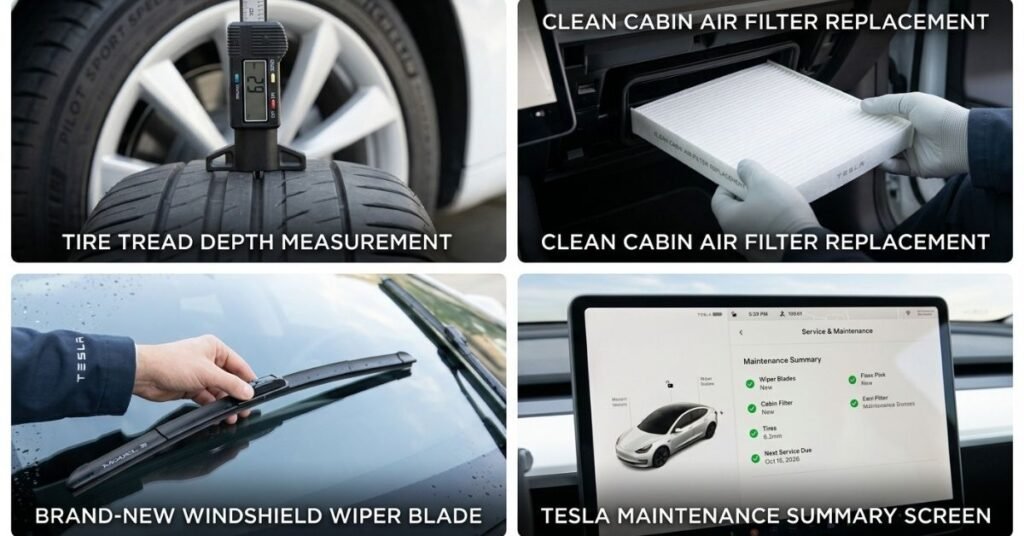
Tesla maintenance is generally less frequent than traditional gasoline-car maintenance, but it is not zero-maintenance. Items include tires, cabin air filters, wiper blades, brake components, brake-fluid checks, and cleaning or inspection tasks.
The exact recommendations vary. For example, Tesla’s Model 3 owner’s manual lists brake-fluid health checks every four years, cabin air-filter replacement every two years, annual wiper-blade replacement, brake-caliper cleaning and lubrication annually or every 20,000 km in areas where roads are salted during winter, and tire rotation every 10,000 km or when tread-depth difference reaches 1.5 mm or more, whichever comes first.
Those intervals are examples for applicable Model 3 vehicles, not a universal schedule for every Tesla sold worldwide. Your owner’s manual and in-car Maintenance Summary should take priority.
Tesla’s touchscreen Maintenance Summary records common maintenance actions and can show when an item is overdue. Owners can access it through Controls, Service, and Maintenance. Tesla also directs owners to schedule service through the Tesla app.
Tesla Maintenance vs. Gasoline Car Maintenance
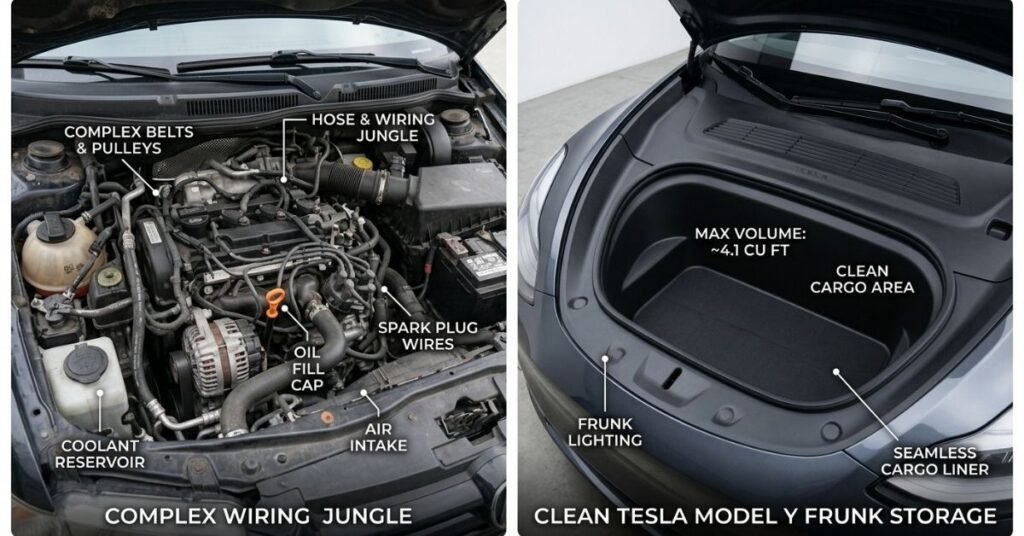
The biggest difference is what you do not have to maintain. A gasoline car typically needs engine oil and filter changes, spark plugs, engine air-filter service, fuel-system maintenance, exhaust-system attention, and emissions-related checks. A Tesla eliminates many of those engine-related tasks.
| Maintenance item | Tesla EV | Typical gasoline car |
| Engine oil change | No | Yes |
| Oil filter change | No engine-oil filter | Usually yes |
| Spark plugs | No | Usually yes |
| Fuel filter/system service | No gasoline fuel system | Applicable |
| Exhaust maintenance | No | Applicable |
| Tire service | Yes | Yes |
| Wiper blades | Yes | Yes |
| Cabin filter | Yes, where equipped | Yes, where equipped |
| Brake inspection | Yes | Yes |
| Drive-unit/gearbox fluid | Model-specific | Transmission-specific |
What Fluids Does a Tesla Use?
Teslas can use several fluids, but they serve different purposes.
Drive-unit or gearbox fluid is used inside the propulsion unit. Tesla’s service manuals specify different fluid requirements for different drive-unit generations. Some service procedures also involve an oil filter inside a drive unit. This does not turn the procedure into a conventional engine oil change.
Battery coolant is another important fluid on applicable Tesla models. Tesla’s Model 3 owner’s manual says battery coolant generally does not need replacement for the life of the vehicle under most circumstances. It also warns that the coolant system should not be opened casually because damage caused by opening the reservoir can be excluded from warranty coverage.
Brake fluid is separate again. Tesla’s Model 3 guidance says owners should not top up brake fluid themselves and recommends a brake-fluid health check at the specified interval. Heavy brake use, towing, mountain driving, performance driving, and hot or humid conditions can affect service needs.
Windshield washer fluid is the simplest owner-level fluid. It can be replenished when needed using an appropriate product for the vehicle and local conditions.
Because fluid requirements differ by model and year, the owner’s manual is the best source for your Tesla.
Do Tesla Batteries Need Oil?
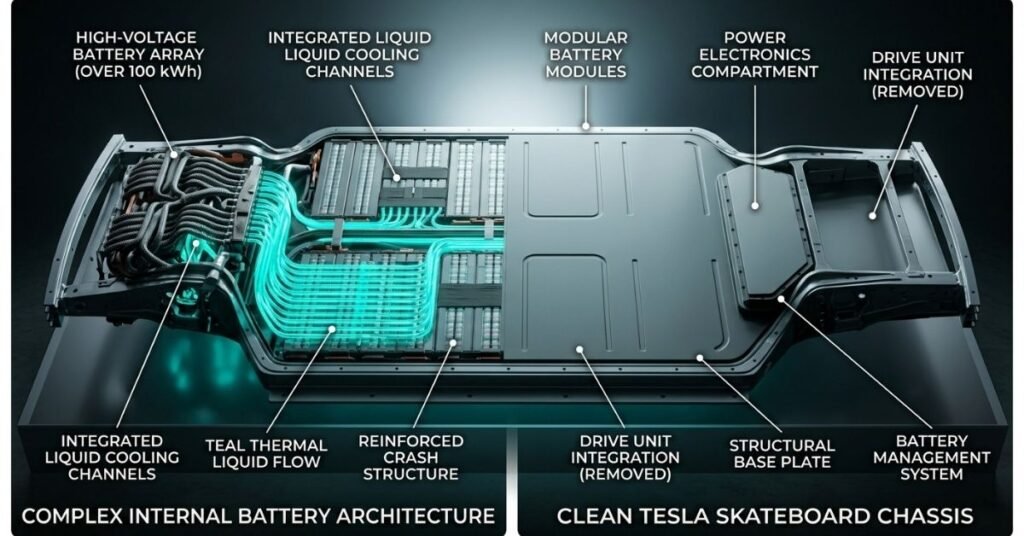
No. Tesla’s high-voltage battery pack does not use engine oil. The battery system is managed through electrical controls and thermal-management hardware rather than a conventional engine lubrication system.
The battery may use coolant as part of thermal management, depending on the vehicle’s design. Cooling helps control temperature during driving and charging. That coolant is not engine oil and should not be treated as a routine owner-replaceable fluid.
Battery health depends on many factors, including usage, temperature, charging behavior, vehicle design, and age. None of those factors creates a need for an engine-style oil change.
Do Tesla Motors Need Oil Changes?
Not in the conventional sense. Electric motors have far fewer moving parts than internal-combustion engines and do not need engine oil to lubricate pistons, crankshaft bearings, valve trains, or combustion components.
However, the complete drive unit is not simply a motor. It can include gears, bearings, seals, pumps, and specialized lubricating fluid. Tesla service documentation demonstrates that certain drive units have procedures for draining and refilling gearbox fluid.
That means the accurate answer is not “Teslas have no oil anywhere.” The accurate answer is “Teslas do not need conventional engine oil changes.” If a drive-unit service is required, it should be performed according to the vehicle-specific procedure and fluid specification.
How Often Should a Tesla Be Serviced?

There is no single worldwide Tesla service interval that applies to every model. Tesla says its vehicles do not require annual maintenance as a blanket requirement, and it directs owners to check the owner’s manual for the latest recommendations.
Intervals can differ by model year, market, climate, road conditions, and driving pattern. A Tesla driven frequently on salted winter roads may need brake-caliper cleaning more often than one operated in a dry climate. Heavy towing or demanding driving can also change some service needs.
If the car displays a warning, fluid-level issue, unusual noise, vibration, braking concern, tire problem, or other symptom, do not wait for a calendar interval. Arrange an inspection.
Does Skipping Oil Changes Save Money?
For Tesla owners, the benefit is real because there is no recurring engine-oil service to purchase. The savings come from eliminating a maintenance category rather than from using a special oil.
However, the total cost of Tesla ownership still includes tires, electricity, insurance, repairs, inspections where required, cleaning, filters, wipers, and other maintenance. Tire wear can also be significant because EVs can deliver strong instant torque and have substantial vehicle weight.
The right comparison is total scheduled and unscheduled maintenance over several years, not simply the price of an oil change.
Pros and Cons of Tesla’s No-Oil-Change Design
Pros
- No routine engine-oil purchases or oil-filter changes.
- No spark-plug replacement.
- No gasoline engine or exhaust-system maintenance.
- Fewer combustion-related components to service.
- Maintenance can be more straightforward for many owners.
Cons
- It still needs tire, brake, filter, wiper, and inspection work.
- Specialized drive-unit service may require trained technicians.
- Service availability varies by market.
- Some repairs can be expensive when specialized components are involved.
- Owners can mistakenly assume “no oil changes” means “no maintenance.”
Who Benefits Most From Lower EV Maintenance?
Drivers who value fewer routine workshop visits may appreciate Tesla’s electric powertrain. Daily commuters, high-mileage drivers, and owners who prefer predictable routine tasks can benefit from eliminating engine-oil service.
That does not automatically make every Tesla cheaper to own. Local electricity prices, insurance, tire costs, purchase price, repair access, climate, and annual mileage all matter.
What Should You Check Instead of Engine Oil?
Instead of opening the hood to check an oil dipstick, Tesla owners should pay attention to the maintenance items the vehicle actually uses. Check tire pressures and tread condition regularly, watch for uneven wear, replace worn wiper blades, and keep the cabin filter on schedule. Pay attention to braking feel, unusual sounds, vibrations, warning messages, and visible leaks.
The vehicle’s touchscreen can help organize maintenance information, while the owner’s manual provides model-specific instructions. If a fluid warning appears, do not assume it is harmless because the car is electric. Fluids can still leak, seals can fail, and mechanical components can wear.
For older vehicles, unusual drive-unit noises or signs of fluid leakage deserve an inspection rather than an improvised change.
Frequently Asked Questions
Does a Tesla need an oil change every year?
No. Tesla does not require conventional annual engine-oil changes because its vehicles do not use gasoline engines. Follow the maintenance recommendations for your specific model.
Does Tesla use oil?
Tesla drive units can contain specialized gearbox fluid, and some service procedures involve fluid replacement. This is different from engine oil.
Does Tesla need a transmission fluid change?
There is no universal interval for every Tesla. Some drive units have service procedures for gearbox fluid. Check the exact model, year, drive unit, and owner’s manual.
Does a Tesla need coolant?
Applicable Tesla vehicles use thermal-management coolant, but the required service differs by model. Current Model 3 guidance says battery coolant generally does not need replacement during the vehicle’s life under most circumstances.
Do Tesla brakes need maintenance?
Yes. Regenerative braking can reduce friction-brake wear, but brakes still need inspection and appropriate service. In some conditions Tesla recommends cleaning and lubricating brake calipers.
How often should Tesla tires be rotated?
The interval depends on the vehicle. A current Model 3 manual recommends rotation every 10,000 km or when tread-depth difference reaches 1.5 mm or more, whichever comes first.
Is Tesla maintenance completely free?
No. Tesla avoids many traditional engine services, but owners still pay for applicable maintenance, repairs, tires, filters, wipers, and other ownership costs.
Conclusion
So, does Tesla need oil changes? No, not the traditional engine-oil service required by gasoline vehicles. Tesla’s electric powertrains eliminate the combustion engine, spark plugs, fuel-system maintenance, and routine engine-oil changes.
The important qualification is that Teslas still contain mechanical systems and fluids. Drive-unit gearbox fluid, battery coolant, brake fluid, washer fluid, tires, filters, wipers, brakes, and other components have their own requirements. Those requirements vary by model, year, drive-unit design, market, and operating conditions.
The smartest maintenance strategy is simple: skip the engine-oil schedule because there is no engine, but do not skip the manufacturer’s actual maintenance guidance. Check the in-car Maintenance Summary, read the owner’s manual for your vehicle, and use Tesla or a qualified repair professional when specialized service is required.
That approach gives Tesla owners the real benefit of EV ownership: fewer routine maintenance tasks without the dangerous assumption that an electric car needs no care.