Who Owns Tesla Car Company? Founders, Shareholders & the Real Power Behind Tesla
Editor’s Note: Tesla’s ownership, financial landscape, and product roadmap evolve rapidly. This guide has been comprehensively revised to reflect Tesla’s official Q1 2026 financial earnings, current shareholder percentages, and the real-world commercial expansion of its autonomous Robotaxi fleet in Texas.
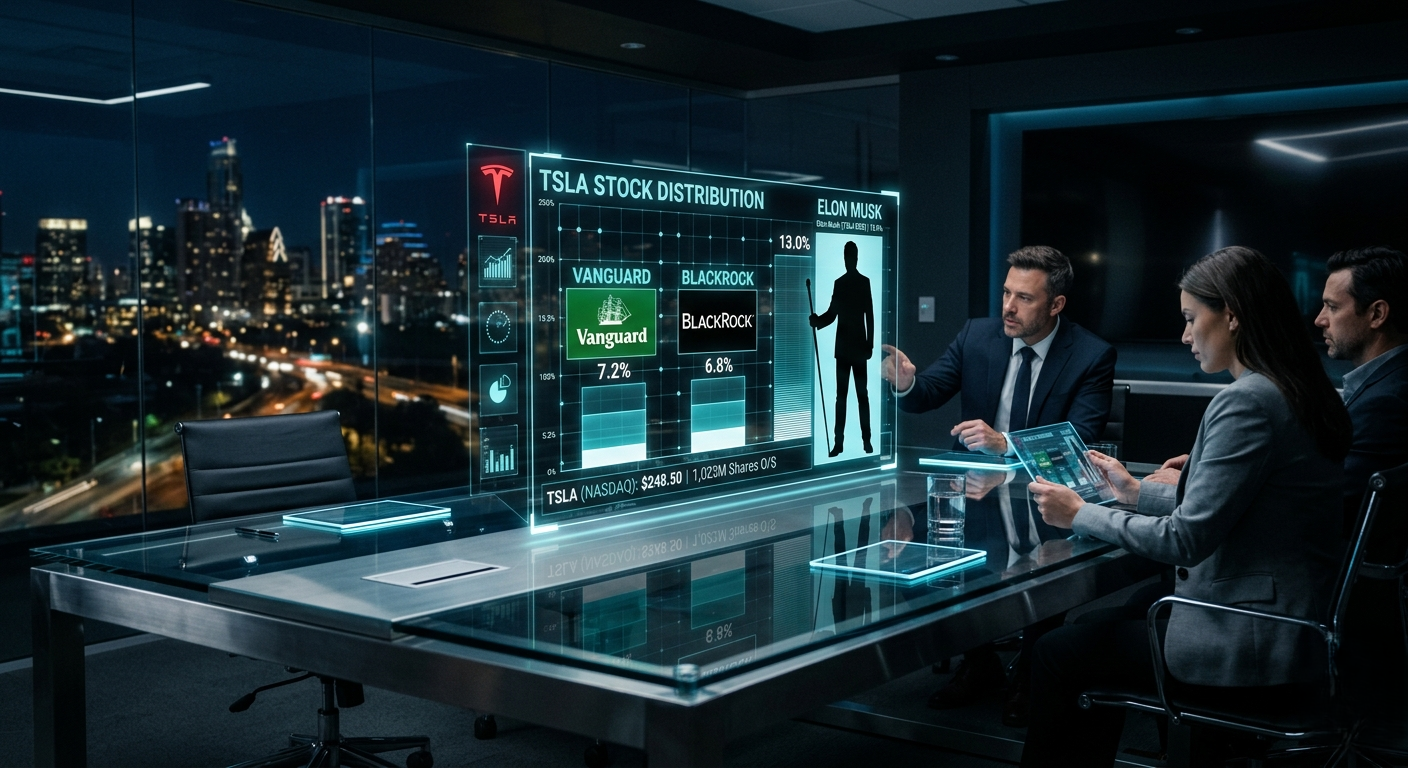
Quick Answer: Tesla is a publicly traded company no single person owns it. Elon Musk is the largest individual shareholder at ~13%, but institutional giants like Vanguard (7.6%) and BlackRock (6.2%) hold more combined. Tesla was founded in 2003 by Martin Eberhard and Marc Tarpenning Musk joined in 2004 as lead investor and became CEO in 2008.Who Owns Tesla Car Company
Most people assume Elon Musk built Tesla from scratch but the real story is more complicated, more interesting, and far more relevant to anyone buying or investing in a Tesla today. From a Silicon Valley garage to a $1.46 trillion company, here’s everything you need to know about who owns Tesla car company and what it means for you.
Why Tesla Matters
Tesla didn’t just build electric cars it forced every major automaker to rethink their future. It created a charging network that became an industry standard. And it made EVs desirable for the first time.
But in 2025, that same brand is under pressure. Sales have stumbled, competition from China is real, and the founder’s political choices have divided its own customer base. Knowing who owns Tesla car company gives you the full picture whether you’re buying, investing, or just curious.
Tesla Car Company at a Glance

| Detail | Info |
|---|---|
| Founded | July 1, 2003 |
| Original Founders | Martin Eberhard, Marc Tarpenning |
| All 5 Co-Founders | Eberhard, Tarpenning, Ian Wright, Elon Musk, JB Straubel |
| CEO | Elon Musk (since 2008) |
| Headquarters | Austin, Texas |
| Annual Revenue (2025) | ~$94.8 billion |
| Market Cap (2025) | ~$1.46 trillion |
Who Owns Tesla Car Company? The Full Ownership Breakdown
Who owns Tesla car company is one of the most Googled questions about the brand and the answer surprises most people.
Tesla is listed on NASDAQ under ticker TSLA, owned by millions of shareholders worldwide. No single person controls it outright.
Top Shareholders (Late 2025)
| Shareholder | Role | Ownership % |
|---|---|---|
| Elon Musk | CEO, Largest Individual Shareholder | ~13–15% |
| Vanguard Group | Institutional Investor | ~7.6% |
| BlackRock | Institutional Investor | ~6.2% |
| State Street | Institutional Investor | ~3.5% |
| Larry Ellison | Board Member | ~1.4% |
| Kimbal Musk | Board Member | ~0.05% |
Who Actually Controls Tesla?
Musk owns only ~13% so why does he act like he owns 100%? As CEO, he controls strategy, products, and public narrative. His influence comes from his role and media dominance, not majority ownership. He has publicly stated he wants to raise his voting control to ~25% to shape Tesla’s AI future. This governance gap is something most Tesla articles never explain.
Tesla Car Company: History, Founders & What Really Happened

Most people think Elon Musk founded Tesla. He didn’t not originally.
Tesla Motors was incorporated on July 1, 2003 by engineers Martin Eberhard and Marc Tarpenning. They had previously co-founded NuvoMedia, maker of one of the world’s first e-readers. Their inspiration for Tesla came from a specific event: in 2003, General Motors recalled and physically destroyed every EV1 electric car. Eberhard and Tarpenning saw this not as a market failure, but as a massive opportunity.
Elon Musk entered in February 2004, contributing $6.5 million of the $7.5 million Series A round, and became Chairman of the Board. JB Straubel joined as CTO in May 2004. A legal dispute later erupted between Eberhard and Musk over who deserved the “founder” title. It was settled in 2009, allowing all five Eberhard, Tarpenning, Wright, Musk, and Straubel to officially call themselves co-founders.
Eberhard was pushed out as CEO in 2007. Musk took over in 2008 and never looked back.
How Tesla Became the EV Giant

Musk’s strategy was simple but bold: start expensive, go mass-market later.
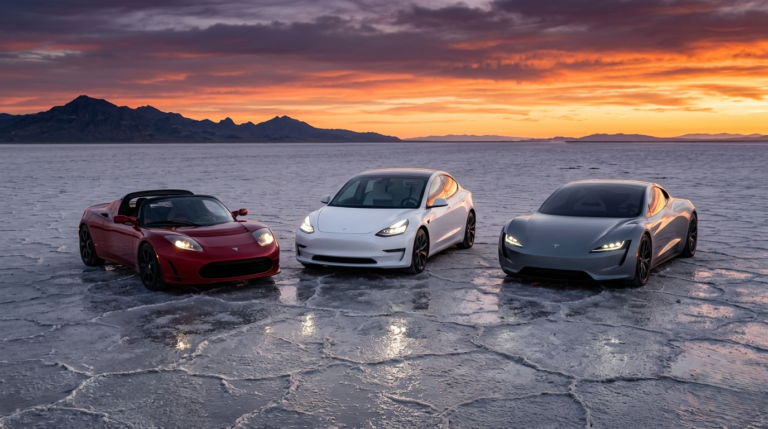
2008 Roadster: Proved EVs could be fast and exciting. 0–60 mph under 4 seconds.
2012 Model S: Won Motor Trend Car of the Year. Changed the industry’s perception of EVs.
2017 Model 3: Tesla’s first mass-market car. 400,000 pre-orders in the first week.
2020 Model Y: Became the best-selling car of any kind globally in 2023.
2023 Cybertruck: Polarizing but sold out. Took years longer than promised to ship.

Each vehicle funded the next. Over-the-air software updates meant cars improved after purchase something no legacy automaker did at scale before Tesla.
Tesla’s Business Segments: More Than Just Cars
1. Vehicles and Software
Automotive is still Tesla’s biggest earner ~$77 billion in 2024. This includes vehicle sales, leasing, and regulatory credits (sold to legacy automakers who can’t meet emissions targets pure profit for Tesla).
Full Self-Driving (FSD) is an added software subscription worth thousands per vehicle. High margin, recurring revenue.
2. Energy Tesla’s Hidden Crown Jewel

Energy Generation and Storage grew 44% year-over-year in Q3 2025, hitting $3.4 billion in one quarter. The Powerwall (home battery), Megapack (utility-scale storage), and solar products are quietly becoming Tesla’s fastest-growing segment. While car sales slowed, energy boomed.
3. Robotaxi and the Future

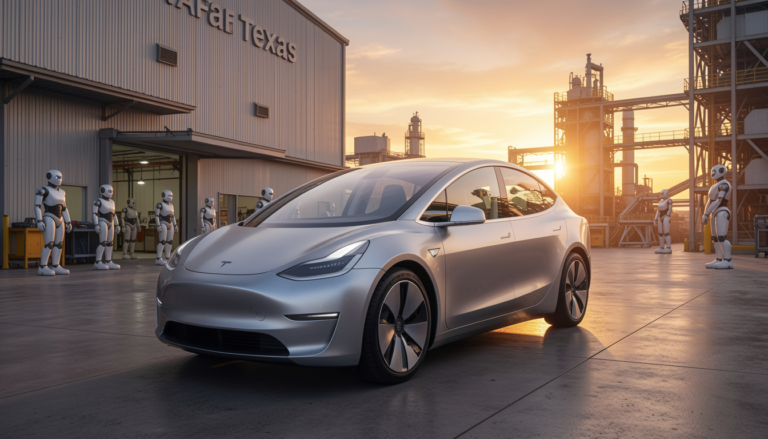
Tesla’s Cybercab a two-passenger, no-steering-wheel robotaxi entered production at Gigafactory Texas in February 2026. Early robotaxi services launched in Austin, Texas. The Optimus humanoid robot is also in early production, initially working inside Tesla factories.
Ark Invest projects that by 2029, up to 88% of Tesla’s value could come from robotaxis rather than car sales. Bold but it shows where the company is headed
Tesla’s Biggest Strengths and Real Weaknesses
Tesla Car Company: Strengths vs. Weaknesses
Where Tesla Shines:

Best fast-charging network in North America (Supercharger)
Over-the-air updates your car improves after you buy it
Energy ecosystem: pair with Powerwall + solar for near grid-free living
Software integration still ahead of most legacy automakers
Where Tesla Struggles:
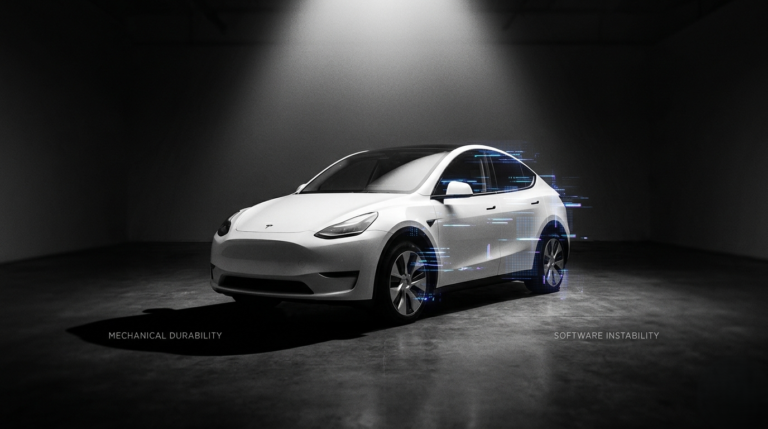
Build quality inconsistencies (panel gaps, paint) vs. German rivals
Limited service centers, expensive out-of-warranty repairs
FSD is not what its name suggests it still requires driver supervision in 2025
Don’t Overestimate “Full Self-Driving”
FSD has improved significantly, but it requires active driver supervision and is not legally autonomous anywhere in the US. Buy a Tesla for what it is today not what FSD might become.
The Musk Effect: Brand Damage, DOGE & What It Means for Buyers

This is the section every other article about who owns Tesla car company skips but it’s the most important one right now. Musk’s political activities $132 million in campaign donations, his DOGE role under President Trump, and his controversial posts on X created a brand crisis with no modern parallel in the auto industry.
Tesla’s Q1 2025 results were brutal: net income down 71%, automotive revenue down 20% Tesla’s worst quarterly sales decline ever. Meanwhile, overall EV sales industry-wide rose 7%.
A Yale University study quantified it: Musk’s actions cost Tesla between 1 million and 1.26 million US vehicle sales, while boosting EV competitor sales by 17–22%.
Musk announced in May 2025 he would reduce DOGE time and refocus on Tesla. The stock rose. But EU Tesla sales had fallen 36% year-over-year in a market where BEV sales overall rose 17%.
What this means for you: If you’re buying for the product range, Supercharger access, software those qualities are independent of Musk’s politics. But understand that the Tesla brand now carries political weight it didn’t have before 2022. And if you’re buying used, this controversy has created some of the best used Tesla deals in years.
Tesla vs Other EV Brands in 2025

Where Tesla Still Leads
Supercharger network: unmatched in reliability and coverage
Software and OTA updates: best-in-class
Range per dollar: still competitive
Where Rivals Have Caught Up
BYD: Surpassed Tesla in global EV sales across multiple 2024–2025 quarters
Hyundai/Kia (Ioniq 6, EV6): Better build quality, 800V ultra-fast charging
GM (Equinox EV): Aggressive pricing, familiar dealer network
Rivian: Better off-road and build quality than Cybertruck at similar prices
Don’t shop in a Tesla vacuum. The gap has narrowed significantly since 2020.
Tesla Car Company: Frequently Asked Questions
Who owns Tesla car company? No single person owns Tesla. Elon Musk holds ~13% as the largest individual shareholder. Vanguard (7.6%) and BlackRock (6.2%) are the top institutional owners. The foundation of Tesla dates back to 2003, spearheaded by Marc Tarpenning and Martin Eberhard.
Is Elon Musk the founder of Tesla? Officially a co-founder following a 2009 legal settlement. Tesla was originally incorporated by Martin Eberhard and Marc Tarpenning. Musk joined as lead investor in 2004 and became CEO in 2008.
When did Tesla start producing cars? First vehicle (Roadster) delivered February 2008. First mainstream car (Model S) launched June 2012.
Is Tesla still the best EV to buy in 2025? For charging convenience and software, yes. For build quality and interior, Hyundai and BMW are serious competition. For value, new entrants are closing the gap fast.
Bottom Line: Is Tesla Right for You?
Who owns Tesla car company and does it matter for your decision?
Tesla is owned by millions of shareholders, led by Musk’s ~13% stake. It was built on a foundation by Eberhard and Tarpenning, scaled by Musk, and shaped by a team no single person can fully own.
As a product, Tesla still delivers: best charging network, strong software, competitive range. The used market shaped by years of price cuts and brand controversy offers deals that didn’t exist two or three years ago. But Tesla is a company in transition. Sales are under pressure. Competition is real. And a CEO whose attention is split across SpaceX, X, DOGE, and now robot axis is a legitimate risk to track. Buy it for the product. Understand the brand. And watch what that robot axi business become
.Latest Tesla Updates Reality Check: While the tech is scaling fast, early 2026 real-world data shows the service faces minor bottlenecks, including geofenced drop-off zones and extended wait times during peak hours.
Financial Comeback (Q1 2026): After a tough 2025, Tesla rebounded strongly in its Q1 2026 earnings, reporting $22.39 billion in revenue (up 17% year-over-year) and beating Wall Street expectations.
Robot axi Expansion: Tesla’s driverless Robot axi service has officially expanded beyond Austin. As of April/May 2026, fully autonomous rides are now running in select areas of Dallas and Houston, Texas.
About the Author:
I am an automotive analyst and tech journalist specializing in electric vehicles (EVs), clean energy software, and corporate market trends. My goal with this guide is to demystify Tesla’s complex corporate structure and ownership reality, providing everyday car buyers and tech enthusiasts with transparent, unbiased, and data-driven insights.