Impact of Aftermarket Wheels on Tesla Efficiency?
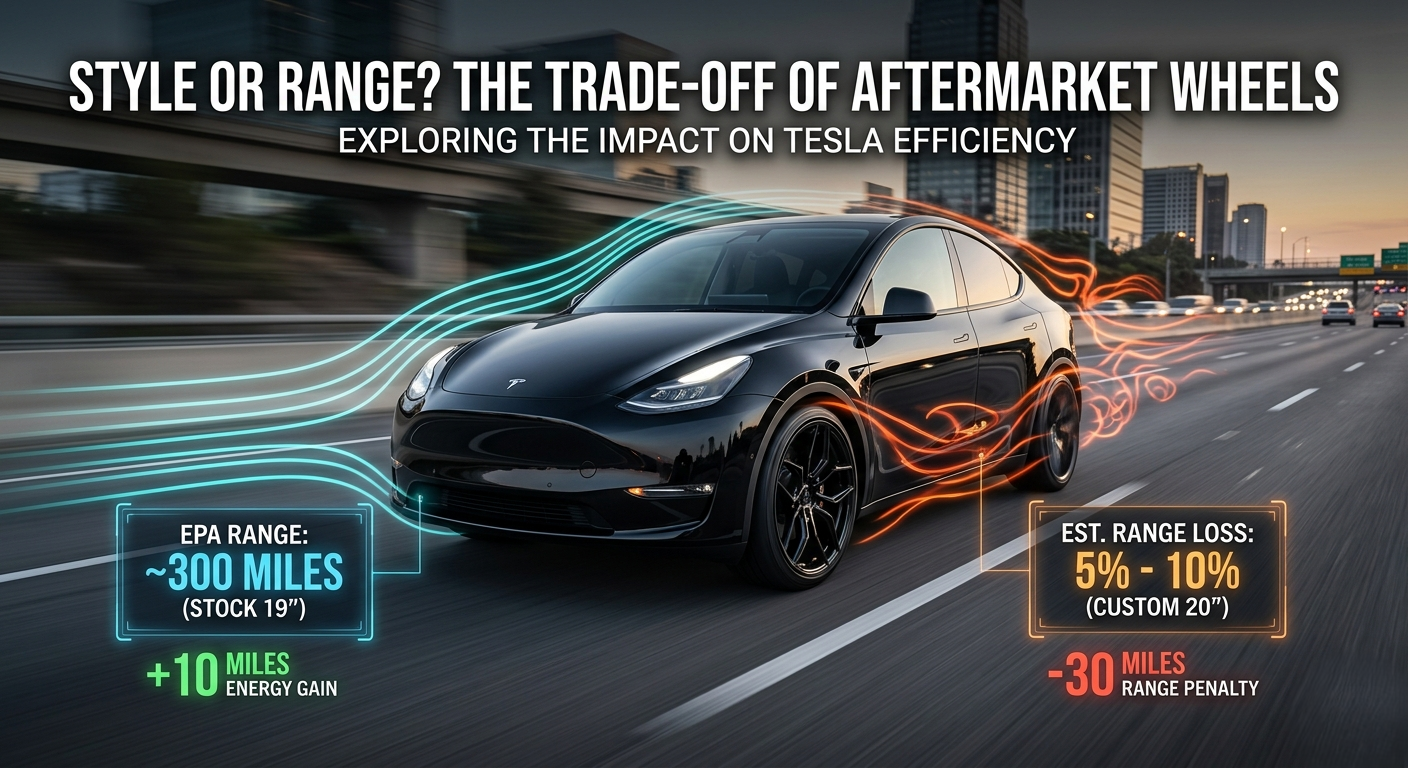
| Quick Answer Aftermarket wheels change the impact of aftermarket wheels on Tesla efficiency in three ways: bigger or heavier wheels add rotational weight, wider tires increase rolling resistance, and non-Tesla tires lack the foam lining that keeps the cabin quiet. On a Model Y Long Range, a common 19-inch to 20-inch upgrade can drop range by 5% to 10%, which is roughly 15 to 30 miles on a full charge. |
If you are thinking about new rims for your Tesla, you are probably wondering how much range you will actually lose. The impact of aftermarket wheels on Tesla efficiency is real, but it is not the same for every wheel and tire combo. This guide breaks down the exact numbers, the hidden costs, and the smart way to upgrade without ruining your daily range.
1. Why Aftermarket Wheels Change Tesla Efficiency

Tesla builds its factory wheels and tires as one matched system. The wheel weight, tire width, and even the tread design are picked to keep the car as efficient as possible. Understanding the impact of aftermarket wheels on Tesla efficiency starts here, because once you swap that matched system for aftermarket wheels, you are changing more than just the look of your car.
Three things usually change at once: the weight of the wheel itself, the width and rolling resistance of the new tire, and the aerodynamic shape of the wheel face. Each of these has its own effect on the impact of aftermarket wheels on Tesla efficiency, and they often stack together.
Why Extra Wheel Weight Forces the Motor to Work Harder
A heavier wheel takes more energy to speed up and more energy to slow down. This is called rotational mass, and it has a bigger effect on efficiency than the same weight sitting somewhere else in the car, like in the trunk.

For example, switching from a factory 19-inch wheel to a heavy 21-inch forged or cast wheel can add 3 to 8 pounds per wheel. Across four wheels, that can be 12 to 32 pounds of extra rotational mass, which adds up during stop-and-go city driving and adds directly to the impact of aftermarket wheels on Tesla efficiency.
The Regenerative Braking Connection (Often Missed)
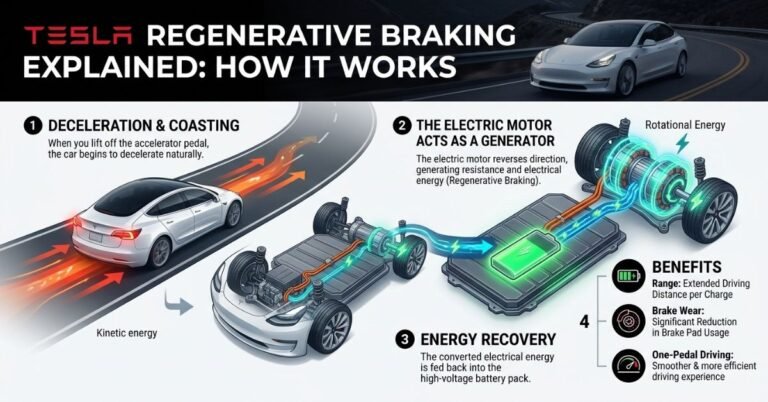
Most articles only talk about acceleration, but regenerative braking is just as important. When you lift off the accelerator, Tesla’s motor acts like a generator and sends energy back to the battery.
Heavier wheels have more rotational inertia, which means the car’s computer has to work harder to manage that energy recapture during liftoff. In simple words, the wheels keep spinning a bit longer due to extra inertia, so the regen system recovers slightly less energy per stop. In daily city driving, with dozens of stops, this small loss adds up and is one reason heavy wheel upgrades hurt city efficiency more than highway efficiency.
Wider Tires Create More Rolling Resistance

Wider tires grip the road better, but they also push more rubber against the pavement. This is called rolling resistance, and it is one of the biggest factors in EV range.
Going from a 245mm wide factory tire to a 265mm or 275mm aftermarket tire can increase rolling resistance noticeably. On its own, this part of the impact of aftermarket wheels on Tesla efficiency can cost you 2% to 5% of your range, even before you add the weight of a bigger wheel.
2. The Hidden Cabin Noise Problem (Acoustic Tires)

This is one of the most overlooked parts of the impact of aftermarket wheels on Tesla efficiency. Tesla’s factory tires, sometimes marked with a T0 or T1 code, have a layer of sound-dampening foam glued inside the tire.
Since an EV has no engine noise to cover up road sound, Tesla relies on this foam to keep the cabin quiet. It absorbs the hollow, drum-like noise that air makes inside a tire as it rolls.
What Happens With Regular Aftermarket Tires

Most aftermarket tires do not have this foam lining. When owners switch to a tire-and-wheel package without checking for it, they often notice two things at the same time: range drops, and highway cabin noise goes up.
This extra noise is part of what engineers call NVH, which stands for Noise, Vibration, and Harshness. A noisier cabin does not directly reduce your battery range, but it is a real comfort cost that most buyers do not expect when they only look at wheel photos online.
How to Avoid This
- Ask the seller directly if the tire has foam noise-cancelling inserts (sometimes called FoamLiner or Acoustic tires)
- Look for tires with an Acoustic or Silent rating from brands like Michelin, Continental, or Pirelli
- If foam tires are not available, budget for slightly thicker door seals or sound-deadening mats as a backup fix
3. Model S and Model X: The Air Suspension Risk

If you drive a Model S or Model X, there is an extra factor most wheel guides skip completely when discussing the impact of aftermarket wheels on Tesla efficiency: your car has an adaptive air suspension.
This system uses air-filled struts and sensors to adjust ride height and stiffness automatically. It is a complex and expensive part of the car, and it was designed around the weight of Tesla’s factory wheels and tires.
Unsprung Weight and Why It Matters

Unsprung weight is the weight of parts that are not supported by the suspension springs, mainly the wheels, tires, and brakes. Heavy aftermarket wheels increase this unsprung weight directly.
More unsprung weight means the air struts and front control arms have to work harder over every bump, pothole, and speed bump. Over time, this can speed up wear on these parts, which are expensive to replace on a Model S or Model X compared to a standard coil-spring car.
If you own a Model S or Model X and want to upgrade your wheels, try to stay close to the factory weight, and avoid going more than 1 inch larger in diameter than stock.
4. Will Aftermarket Wheels Void Your Tesla Warranty?

This is the question that scares a lot of owners away from upgrading at all, but the real answer is more balanced than most people think.
The Magnuson-Moss Warranty Act, Explained Simply
In the United States, a federal law called the Magnuson-Moss Warranty Act protects car owners. Under this law, Tesla cannot automatically void your entire warranty just because you installed aftermarket wheels.
Instead, if Tesla wants to deny a specific warranty claim, the burden of proof is on Tesla. They have to show that the aftermarket part, in this case the wheels, actually caused the specific damage being claimed.
What This Means in Practice
- Your battery, motor, and electronics warranty generally stays intact even with new wheels
- If a suspension part fails and Tesla believes the wheels caused it, they need evidence, not just a guess
- Keep receipts and specs for your wheels and tires, including weight and size, in case you ever need to push back on a claim
Staying close to factory wheel weight and tire size is still the safest way to avoid this conversation altogether.
5. Real Numbers: How Much Range Do You Actually Lose?

Forget vague percentages for a second. Here is what the impact of aftermarket wheels on Tesla efficiency looks like in real miles for a Tesla Model Y Long Range, which has an EPA range of about 300 miles.
| Wheel Upgrade | Estimated Range Loss | Real-World Range |
|---|---|---|
| Stock 19-inch wheels (baseline) | 0% | 300 miles |
| 19-inch to 20-inch, similar weight | 3% to 5% | 285 to 291 miles |
| 19-inch to 20-inch, heavier + wider | 5% to 8% | 276 to 285 miles |
| 19-inch to 21-inch, heavy aftermarket | 8% to 12% | 264 to 276 miles |
The Supercharger Math Owners Actually Care About

Most owners do not really care about percentages. What they want to know is simple: will this upgrade cost me an extra charging stop on a road trip?
Take the Los Angeles to Las Vegas drive, which is roughly 270 miles. On stock wheels with 300 miles of range, most drivers can make it with a small buffer. If a wheel upgrade drops your range to 270 miles, that buffer disappears, and you may need to add one extra Supercharger stop along the way, especially in hot or cold weather when range drops further. In these conditions, understanding Tesla preconditioning benefits for battery longevity can help you optimize those cold or hot weather charging stops and keep your battery pack performing efficiently.
This is the real-world impact of aftermarket wheels on Tesla efficiency: it is not just a number on a screen, it can change how you plan a trip.
6. Forged vs Cast Wheels: Which Is Better for Efficiency?

Not all aftermarket wheels are the same. The manufacturing process changes the weight, strength, and price, and weight is the main thing that affects efficiency.
Cast Wheels
Cast wheels are made by pouring melted metal into a mold. This process is cheaper, which is why most affordable aftermarket wheels are cast. The tradeoff is that cast wheels are usually heavier for the same size and strength compared to forged wheels.
Forged Wheels
Forged wheels are made by pressing a solid piece of metal under extreme pressure. This makes the metal denser and stronger, so the wheel can be made thinner and lighter while still being safe.
A forged wheel can be 15% to 25% lighter than a similar-looking cast wheel. For someone focused on reducing the impact of aftermarket wheels on Tesla efficiency, a lighter forged wheel in the same size as your stock wheel can help you keep most of your factory range, even with a different look.
| Wheel Type | Typical Weight (20-inch) | Price Range | Efficiency Impact |
|---|---|---|---|
| Stock Tesla wheel | 22 to 24 lbs | Included | Baseline |
| Cast aftermarket wheel | 26 to 32 lbs | $800 to $1,500 (set of 4) | Moderate to high range loss |
| Forged aftermarket wheel | 20 to 25 lbs | $2,000 to $4,000+ (set of 4) | Low range loss, close to stock |
7. The 12V Battery Drain Issue From TPMS Sensors

This is a smaller issue, but it causes a lot of confusion in Tesla owner forums. When you change wheels, you often need new tire pressure sensors, known as TPMS sensors.Some owners install cheap, unapproved Bluetooth TPMS sensors to save money. These sensors can sometimes prevent the car’s computer from fully going to sleep when parked.
If your Tesla’s computer stays partly awake overnight, it slowly drains the small 12V or 16V accessory battery that powers things like the screen and door handles. This can lead to a dead 12V battery and an error message on the screen, even though your main battery pack is fine.To avoid this, stick with TPMS sensors that are specifically listed as Tesla-compatible, even if they cost a little more than generic Bluetooth options.
8. Protecting Your New Wheels: The Curb Rash Problem

If you are spending $2,000 or more on a fresh set of wheels, the last thing you want is a scrape on day one from a parking curb, on top of dealing with the impact of aftermarket wheels on Tesla efficiency. Tesla’s factory wheels are designed so the tire’s sidewall sticks out slightly past the edge of the rim.
This little bit of rubber, sometimes called extra meat or sidewall bulge, acts like a built-in bumper for the wheel. When choosing aftermarket wheel and tire sizes, ask your installer to keep a similar tire stretch, where the tire sidewall still slightly protects the rim edge. This small detail can save your expensive new wheels from the first curb scrape, without changing the look much at all.
9. How to Minimize Efficiency Loss When Upgrading Wheels

You do not have to choose between style and range. With the right choices, you can reduce the impact of aftermarket wheels on Tesla efficiency while still upgrading the look of your car.
- Choose forged wheels over cast wheels if your budget allows, since the weight savings directly help efficiency
- Stay within 1 inch of your factory wheel diameter, especially on Model S and Model X
- Pick tires with an acoustic or foam-lined design to protect both range and cabin noise
- Avoid going more than 10 to 15mm wider than your factory tire width
- Use Tesla-compatible TPMS sensors to avoid 12V battery drain issues
- Keep your original wheels and tires in storage, so you can switch back for long road trips if needed
Frequently Asked Questions
Do bigger wheels always reduce Tesla range?
Yes, in almost all cases. Bigger wheels are usually heavier and paired with wider tires, both of which increase the energy needed to move the car. The exact loss depends on the weight and tire choice, but some range loss should be expected with any change that affects the impact of aftermarket wheels on Tesla efficiency.
How much range will I lose with 20-inch wheels on a Model Y?
Most owners report a 3% to 8% range loss when moving from 19-inch to 20-inch wheels, depending on the weight of the new wheels and tires. On a 300-mile Model Y Long Range, that is roughly 9 to 24 miles, which is the most common version of the impact of aftermarket wheels on Tesla efficiency that owners notice.
Can aftermarket wheels void my Tesla warranty completely?
No. Under the Magnuson-Moss Warranty Act, Tesla cannot void your entire warranty just for using aftermarket wheels. Tesla would need to prove that the wheels directly caused a specific problem before denying that specific claim.
Are forged wheels worth the extra cost for efficiency?
If keeping your range close to factory levels is a priority, forged wheels are worth considering. They can be 15% to 25% lighter than cast wheels of the same size, which directly reduces the impact of aftermarket wheels on Tesla efficiency compared to heavier cast options.
Why does my cabin sound louder after switching to aftermarket wheels?
This is usually because the new tires do not have the sound-dampening foam lining that Tesla’s factory tires include. Without this foam, more road and tire noise enters the cabin, especially at highway speeds, and this is part of the wider impact of aftermarket wheels on Tesla efficiency and comfort.
Will TPMS sensors affect my Tesla’s battery?
Standard, Tesla-compatible TPMS sensors will not cause problems. However, some unapproved Bluetooth TPMS sensors can stop your car from fully going to sleep, which may slowly drain the 12V accessory battery over time. If you are already watching your 12V health, it is worth reading our guide on
Conclusion

The impact of aftermarket wheels on Tesla efficiency is real, but it is manageable once you understand where the losses come from. Extra weight, wider tires, and missing acoustic foam are the three biggest factors, and each one can be reduced with smarter choices.
If you want a noticeably different look without a big range penalty, lighter forged wheels close to your factory size, paired with acoustic tires, are the safest bet. If you are willing to accept a 5% to 10% range drop for a bolder style, that is a fair tradeoff as long as you plan your charging stops around it. To keep an eye on other common issues that can affect efficiency over time, check out our guide on