How to Perform a Soft and Hard Reset on Tesla Touchscreen
| Quick Answer: Soft reset (most fixes): Hold both scroll wheel buttons for 10 to15 seconds until the screen goes black, then release. Ensure the vehicle is parked, then navigate to Controls > Safety > Power Off. Let the car sit completely undisturbed for at least two minutes before opening a door to trigger the reboot. These two methods fix 95% of Tesla touchscreen freezes, black screens, and crash loops. |
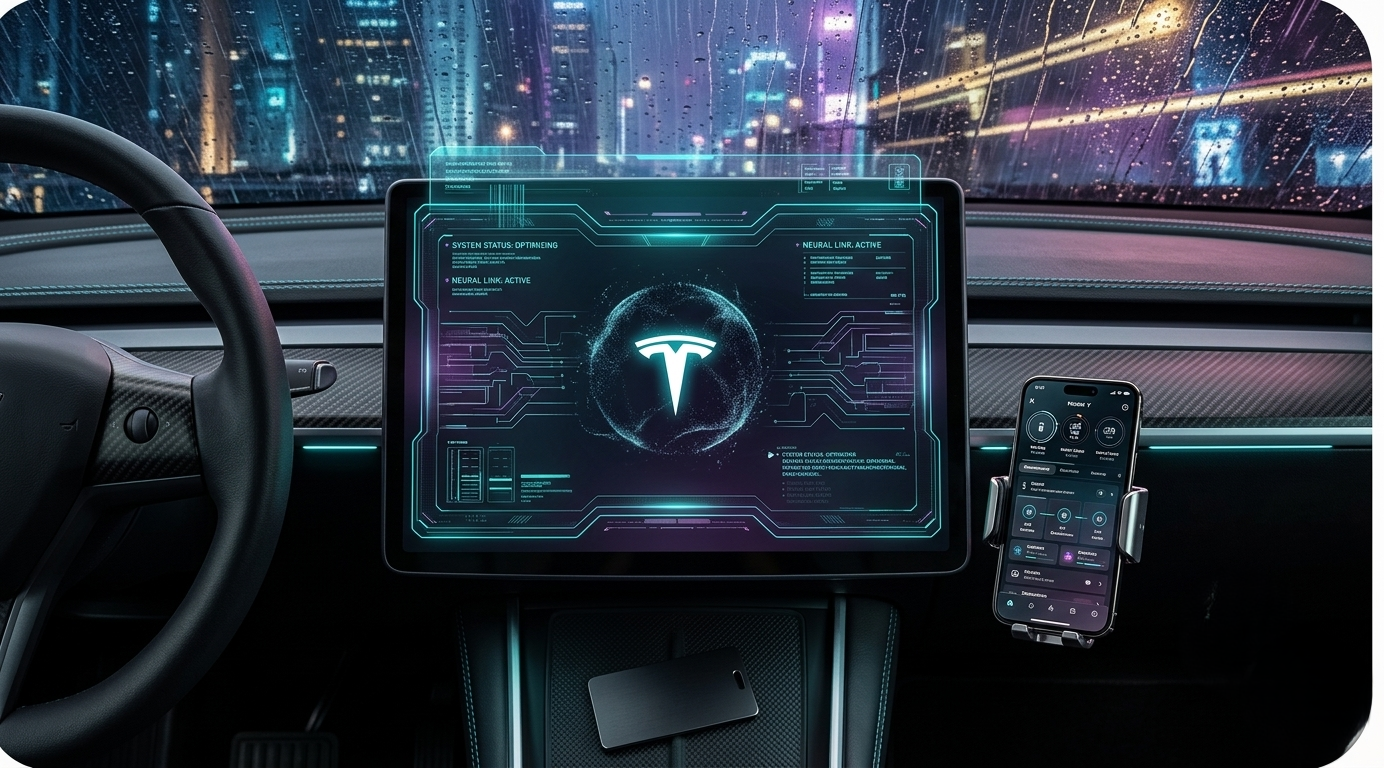
From adjusting the cabin temperature and routing maps to streaming media and checking safety feeds, Tesla’s central display commands the entire driving experience. . When it freezes or goes black, it feels like the whole car is broken. The good news: it’s almost always a software glitch, not a hardware failure. This guide covers exactly how to perform a soft and hard reset on Tesla touchscreen in minutes.
1. Is It Safe to Drive When Your Tesla Screen Freezes?

Yes your Tesla is 100% safe to drive even with a frozen or black screen. The Tesla touchscreen runs on a separate computer from the powertrain. Brakes, steering, and acceleration all work independently and are not controlled by the infotainment system.
What stops working during a screen freeze:
- Navigation and maps
- Climate controls (stays at last setting)
- Music and media
- Backup camera
If the screen freezes while you’re driving on the highway, stay calm. Pull over when it’s safe and perform a soft reset. Your car is not in danger.
2. What Causes a Tesla Touchscreen to Freeze or Go Black?

Before you fix it, it helps to know what actually caused it. Here are the most common reasons:
| Cause | Which Models | How Common |
| Software crash or memory overflow | All models | Very common |
| Sentry Mode USB drive corruption | All models with Sentry Mode | Common |
| Bluetooth crash loop (phone contact data) | Model 3, Y, S, X | Common |
| OTA update mid-install glitch | All models | Occasional |
| eMMC chip failure (hardware) | 2018 or older Model S/X (MCU1 only) | Rare/Legacy |
Important: The eMMC chip failure is a legacy issue that only affects 2018 and older Model S/X vehicles with MCU1. If you own a Model 3, Model Y, or a newer Model S/X or Cybertruck, this does not apply to you. Your fix is almost always a soft or hard reset.
3. Method 1: Soft Reset (Try This First Fixes 80% of Issues)

A soft reset reboots the Tesla touchscreen’s infotainment computer without cutting power to anything else. It takes under 2 minutes and you can do it while parked or even while driving.
How to Do a Soft Reset

Step 1: Put the car in Park (not required but recommended).
Step 2: Press and hold BOTH scroll wheel buttons on the steering wheel at the same time.
Step 3: Keep holding for 10–15 seconds. The screen will go black. Do NOT release early.
Step 4: Release when the screen goes black. The Tesla logo will appear as it reboots.
Reboot Time: Don’t Panic
How long it takes depends on your car’s chip:
| Model / Chip | Reboot Time |
| Model 3 / Y (2021+) AMD Ryzen chip | 10 to15 seconds |
| Model S / X (2021 Refresh+) AMD chip | 10 to 20 seconds |
| Model 3 / Y (2017–2020) Intel Atom chip | 45 to 90 seconds |
| Cybertruck | 10 to 15 seconds |
Newer models (AMD Ryzen) reboot in under 15 seconds. If you have an older Intel-chip model and the screen is still black after 60 seconds, keep waiting it’s still booting. If a soft reset doesn’t work after two attempts, check your an interrupted update can cause persistent freezes that need a harder fix.
4. Method 2: Hard Reset Power Off (For Stubborn Freezes)

If the soft reset didn’t work, or the screen keeps crashing after reboot, a full power-off cycle is the next step. This shuts down ALL vehicle computers, not just the screen.
How to Do a Hard Reset via Power Off

Step 1: Put the car in Park. This is required for this method.
Step 2: Go to Controls > Safety > Power Off (tap the power button).
Step 3: Wait a full 2 minutes. Do not touch the brake, open a door, or interact with the car.
Step 4: After 2 minutes, open a door or press the brake pedal to wake the car.
The car will restart from a cold boot. The screen should come back fully functional.
The Software Wheel Configuration Trick (No Tools Needed)

If your screen is completely unresponsive and you can’t tap ‘Power Off’, here’s a workaround that forces a deep network reboot without touching the low-voltage battery :Go to Controls > Service > Wheel Configuration > change your wheel size to any different size > confirm. This triggers a deep recalibration that forces the system to reboot all network modules. Change it back to your correct setting after the car restarts. This method is particularly useful if the Tesla touchscreen is partially frozen where you can still navigate menus but can’t do a standard soft reset.
5. The Bluetooth Crash Loop Fix

Symptom: Screen freezes or crashes every time you get in the car and your phone connects via Bluetooth.This is caused by corrupt contact data syncing from your phone’s address book. It’s a known issue on Model 3 and Model Y, especially after a phone OS update.
How to Fix It

Step 1: Get in the car but do NOT let your phone connect. As a preliminary step, shut down your phone’s Bluetooth entirely.
Step 2: Once inside and seated, go to Controls > Bluetooth and forget/delete your phone from the list.
Step 3: Do a soft reset while your phone’s Bluetooth is still off.
Step 4: After reboot, re-pair your phone fresh. When it asks to sync contacts, choose ‘No’ or ‘Ask each time’.
This permanently fixes the crash loop in most cases. The corrupted phonebook data is cleared when you unpair and re-pair.
6. How to Reset the Rear Touchscreen (Refreshed Model S/X and Model 3 Highland)

If you own a 2021+ Model S or Model X (refresh), or the new Model 3 Highland, you have a rear passenger touchscreen in addition to the front display. These can freeze independently.
Resetting Only the Rear Screen
You do NOT need to do a full car reset. The rear screen can be rebooted on its own:
Step 1: On the frozen rear screen, press and hold the power icon in the top corner (if visible).
Step 2: If the screen is completely unresponsive, the front driver’s screen can control it: Controls > Rear Screen > Restart Rear Display.
If both screens are frozen, perform a full soft reset using the steering wheel scroll buttons as described in Method 1.
7. Sentry Mode USB Is Freezing Your Screen Here’s the Fix

Many Tesla owners don’t realize that a corrupted Sentry Mode USB drive can slow down or freeze the Tesla touchscreen entirely. If your screen feels laggy or freezes every time you start the car, this is a likely cause.
How to Check and Fix
Step 1: Eject the USB drive from the car’s USB port.
Step 2: Do a soft reset without the drive plugged in.
Step 3: If the screen works fine now, your USB is the problem.
Step 4: Format the USB drive as exFAT on your computer, then create a folder called ‘TeslaCam’ on it. Re-plug into the car.
For best results, use a USB drive specifically rated for dashcam use. Learn more about how Sentry Mode works and energy usage to set it up properly.
8. When to Contact Tesla Service
Soft reset and hard reset fix the vast majority of Tesla touchscreen issues. But in rare cases, you may need Tesla’s help. Contact Tesla Service if:
- Screen stays black even after multiple soft and hard resets
- Touchscreen physically cracked or damaged
- You drive a 2018 or older Model S/X and the screen has been failing repeatedly for months
- Error messages appear about hardware failure or MCU
You can schedule service directly through the Tesla app. Check the Tesla navigation system optimization guide for tips while waiting for your appointment.
9. Frequently Asked Questions
Will a soft reset delete my Tesla settings?
No. A soft reset only reboots the Tesla touchscreen’s infotainment computer. All your settings, profiles, Autopilot preferences, and saved locations stay exactly as they were.
Can I do a soft reset while driving?
Yes. Knowing how to perform a soft and hard reset on Tesla touchscreen while driving is useful hold both scroll wheel buttons while moving. The screen will go black briefly but the car continues operating normally. However, it’s safer to pull over before resetting.
My backup camera is stuck on screen after reversing what do I do?
This is a known bug where the Tesla touchscreen camera feed doesn’t close after you shift out of Reverse. Do a soft reset immediately. The camera image is a software display issue and does not affect your ability to drive forward.
How often should I reset my Tesla touchscreen?
There’s no need to reset proactively. Only reset when you experience actual issues. If you find yourself needing to know how to perform a soft and hard reset on Tesla touchscreen more than once a week, check your Sentry Mode USB, remove recently paired Bluetooth devices, and schedule a software check with Tesla.
Does a hard reset affect my Autopilot or FSD data?
No. Autopilot and Full Self-Driving data are stored on a separate computer (the Autopilot ECU) and are not affected by any type of touchscreen reset.
10. Conclusion
In most cases, knowing how to perform a soft and hard reset on Tesla touchscreen is all you need to get your car back to normal in under 2 minutes. Start with the soft reset using the scroll wheel buttons. If that doesn’t work, use the Power Off method from the Safety menu. For specific problems like Bluetooth crash loops, rear screen freezes, or Sentry Mode lag, follow the targeted fixes in this guide. Your Tesla’s powertrain is always safe — the screen is just software, and software can always be rebooted.