Tesla One-Pedal Driving Guide: How Regenerative Braking Works
Introduction
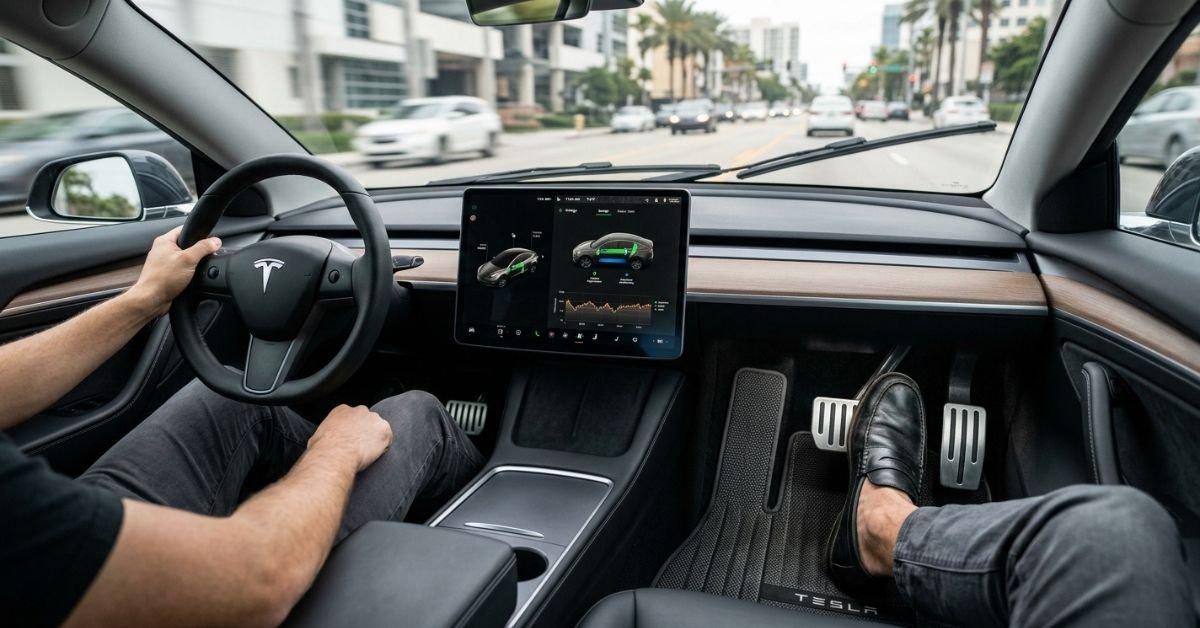
A Tesla One-Pedal Driving Guide is really a guide to controlling speed with the accelerator pedal. Instead of moving between accelerator and brake for every small speed change, you can lift your foot to command regenerative braking and let the motors slow the car. Done smoothly, this can make urban driving easier, reduce unnecessary brake use, and recover some energy for the battery. Tesla’s current manuals explain that regenerative braking occurs when the accelerator is released, although its strength can vary with battery conditions. This guide explains how one-pedal driving works, how to learn it, when it changes, and why the brake pedal still matters.
Quick Answer
Tesla one-pedal driving uses regenerative braking to slow the vehicle when you reduce or release accelerator pressure. In many situations, a Tesla can decelerate strongly enough that you rarely need the brake pedal in normal traffic. The exact feel varies by model, software, battery temperature, charge level, and conditions. One-pedal driving is a driving technique, not a promise that the vehicle will always stop by itself.
How Tesla One-Pedal Driving Works
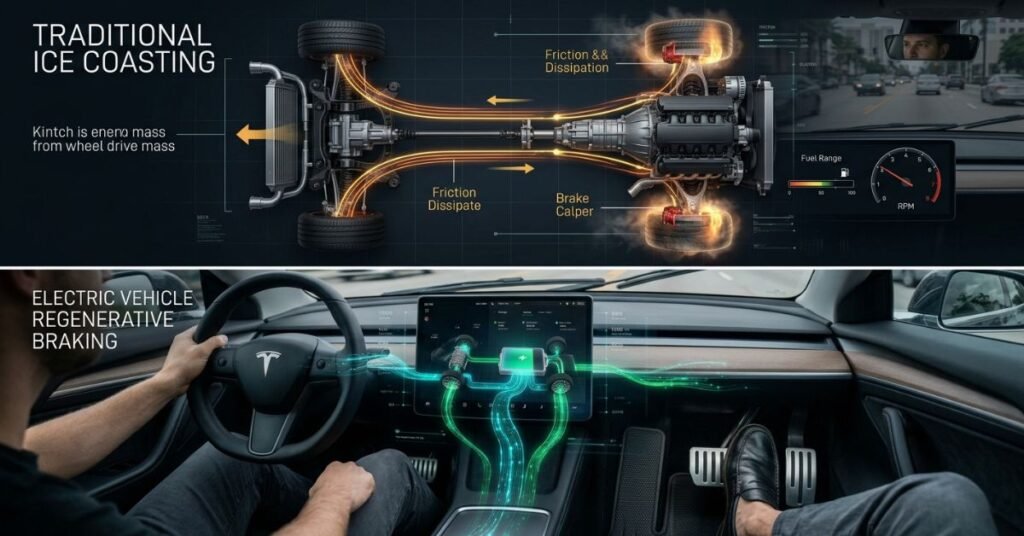
The key is the accelerator pedal. Pressing it asks the electric motors to deliver torque and move the car forward. Easing off reduces drive torque. Releasing the pedal can command regenerative braking, in which the motors act as generators and send some recovered electrical energy back toward the battery.
That is different from simply coasting in a gasoline car. A conventional vehicle may continue rolling when you lift off the throttle, while a Tesla can produce noticeable deceleration. Tesla says anticipating stops and reducing accelerator pressure can help take advantage of regenerative braking and increase driving range.
The sensation is also different from conventional engine braking because an EV can respond immediately to small pedal changes. Drivers should focus on the vehicle’s actual response rather than memorizing a particular distance or deceleration rate. This matters when changing between Tesla models or software versions, because familiar pedal habits may not transfer perfectly.
One-pedal driving does not mean the mechanical brakes have disappeared. The brake pedal remains available whenever you need stronger or more immediate deceleration. Regenerative braking may also be supplemented by friction braking in some circumstances, depending on the vehicle and battery state.
How to Learn One-Pedal Driving
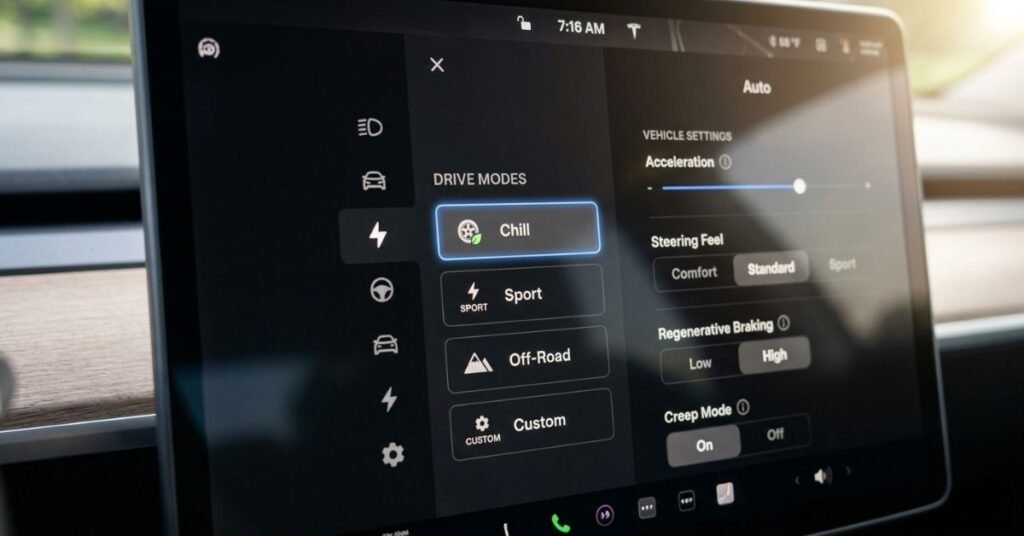
Start somewhere quiet, dry, and familiar. Keep your attention on the road and leave plenty of space. At first, use the accelerator gently and lift your foot gradually rather than snapping completely off it.
Practice four situations: slowing for a red light, approaching a stop sign, following slower traffic, and reducing speed before a turn. The goal is to predict how much pedal release produces the desired deceleration.
A useful technique is to think of the accelerator as a speed-control dial rather than an on-off switch. More pressure means acceleration; less pressure means less acceleration or more regenerative deceleration. With practice, your ankle learns small adjustments that make the car feel much smoother.
Do not practice by intentionally following traffic too closely or trying to avoid the brake pedal at all costs. If a situation develops quickly, brake normally. Good one-pedal driving is about control and anticipation, not proving that you can use only one pedal.
Stopping Modes and Low-Speed Behavior
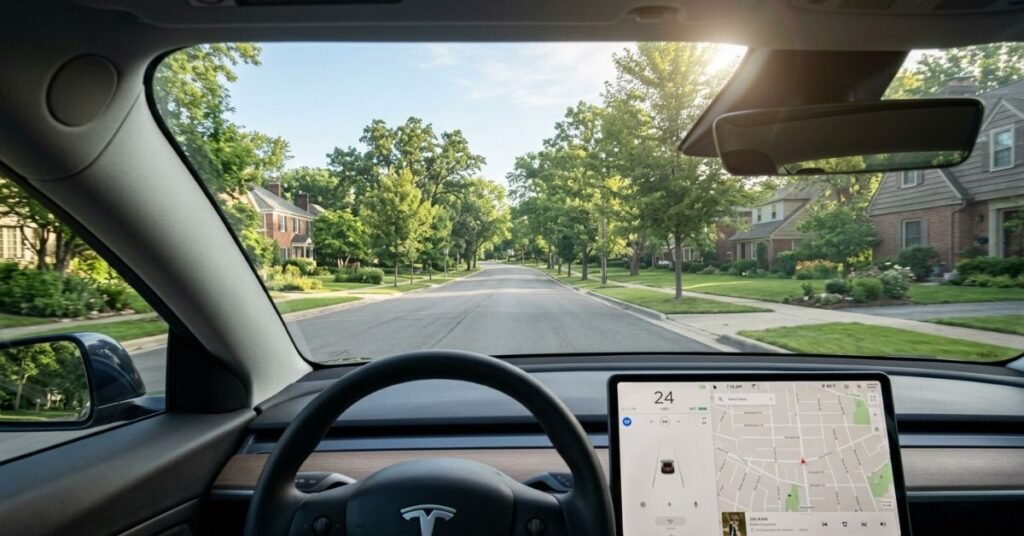
Tesla vehicles have used different stopping-mode choices over time and across models. Depending on the vehicle and software, settings can include Hold, Creep, or Roll. Hold is particularly relevant to one-pedal driving because it can keep the vehicle stopped after regenerative braking brings it to very low speed.
Do not assume every Tesla has identical menu options. Check your vehicle’s current touchscreen settings and owner’s manual. Tesla can change features through software updates, and menus can differ by model, market, and configuration.
If your Tesla uses Hold, you can often approach a stop with accelerator modulation, allow regenerative braking to slow the car, and let the vehicle remain stopped without keeping your foot on the brake. That can be convenient in traffic. Nevertheless, when stopped on a slope or in a situation requiring certainty, use the brake pedal as appropriate.
When Regenerative Braking Is Limited
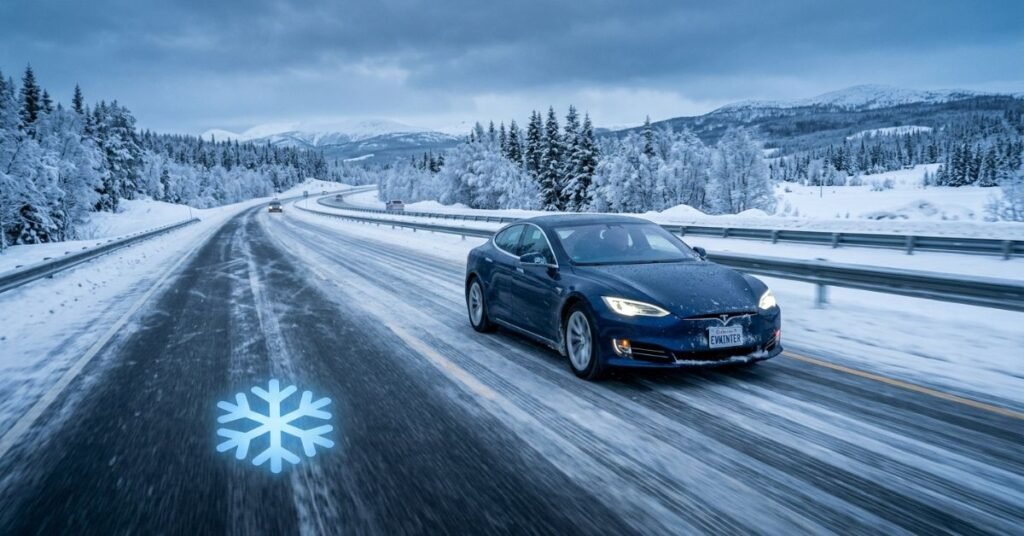
One-pedal driving feels different when regenerative braking is restricted. Tesla identifies a cold battery and a battery that is already fully charged as conditions that can limit regeneration. When that happens, lifting the accelerator may produce less deceleration than you expect.
Cold weather is especially important. A cold battery can temporarily reduce regenerative braking until the battery warms. Tesla manuals describe preconditioning as one way to reduce limited regeneration before departure. A blue snowflake indicator can appear on applicable vehicles when some battery energy is unavailable because the battery is cold.
A high state of charge can also matter. If you leave with a very full battery, there may be less room to accept recovered energy. The result can be a different pedal response during the first part of the trip.
This is one reason experienced Tesla drivers should never rely on a fixed amount of pedal release. Look at the vehicle’s displays, pay attention to the road, and expect braking behavior to change when conditions change.
For highway driving, one-pedal control is still useful, but it is usually more about making gentle speed corrections than repeatedly slowing to a complete stop. On long downhill sections, regenerative braking can help control speed while recovering some energy, although drivers should continue monitoring traffic, road grade, and posted limits.
The Brake Pedal Still Matters
The biggest mistake in one-pedal driving is treating the brake pedal as unnecessary. It is not. Emergency stops, sudden traffic changes, pedestrians, cyclists, unexpected obstacles, and other hazards can require immediate braking.
Tesla’s manuals specifically instruct drivers to use the brake pedal when regenerative braking is reduced. Some current vehicles also offer an option that automatically applies the regular brakes when regenerative braking is limited, helping maintain more consistent deceleration. Availability and menu wording vary by vehicle.
You should also use the brake pedal when you need stronger braking than regenerative braking provides. Smoothly blending regeneration with friction braking is normal vehicle operation. There is no safety prize for reaching every stop without touching the brake.
One-Pedal Driving in Rain, Snow, and Cold

Weather can change the experience. Cold temperatures can limit battery regeneration, while slippery roads can make abrupt deceleration less desirable. One-pedal driving should therefore become gentler when traction is uncertain.
In wet or icy conditions, leave more following distance and make smoother pedal movements. Avoid using strong regenerative deceleration as a substitute for careful speed management. The vehicle’s stability and traction systems remain important, but they cannot repeal the laws of physics.
Cold weather also affects efficiency and battery performance. If your Tesla displays reduced regenerative braking, treat that as useful information rather than a fault automatically. As the battery warms, available regeneration can increase.
Does One-Pedal Driving Save Battery Energy?
It can help efficiency, but the benefit is often misunderstood. Regenerative braking recovers part of the vehicle’s kinetic energy during deceleration. It does not recover all of it. Energy is lost through electrical conversion, motor and power electronics losses, tires, and other sources.
The most efficient drive is generally the one that avoids unnecessary acceleration and braking in the first place. If you accelerate hard and then immediately regenerate that speed away, you are not creating free energy. Anticipating traffic, maintaining appropriate speed, and lifting the accelerator early can reduce waste.
Tesla itself recommends modulating the accelerator instead of using the brake pedal for gradual slowing when safe to do so. That recommendation supports the efficiency advantage of regenerative braking, but it should never override safe driving.
One-Pedal Driving and Brake Wear
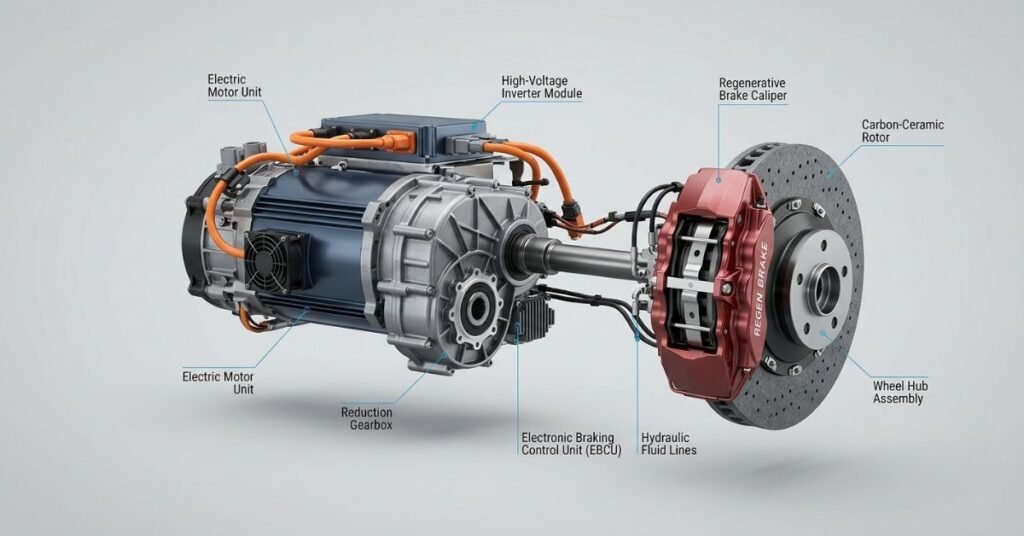
Regenerative braking can reduce how often the friction brakes are used during ordinary driving. That may help reduce brake-pad wear compared with a driving pattern that relies heavily on mechanical braking.
However, reduced brake use does not mean brake maintenance can be ignored. Brake components still need to remain functional, and Tesla vehicles include systems such as brake disc wiping on applicable models to help keep discs responsive in cold or wet conditions.
If you notice unusual brake behavior, warning messages, grinding, pulling, or reduced stopping performance, use the brake pedal as necessary and seek appropriate service. One-pedal driving is not a substitute for maintaining the complete braking system.
Another practical point is passenger comfort. Abruptly lifting the accelerator can create a noticeable forward weight transfer, especially for passengers who are not accustomed to strong regeneration. Smooth releases usually make the experience more comfortable overall.
Pros and Cons
Pros
- Smooth, predictable speed control once learned.
- Convenient in stop-and-go traffic.
- Can reduce routine friction-brake use.
- Regenerative braking can recover some energy.
- Encourages anticipation and gentle acceleration.
Cons
- Takes practice for new drivers.
- Deceleration can change with battery temperature and charge level.
- Strong regeneration may feel unusual to passengers.
- Slippery conditions require extra care.
- It can encourage bad habits if drivers avoid the brake pedal unnecessarily.
Is One-Pedal Driving Available on Every Tesla?
The basic regenerative-braking behavior is a feature of Tesla electric vehicles, but the exact driving feel and available settings are not universal. Model 3, Model Y, Model S, and Model X can differ by generation, drivetrain, software version, and market.
Tesla has also changed menus and braking behavior through software updates. Some vehicles provide specific options for maintaining consistent deceleration when regeneration is limited, while others may present different controls.
The safest reference is your Tesla’s current owner’s manual and touchscreen. Do not assume instructions for an older Model 3 automatically apply to a newer Model Y, or that a setting available in one market appears in another.
Who Should Use One-Pedal Driving?
One-pedal driving is especially useful for drivers who spend time in urban traffic, make frequent speed adjustments, or want a more integrated EV driving experience. It can become intuitive after a short learning period.
It may feel less natural for drivers moving between different vehicles, particularly if they frequently switch between a Tesla and a conventional car. In that case, remember that the pedal behavior is vehicle-specific.
New Tesla owners should spend their first drives learning the response gradually rather than immediately attempting aggressive regeneration. Passengers may also appreciate smoother pedal inputs while you adapt.
Frequently Asked Questions
Does Tesla really have one-pedal driving?
Yes, regenerative braking allows a Tesla to decelerate when you lift the accelerator, and certain configurations can bring the vehicle to a stop and hold it. The exact behavior depends on model, settings, software, and battery conditions.
Can one-pedal driving stop a Tesla completely?
It can in conditions where the vehicle’s configured braking and stopping behavior supports it. However, drivers should still be ready to use the brake pedal whenever necessary.
Why does my Tesla sometimes slow down less when I lift off?
Regenerative braking can be limited when the battery is cold or very highly charged. Vehicle configuration and software can also affect the experience.
Does one-pedal driving damage the battery?
Normal regenerative braking is a designed operating function. It does not mean the battery is being damaged simply because energy is recovered during deceleration.
Does one-pedal driving wear out brakes?
It can reduce routine use of friction brakes, potentially reducing pad wear. Brake components still require normal inspection and maintenance.
Should I use one-pedal driving in snow?
Use greater caution. Smooth pedal inputs, lower speeds, and increased following distance are more important than maximizing regenerative braking.
Conclusion
Tesla one-pedal driving is best understood as controlled accelerator modulation supported by regenerative braking. It can make everyday driving smoother, reduce routine brake use, and recover some energy, but it does not eliminate the need for conventional braking.
The key is adaptability. Learn your Tesla’s response, expect regeneration to change with battery conditions, and use the brake pedal confidently whenever safety requires it. Check your vehicle’s current manual and touchscreen because exact settings vary across models, software versions, and markets. Once learned properly, one-pedal driving becomes a useful EV skill rather than a gimmick.