Tesla vs BMW Electric Car (2026): Is German Luxury Worth the $20K Premium?
| Quick Answer Tesla vs BMW Electric Car (2026): Tesla wins on price, technology, and charging convenience. The Tesla Model 3 starts at ~$38,990 vs the BMW i4 at ~$57,900 a $19,000+ difference. BMW wins on build quality, cabin refinement, and traditional driving feel. In this Tesla vs BMW electric car comparison, Tesla offers the best tech-per-dollar; BMW suits buyers upgrading from a premium gas car who refuse to compromise on interior quality. Tesla vs BMW Electric Car |
If you are shopping for a Tesla vs BMW electric car comparison in 2026, you will find most articles written by dealerships and they only give you half the truth. This guide delivers the full picture: real pricing, hidden costs, charging realities, and ownership pain points that neither brand’s marketing will mention. Whether you want cutting-edge software and maximum efficiency or timeless German craftsmanship and a driver-focused experience, here is everything you need to make the right call.
Tesla vs BMW ElectriTc Car: Setting the Stage


Before diving into specs, the Tesla vs BMW electric car debate only makes sense when you match the right competitors. Comparing the wrong models skews every data point.
- Sedan Battle: Tesla Model 3 vs. BMW i4 eDrive40
- Luxury SUV Faceoff: Tesla Model Y / Model X vs. BMW iX
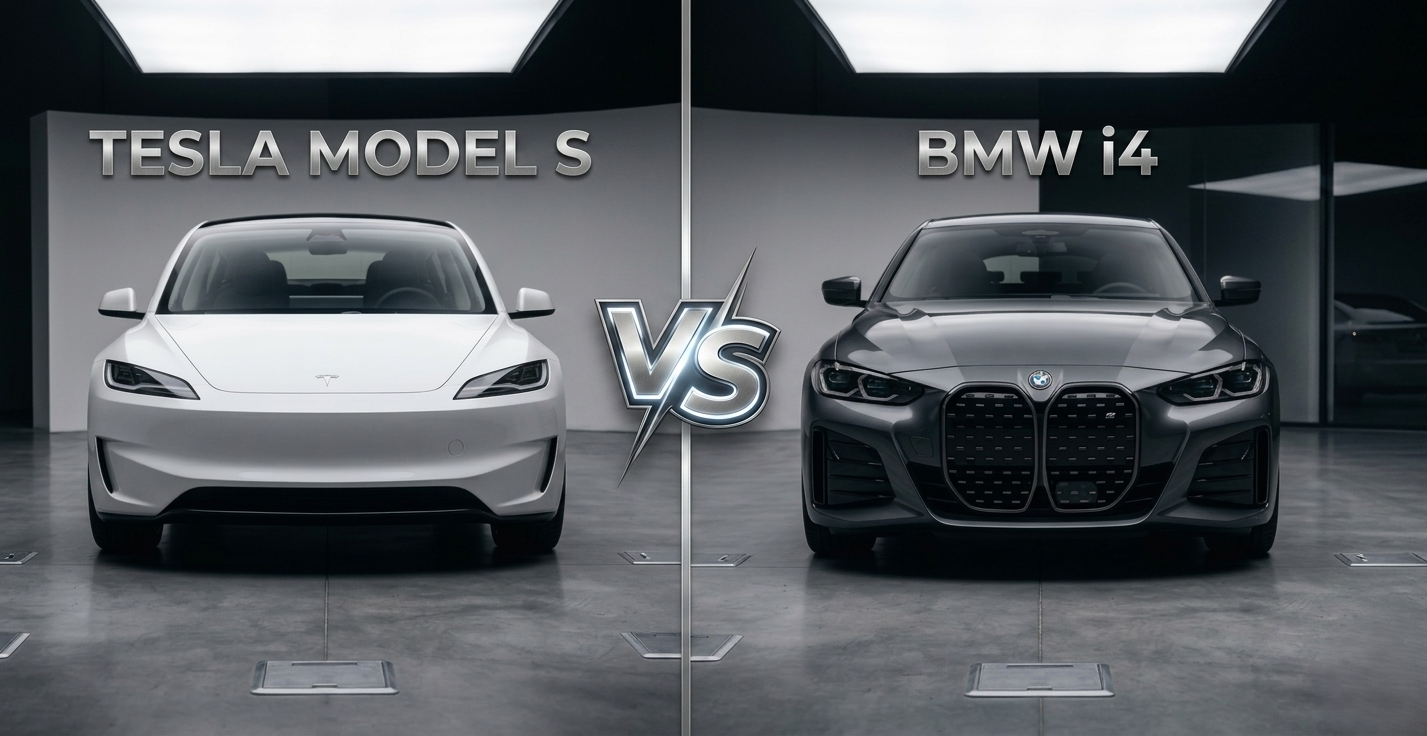
- Full-Size Flagship: Tesla Model S vs. BMW i7 (note: some dealership sites wrongly compare the i4 to the Model S this is a flawed comparison designed to make Tesla look cheaper)
Head-to-Head Specification Matrix (2026)


Here is the full side-by-side data for the Tesla vs BMW electric car matchup every spec that matters to a US buyer in 2026:
| Feature | Tesla (Model 3 / Y) | BMW (i4 / iX) |
| Starting MSRP (US) | ~$38,990 to $44,990 | ~$57,900 to $87,100 |
| Range (EPA Estimated) | Up to 358 miles | Up to 307 miles |
| 0–60 mph | As fast as 3.1 seconds | As fast as 3.7 seconds |
| Charging Network | Native Supercharger (Seamless) | NACS Adapter Required |
| OTA Software Updates | Full system (incl. range & performance) | Limited dealer visits for deep updates |
| Interior Philosophy | Ultra-Minimalist (Screen Only) | Traditional Luxury (Physical Buttons + Stalks) |
| Build Quality | Average (minor panel gap reports) | Excellent (solid German engineering) |
| US Insurance Cost | 20–30% higher than luxury avg. | Standard luxury rates |
| Autopilot / Driver Assist | FSD + Autopilot (camera based) | Highway Assistant Level 2+ (hands-free to 85 mph) |
| Depreciation (24 months) | Moderate | Heavy (worse than Tesla in US market) |
| Buying Experience | Online fixed price, no haggling | Dealership negotiation + hidden fees |
The $20,000 Question: Price to Value Reality


The single biggest factor in any Tesla vs BMW electric car decision is price. The entry-level Tesla Model 3 starts nearly $19,000 cheaper than the base BMW i4 eDrive40. That is not a rounding error it is the cost of a solid used car. Even accounting for BMW’s superior cabin materials and quieter ride, you have to ask: is a whisper-quiet interior and stitched leather worth $19,000 more out of pocket? For most buyers in 2026, the honest answer is no.
Furthermore, federal tax incentives represent another key variable that could tip the scales heavily in Tesla’s favor . Depending on your income and filing status, you may qualify for up to $7,500 off a new Tesla. For a full breakdown of eligibility rules, income caps, and how to claim it, read our detailed Tesla EV Tax Credit Guide.
Buying Process: No Haggling vs. Dealer Markups


Another underrated advantage in the Tesla vs BMW electric car buying experience is how the transaction works. Buying a Tesla takes roughly five minutes on an app. The price you see is the price you pay no negotiation, no documentation fees, no last-minute dealer add-ons. Buying a BMW means walking into a dealership, sitting across from a sales manager, and navigating hidden costs that can add $2,000–$5,000 above the listed MSRP. For tech-forward buyers who already know what they want, the Tesla buying experience is simply better.
OTA Updates: Tesla vs BMW Electric Car Software Reality


When comparing Tesla vs BMW electric car software capabilities, the gap is significant. Tesla’s over-the-air updates have improved real-world range, adjusted suspension tuning, and added new Autopilot features all while the car sat in the driveway. BMW offers some OTA updates, but deeper system-level changes navigation, battery management, core driver-assist calibration still often require a physical dealership visit. You are paying $57,000+ for a car that may need a service appointment just to receive a software upgrade.
Resale Value and Depreciation: The Hidden Cost


Depreciation is one of the most overlooked factors when evaluating Tesla vs BMW electric car ownership costs. Luxury EVs depreciate fast across the board, but BMW’s electric lineup has been hit especially hard in the US used-car market. A two-year-old BMW i4 or iX can lose 40–50% of its original value, compared to 30–40% for a comparable Tesla. If you are financing over five years, this gap directly impacts your equity at trade-in time.
Real-World Ownership Pain Points
Real owners on Reddit, Tesla Motors Club, and i4Talk forums have documented exactly what frustrates them about each brand. In the Tesla vs BMW electric car ownership debate, both sides have legitimate complaints.
Why Tesla Drivers Complain
- No Stalks, More Stress: The newer Tesla Model 3 Highland removed physical turn signal and gear stalks. US drivers find this genuinely frustrating in daily driving especially in roundabouts.
- Variable Fit and Finish: Common criticisms frequently center around uneven body panel alignment, cabin trim rattling during high-speed driving, and low-grade interior materials that fail to justify the premium cost . For a deeper look at what goes wrong and how to fix it, see our full guide to Common Tesla Problems and How to Fix Them.
- Insurance Premium Shock: Insuring a Tesla in the US costs 20–30% more than a comparable luxury car. Tesla body panels are expensive to source, and specialized repair shops are scarce pushing up claim costs and your monthly premium.
- Service Center Delays: After a minor fender-bender, waiting weeks for official Tesla parts is a common complaint outside major metro areas.
Why BMW EV Drivers Complain
- Legacy Platform Compromise: The BMW i4 is built on BMW’s CLAR platform originally designed for gas and hybrid cars. This means a transmission tunnel hump runs through the rear floor, cutting into legroom compared to Tesla’s purpose-built flat EV floor.
- Charging Friction with NACS Adapters: BMW EVs can now technically access Tesla’s Supercharger network, but it is not seamless. You need a physical NACS adapter, must authorize via the Tesla app, and occasionally hit compatibility errors. Tesla drivers simply plug in and walk away.
- Heavy Depreciation: New BMW EVs lose value at an alarming pace in the US market, making them a poor financial asset over a 3–5 year ownership cycle.
- Dealership Dependency for Updates: Deep software improvements still require dealership visits, locking your car’s capability behind service appointments.
Autopilot vs. BMW Highway Assistant


Driver-assist technology is a major differentiator in the Tesla vs BMW electric car comparison. Tesla’s Autopilot and Full Self-Driving (FSD) suite handle lane changes, on-ramp navigation, and traffic light recognition but require hands on the wheel and active supervision at all times. The in-cabin camera can be overly sensitive, triggering disengagements at inconvenient moments.
BMW’s Highway Assistant (Level 2+) offers true hands-free driving up to 85 mph on designated US highways, using radar, cameras, and precision mapping. It is a narrower feature set, but it executes with greater polish. For cross-country motorists in the US, BMW’s driver-assist setup frequently offers a more stress-free ride, primarily due to its lack of abrupt, unprovoked slowdowns
Charging in 2026: Supercharger vs. NACS Reality


Charging convenience is often the deciding factor in any Tesla vs BMW electric car purchase. Tesla’s Supercharger network remains the gold standard over 20,000 US stalls, fast speeds, and a native plug-and-charge experience requiring zero app interaction. BMW EVs gained NACS access in 2024–2025, but BMW drivers must carry a NACS adapter, initiate sessions through a third-party app, and occasionally deal with authorization errors. For a $57,000+ vehicle, this friction is a legitimate ownership annoyance.
Tesla vs BMW Electric Car: Insurance Cost Breakdown


Insurance is a hidden ownership cost that rarely appears in Tesla vs BMW electric car comparison articles. In the US, Tesla vehicles cost 20–30% more to insure than comparable luxury cars, including BMW. The primary reason is repair cost: Tesla body panels and sensors are expensive, and the network of certified Tesla repair shops is still limited especially outside major cities.
BMW insurance, while not cheap, falls within standard luxury vehicle rates. Over five years of ownership, the Tesla insurance premium gap can add $3,000–$6,000 to total cost of ownership a meaningful number that partially closes the upfront price advantage. When doing your Tesla vs BMW electric car math, always get insurance quotes before signing.
Which Model Year Should You Buy? (2026 Context)


For the Tesla vs BMW electric car buyer in 2026, model year timing matters. The Tesla Model 3 Highland (refreshed in 2024) is the current standard it brings improved range, a redesigned interior, and a smoother ride. However, it is also the model that removed physical stalks, which remains a divisive change for US drivers. The BMW i4 received a mid-cycle update in 2025 with improved range and a software refresh, narrowing but not closing Tesla’s technology lead.
Final Verdict: Tesla vs BMW Electric Car Which Is Right for You?


After evaluating every angle of the Tesla vs BMW electric car decision, here is the honest bottom line.
Choose Tesla If:
- You want the best technology-per-dollar in the Tesla vs BMW electric car category
- Seamless Supercharger access and regular OTA software improvements are priorities
- You are a first-time EV buyer focused on efficiency, range, and a space-optimized interior
- You plan to keep the car 3–5 years and want to minimize total cost of ownership
- A fixed, transparent price with no dealership negotiation matters to you
Choose BMW If:
- You are transitioning directly from a premium gas car and refuse to compromise on build quality or cabin refinement
- Sound insulation and a whisper-quiet highway ride are non-negotiable
- You prioritize a driver’s car over a technology showcase
- Hands-free highway driving via BMW’s Highway Assistant is a higher priority than Tesla’s broader FSD feature set
- Physical buttons, traditional stalks, and a familiar cockpit layout matter to your daily comfort