Tesla Car Carrier Fire?: What Really Happened on the 5 Freeway
| Quick Answer The Tesla car carrier fire happened on August 16, 2025, on the southbound 5 Freeway in Sylmar, Los Angeles. A diesel semi-truck (the car carrier itself) caught fire first not the Tesla EVs it was hauling. The fire spread to eight Teslas on the trailer, destroying six of them. Tesla VP of Supply Chain Roshan Thomas confirmed the 3PL diesel truck was the fire’s origin. No injuries were reported. Tesla has committed to replacing all damaged vehicles for affected customers. |
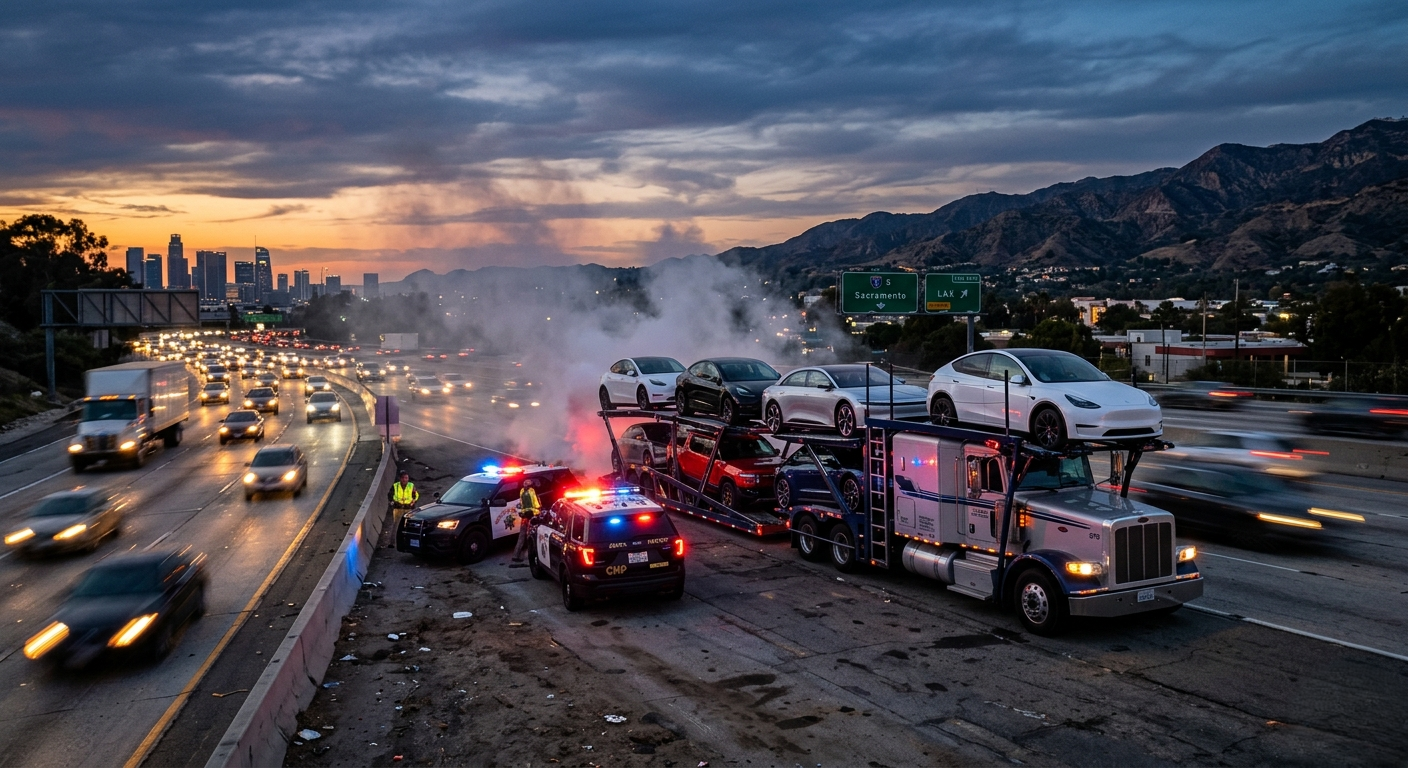
On August 16, 2025, a Tesla car carrier fire broke out on the Golden State Freeway in Sylmar, California, sending shockwaves through the EV community. Media headlines quickly blamed electric vehicles but the real story is very different. Here is a fact-based breakdown of exactly what happened, why the EV batteries were not the cause, and what it means for buyers still waiting on their deliveries.
1. What Actually Started the Tesla Car Carrier Fire
The Diesel Truck Ignited First
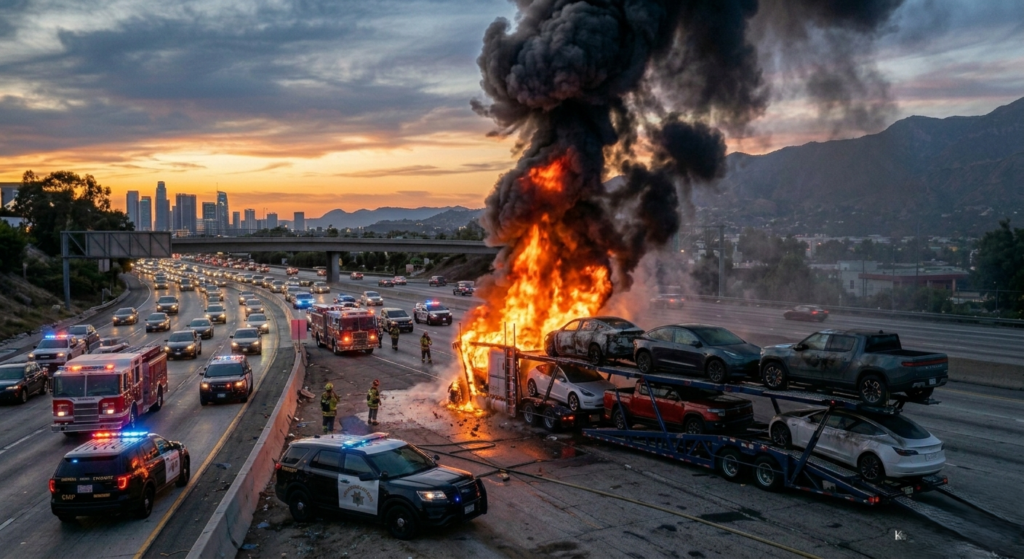
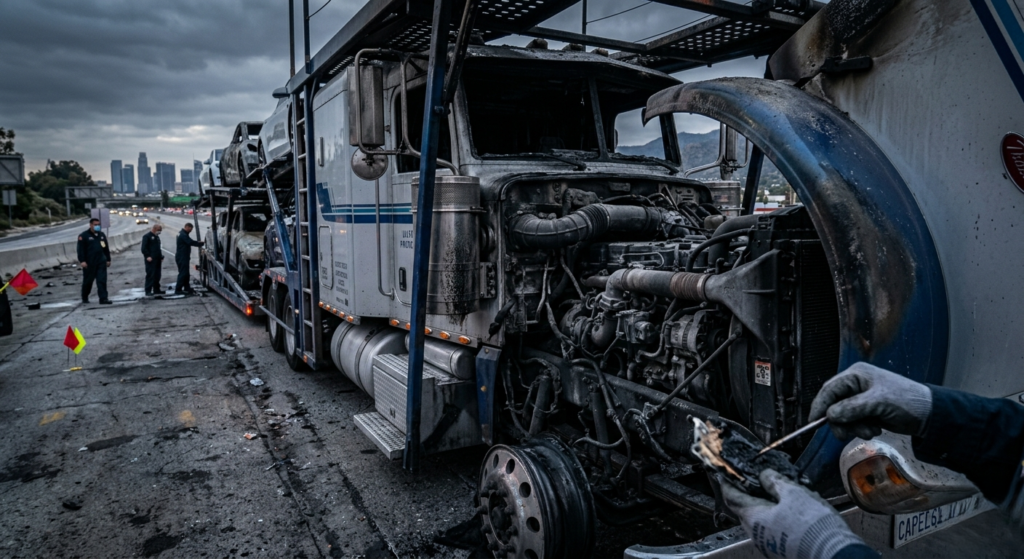
The Tesla car carrier fire originated in the diesel semi-truck, not in any Tesla vehicle. Tesla’s Vice President of Supply Chain, Roshan Thomas, posted a clear statement on X (formerly Twitter): the third-party logistics semi-truck caught fire first, and the Teslas on the trailer suffered damage as a result. This is an important distinction that most early news reports buried or ignored entirely.
Accordingly, the fire was first reported at 5:35 p.m. on the southbound 5 Freeway, just north of Balboa Boulevard in Sylmar. The Los Angeles Fire Department declared the fire fully out at approximately 9:30 p.m. nearly four hours later.
Incident Facts at a Glance
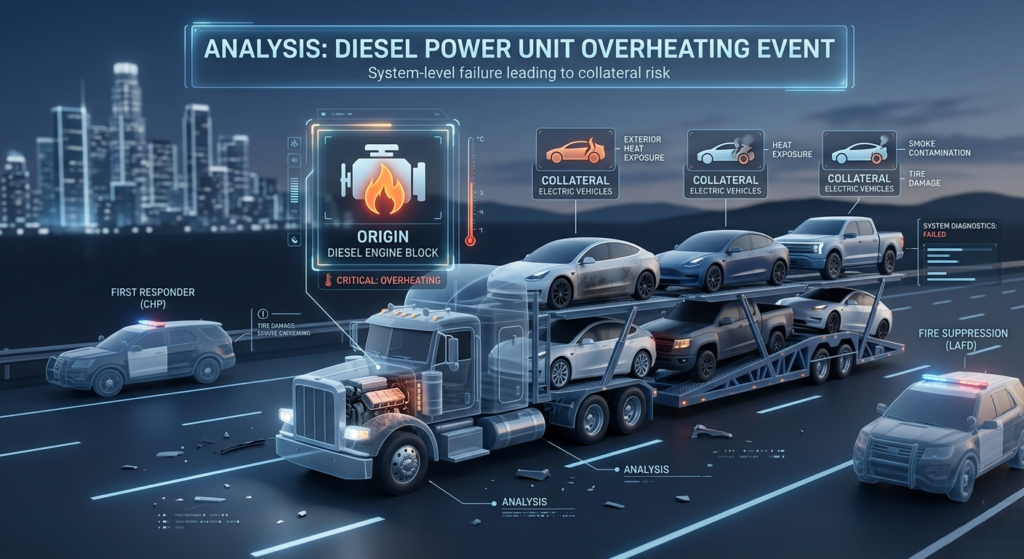
The table below summarizes the key details of the Tesla car carrier fire in Sylmar:
| Detail | Information |
| Date | August 16, 2025 |
| Location | Southbound 5 Freeway, Sylmar, Los Angeles |
| Fire Origin | Diesel semi-truck (car carrier) NOT Tesla EV batteries |
| Teslas on Carrier | 8 vehicles |
| Teslas Destroyed | 6 vehicles |
| Injuries | None (driver escaped safely) |
| Fire Reported | 5:35 PM |
| Fire Extinguished | 9:30 PM (approx. 4 hours) |
| Tesla Response | Committed to replacing all damaged vehicles |
Timeline of the Incident
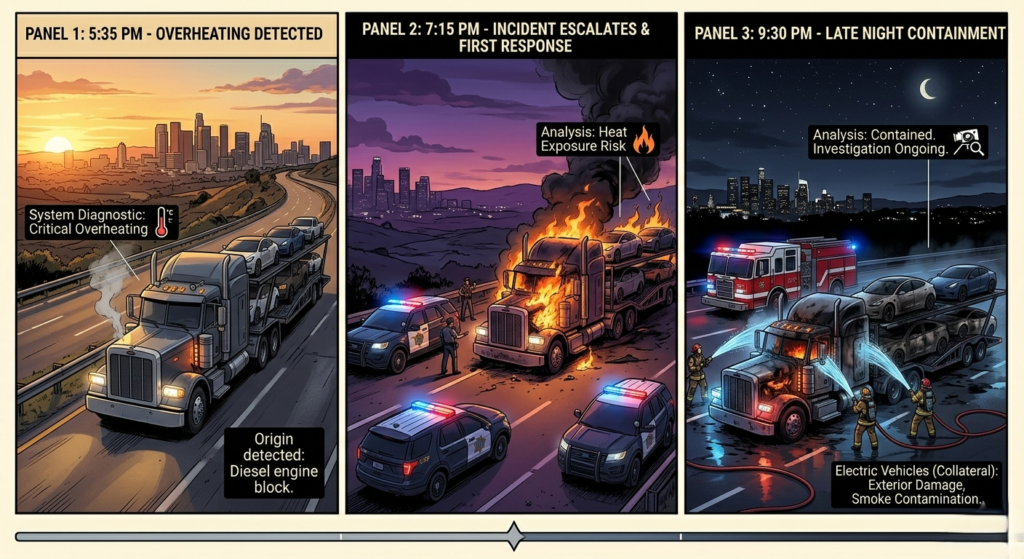
5:35 PM Fire reported on southbound 5 Freeway, Sylmar.
5:35 to 6:00 PM CHP issues SigAlert; all southbound lanes closed, including truck lanes.
Traffic rerouted to northbound 14 Freeway.
Six of eight Teslas destroyed; truck cab heavily damaged.
The driver escaped safely with no injuries.
9:30 PM LAFD declares fire extinguished.
Hazmat runoff managed; truck lanes remain closed for cleanup.
2. Why the Media Got It Wrong
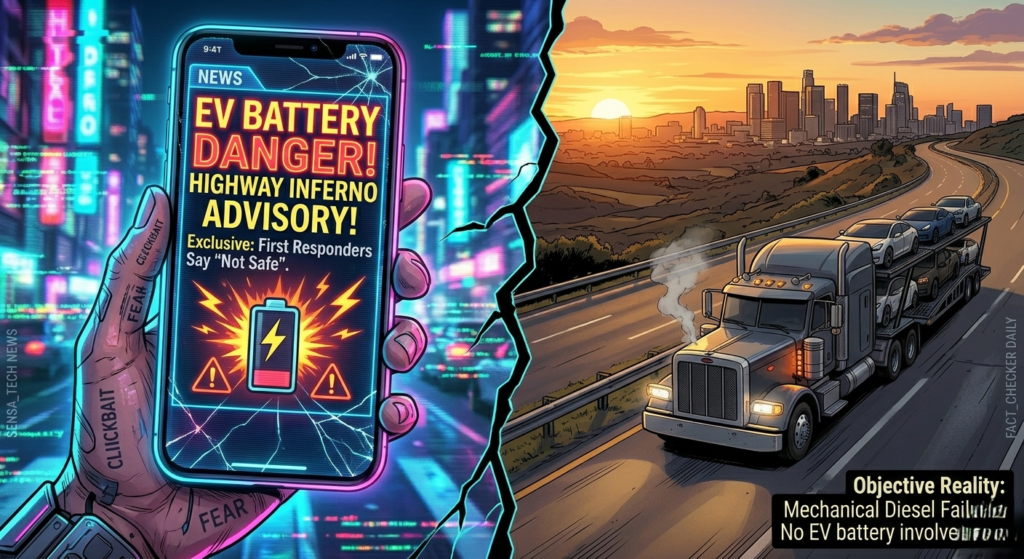
Clickbait vs. Facts
Several outlets ran misleading headlines about the Tesla car carrier fire without clarifying that the hazmat situation was triggered by the diesel truck’s engine and fuel not by EV battery failure. Some used emotionally charged language that implied Tesla’s electric vehicles were the problem.
This kind of framing is a pattern critics call anti-EV media bias. Tesla owners and enthusiasts on Tesla Motors Club and Reddit quickly flagged that no early report mentioned the diesel engine or fuel tank as the fire source even though that was the verified cause of the Tesla car carrier fire.
What the Community Said
On the Tesla Motors Club forum, members pointed out that the fire’s diesel origin was not mentioned in the first wave of news stories. The community noted that the media made sure audiences knew Tesla EVs were involved, while skipping over the actual ignition source the petrol engine and fuel tanks of the carrier itself.
3. How the Fire Spread: Thermal Runaway Explained
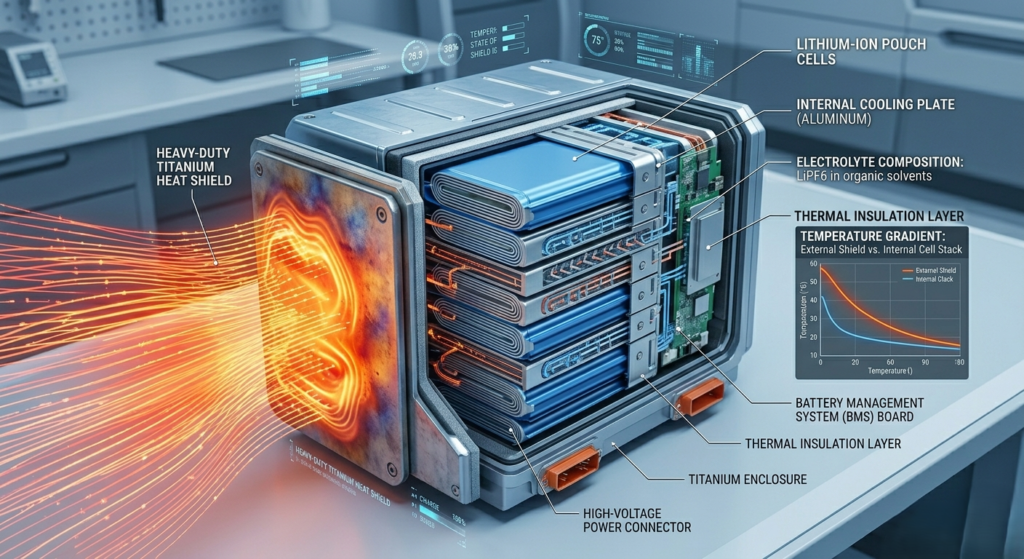
The Role of Lithium-Ion Batteries After the Diesel Fire
Once the diesel truck fire in the tesla car carrier fire grew large enough to reach the Teslas on the trailer, the heat became a serious problem for the lithium-ion battery packs underneath those cars. This is when thermal runaway becomes a real risk and it is important to understand what that actually means.
Thermal runaway happens when a battery cell short-circuits and begins heating up uncontrollably. Lithium ion batteries store a large amount of energy in a compact space. When that energy is released rapidly due to extreme external heat, it can trigger a chain reaction: one cell heats the next, and temperatures can exceed 1,000°C in severe cases.
Why the Fire Was Hard to Put Out
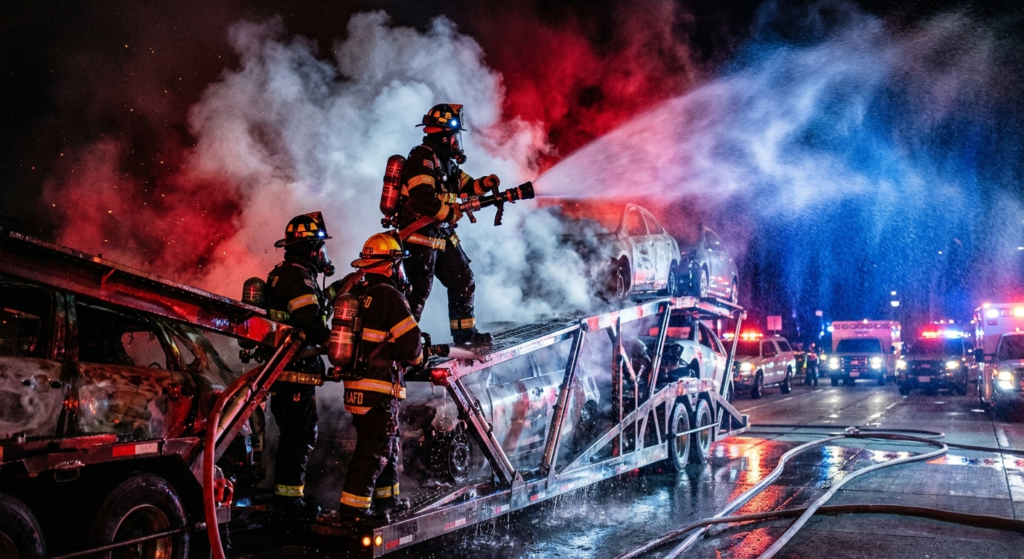
Traditional fire hoses have difficulty reaching lithium-ion battery packs because they are mounted beneath the vehicle floor for structural protection. Once thermal runaway begins, the reaction also generates its own oxygen, making it self-sustaining and resistant to conventional suppression methods. This is why the LAFD took nearly four hours to fully extinguish the blaze and why the toxic smoke forced a full freeway shutdown.
The battery fires in this tesla car carrier fire were a consequence of the external diesel fire, not a spontaneous EV malfunction. You can read more about Tesla battery lifespan and how battery health works to understand the safeguards built into modern Tesla battery packs.
4. What Happens to Buyers Waiting on Their Tesla
Tesla’s Response to Affected Customers
Tesla moved quickly after the Tesla car carrier fire. Roshan Thomas confirmed this directly: “We will be looking to replace the vehicles for our intended customers as soon as we can.” If you were waiting for one of the eight Teslas on that carrier, Tesla’s supply chain team will coordinate a replacement delivery.
What You Should Do if You Were Affected
Contact Tesla’s delivery team directly through your Tesla account or the official Tesla app. Keep your delivery order reference number handy. Replacement vehicles are sourced from existing inventory and prioritized for affected customers.
Delivery delays from transport incidents like the Tesla car carrier fire are rare, but they do happen. If you are concerned about your vehicle’s battery after a replacement, see our full guide on Tesla battery replacement cost so you know exactly what to expect down the road.
5. Is EV Transport Actually Safe?
Road Transport vs. Maritime Transport
The Tesla car carrier fire involved road transport, which has a very different risk profile compared to maritime shipping. On roads, the fire hazard typically comes from the diesel truck’s mechanical components engine overheating, fuel leaks, or brake fires. The Teslas on this carrier were not the fire’s source; they were victims of an external fire.
Maritime EV transport is a more complex challenge. On a ship, vehicles are parked bumper-to-bumper on RoRo (roll-on/roll-off) decks. If one EV’s battery goes into thermal runaway, radiant heat alone can ignite the next vehicle within minutes. The maritime insurance industry is actively working on improved containment protocols for this reason.
Best Practices That Could Prevent Future Incidents
To prevent another tesla car carrier fire, transport companies can take these concrete steps:
- Park EVs with extra spacing between vehicles on the carrier trailer
- Ship EVs with battery state of charge at or below 50%, which research shows reduces thermal runaway risk
- Install fire blankets or containment systems designed for lithium-ion battery fires on carrier trucks
- Perform regular maintenance checks on diesel trucks used as car carriers, especially cooling systems and fuel lines
The root cause here was diesel truck mechanical failure not EV technology. This particular incident should not change how you feel about Tesla’s overall safety record.
6. EV Fire Stats: Are Teslas More Likely to Catch Fire?
The Numbers Tell a Different Story
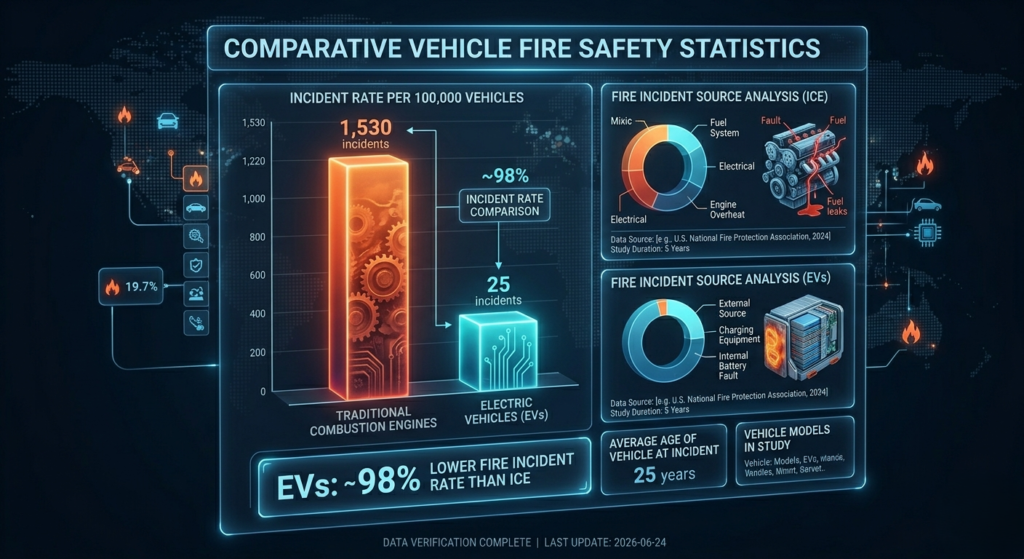
Despite the attention the Tesla car carrier fire received, Tesla vehicles actually catch fire at a significantly lower rate than gasoline cars. According to data from the National Transportation Safety Board (NTSB), the primary triggers in EV fire cases are high-speed crash damage to battery packs or external heat exposure, not spontaneous battery failure.
Studies on lithium iron phosphate (LFP) batteries which Tesla uses in Standard Range models show they are thermally more stable than older lithium cobalt oxide batteries. LFP chemistry has a lower likelihood of thermal runaway under normal operating conditions. This is one major reason that a Tesla car carrier fire caused by a battery defect is extremely rare.
EV vs. Gasoline Car Fire Risk: Side-by-Side Comparison
Here is how the fire risk of a Tesla compares to a standard gasoline car. Context like this is important when evaluating what the tesla car carrier fire actually tells us:
| Factor | Tesla / EV | Gasoline Car |
| Fire Rate | Lower than gasoline cars | Higher overall rate |
| Main Fire Cause | Crash damage or external heat | Fuel leak or engine failure |
| Battery Type (Tesla LFP) | Thermally stable, lower TR risk | N/A |
| Extinguishing Difficulty | High (battery under floor) | Moderate (fuel-based) |
| Self-Reignition Risk | Yes, if thermal runaway active | Lower once fuel burned off |
| Sylmar Incident Cause | External diesel truck fire | N/A |
For more context on Tesla’s infrastructure reliability, see our detailed guide on Tesla charging network uptime and reliability statistics which shows how Tesla’s overall safety and dependability stack up.
Frequently Asked Questions
What caused the Tesla car carrier fire?
The Tesla car carrier fire was caused by the diesel semi-truck, not by any Tesla vehicle. Tesla VP Roshan Thomas confirmed that the third-party logistics truck ignited first, and the Teslas on the trailer were damaged as a secondary result.
How many Teslas were destroyed in the car carrier fire?
Six out of eight Teslas on the carrier were destroyed. The car carrier truck was also heavily damaged. No injuries were reported.
Where did the Tesla car carrier fire happen?
The Tesla car carrier fire happened on the southbound Golden State (5) Freeway in Sylmar, Los Angeles, just north of Balboa Boulevard. The incident occurred on August 16, 2025.
Is it safe to transport Teslas on car carriers?
Yes, the road transport of Teslas is generally safe. The Tesla car carrier fire was caused by the diesel hauling truck, not the EVs. The risk depends heavily on the mechanical condition and maintenance of the carrier truck itself.
Will Tesla replace the cars that were destroyed?
Yes. Tesla has committed to replacing all damaged vehicles for affected customers as quickly as possible, according to Roshan Thomas’s statement on X.
What is thermal runaway in EV batteries?
Thermal runaway is a chain reaction inside lithium-ion battery cells triggered by extreme heat, physical damage, or internal short circuits. In the Sylmar incident, thermal runaway in the Teslas was caused by external heat from the diesel truck fire — not a battery defect.
Conclusion
The Tesla car carrier fire on the 5 Freeway was a logistics incident caused by a diesel semi-truck not by electric vehicle batteries. Media headlines misleadingly framed it as an EV or Tesla problem, but Tesla’s own VP confirmed the truth: the 3PL truck caught fire first, and the Teslas were collateral damage.
For buyers still waiting on deliveries, Tesla has committed to replacements. For prospective EV owners worried about safety after the Tesla car carrier fire, the facts are reassuring: EV fire rates are lower than gasoline cars, and this incident does not change Tesla’s safety profile. Want to learn more? Check out our guides on Tesla charging network reliability to make a fully informed decision.