Tesla Cyber cab Purchase Price:
Is the $30,000 Promise Reality or Strategy?
QUICK ANSWER Yes, the Tesla Cyber cab purchase price under $30,000 is Tesla’s confirmed target not just a marketing slogan. Elon Musk reaffirmed this price on X after the first unit rolled off Giga Texas in February 2026. Production is live. Volume manufacturing began April 2026. However, you cannot buy one yet all current units go into Tesla’s internal robotaxi fleet in Austin, Dallas, and Houston. Private sales are expected in late 2026 or 2027. The $30,000 figure is real, but it comes with an important asterisk: the car’s core value depends on software (unsupervised FSD) that is still in final validation.
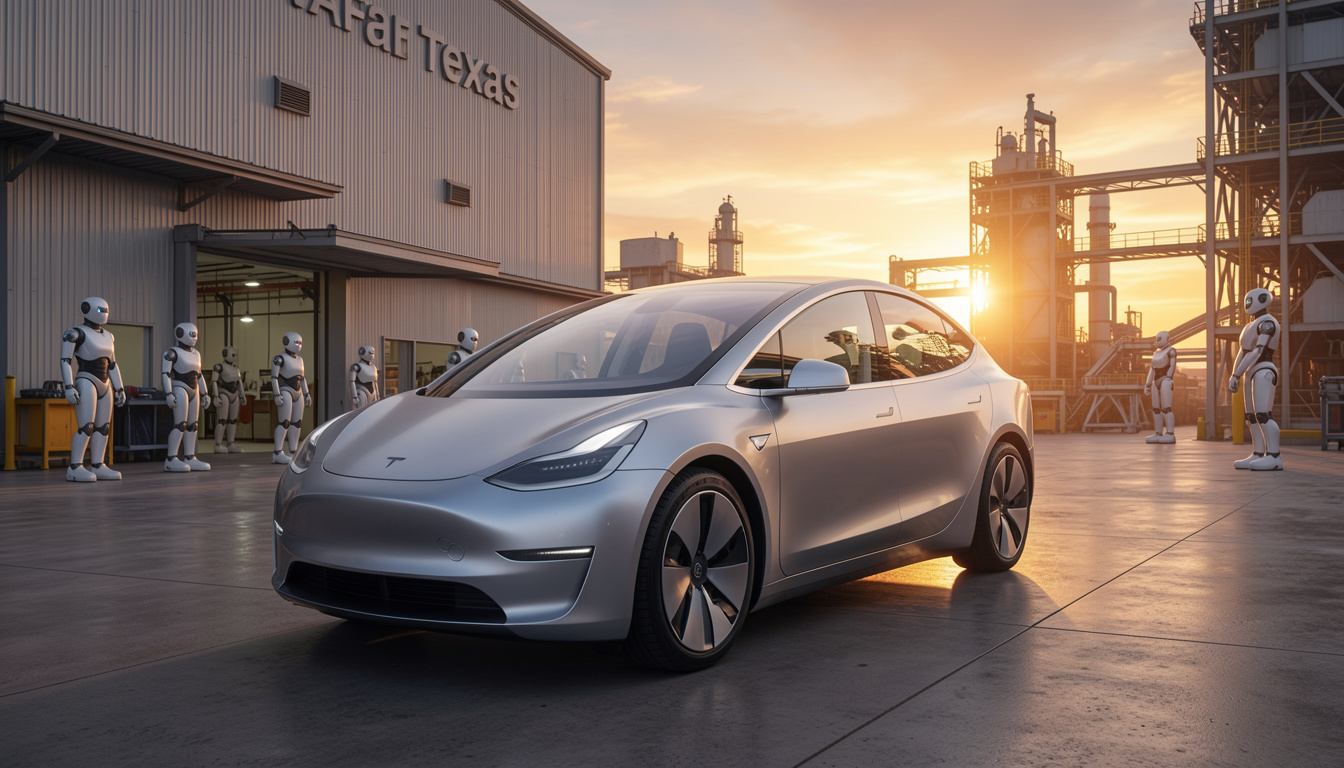
Giga Texas is rolling out Cybercabs and the pace is accelerating. On February 17, 2026, Tesla successfully manufactured the very first unit of the Cybercab By April, Tesla had shifted to volume manufacturing. Drone footage from May 2026 confirms dozens of production-spec, steering wheel free Cybercabs sitting in outbound lots.

“However, the reality is clear: the hardware is already finalized. The full software deployment is not yet. For anyone searching for the Tesla Cyber cab purchase price under 30000, the $30,000 target is backed by genuine engineering logic not just a marketing pitch. This article breaks down exactly what makes that price sustainable, who can actually buy one, and what the “autonomy gap” means for your decision.
KEY FACTS AT A GLANCE

| First Production Unit | February 17, 2026 Giga Texas |
| Volume Production | April 2026 onwards |
| Target Price | Under $30,000 (consumer sales ~late 2026/2027) |
| Energy Efficiency | 165 Wh/mi most efficient EV ever certified |
| Current Fleet Cities | Austin, Dallas, Houston (unsupervised) |
| FSD Validation | Full deployment expected Q4 2026 |
| Production Cap | None self-certified under FMVSS; no 2,500-unit limit |
Behind the $30,000 Price Tag: Engineering, Not Marketing
The Tesla Cybercab purchase price under 30000 is possible because of radical subtraction. Tesla removed everything a human driver needs: steering wheel, pedals, dashboard controls, side mirrors, and driver-side airbag systems. Each removal reduces parts, weight, assembly time, and supply chain complexity.

The Unboxed manufacturing process goes further. Traditional cars are built on a linear conveyor one station at a time. Tesla builds the Cyber cab in modular sub-assemblies simultaneously, then joins them at the end. The result: 40% smaller factory footprint and up to 50% lower manufacturing costs compared to conventional production. Next-generation Giga Presses (estimated at 12,000 tons of clamping force) cast the front and rear structures in just two large pieces eliminating hundreds of welds. Fewer parts, fewer steps, fewer quality checkpoints.
This is why the Tesla Cybercab price under $30,000 is not a loss-leader or a government-subsidy play. The engineering supports the economics. The open question is only scale and how fast Tesla gets there.
The Efficiency Milestone: 165 Wh/mi Explained
According to Tesla’s VP of Vehicle Engineering, Lars Moravy, the Cybercab has been officially certified at 165 Wh/mi, establishing it as the most energy-efficient electric vehicle ever built. This is not a marketing claim. It is a certified number.
Here is how it compares:

- Lucid Air Pure (next best): ~211 Wh/mi 28% less efficient
- Tesla Model 3: ~230 Wh/mi roughly 40% less efficient
- Hyundai Ioniq 5: ~300 Wh/mi nearly double the energy per mile
At average U.S. electricity rates ($0.16/kWh), the Cybercab costs $0.026 per mile in energy versus $0.038 for a Model 3. Over hundreds of thousands of fleet miles, that gap is enormous. Musk’s stated goal of $0.20 per mile all-in (energy + insurance + maintenance + depreciation) becomes realistic with an efficiency advantage this large.
“The integration of a sub-50 kWh battery pack not only enables quicker charging cycles but also slashes battery-related expenses, creating two vital advantages for fleet operational economics.”. If you are thinking about Tesla Cybercab purchase price under 30000 as a gig-economy investment, the operating cost story is as important as the sticker price.Want to understand how the broader ICE to EV transition affects vehicle economics? The Cybercab’s efficiency numbers make that comparison especially stark.
Can You Actually Buy a Cybercab Right Now?
Short answer: No but the timeline is clearer than it was six months ago. All current production goes directly into Tesla’s internal robotaxi fleet. As of May 2026, unsupervised service runs in Austin, Dallas, and Houston. Bay Area expansion is active. Phoenix, Miami, Las Vegas, and Orlando launches are planned within 2026.

Private consumer sales will open once production volume is sufficient. Elon Musk has confirmed a sub-$30,000 price for private buyers, with consumer availability expected late 2026 or 2027. Tesla’s Q1 2026 SEC filings confirm that Cybercab will eventually replace Model Y vehicles in the fleet, with private sales following at scale.
Here is what each type of buyer should do right now:
- Investors / fleet operators: Production is real. Regulatory path is clear. Monitor software validation milestones that is the only remaining risk.
- Individual buyers: Wait. Private sales are not open. Use the next 12 months to track robotaxi expansion city by city.
- Gig economy workers (Uber/Lyft): The disruption is coming, but it is city-by-city and quarter-by-quarter not overnight. Plan ahead, but do not panic yet.
Curious how Tesla compensates its own workforce during this production ramp? See whether Tesla workers get stock options as part of their package.
The Autonomy Gap: Why Production Doesn’t Equal Deployment
This is the section most outlets skip. It is the most important thing to understand about the Cybercab in 2026.

Tesla has solved the hardware problem. The Tesla Cybercab under $30,000 is in production. The efficiency is certified. The manufacturing is scaling. What has not been fully solved is unsupervised Full Self-Driving across all roads, all weather, and all cities.
Unsupervised FSD for broad consumer deployment has been pushed to Q4 2026. Early validation units you see in drone footage the ones with temporary steering wheels and pedals are there because federal safety regulations require manual override capability during the data-collection phase. The true production Cybercab (no controls) is rolling now, but its deployment depends entirely on software passing final safety validation.
THE HONEST ASSESSMENT
The Cybercab hardware is ready. The software to fully unlock it is not yet. Competitors hype the production numbers. The smarter question is: when does unsupervised FSD clear validation in your city? That date matters more than the factory output rate.
Achieving the sub-$30,000 target for the Cybercab inherently relies on Tesla’s ability to scale manufacturing effectively.” . Musk has warned that early ramp will feel ‘agonizingly slow’ before going ‘insanely fast.’ That S-curve applies to software deployment just as much as factory output.
This transition is part of a larger story. The ICE to EV transition is accelerating across the industry, and the Cybercab represents its most radical expression a vehicle with no combustion, no driver, and no steering wheel.
The Self-Certification Advantage: Tesla Scales Without Limits
This detail is missing from most coverage and it changes the entire competitive picture. Waymo, Cruise, and other AV companies deploy vehicles under NHTSA exemptions. Those exemptions cap annual production at 2,500 vehicles per year. For a consumer product, that ceiling makes nationwide scale impossible.
Tesla did not apply for an exemption. Instead, it engineered the Cybercab to self-certify compliance with existing Federal Motor Vehicle Safety Standards (FMVSS). VP Lars Moravy confirmed this at Q1 2026 earnings: no exemption, no cap, no ceiling.
Tesla can produce 250,000 or 2.5 million Cybercabs per year no federal production limit applies. This is what makes the company’s 2 to 4 million units per year goal a serious projection rather than fantasy. Competitors are limited to test fleets. Tesla has cleared the runway for true mass production of the Cybercab under 30000.
Charging: The Wireless Future and the Physical Backup
Tesla’s official vision for the Cybercab is fully wireless inductive charging. The car parks over a ground pad, aligns autonomously using Ultra-Wideband (UWB) radio technology (FCC-approved February 2026), and charges at over 90% efficiency no cables, no human intervention.


But here is the detail most sites miss: current prototype and testing units have been spotted with a NACS (North American Charging Standard) port tucked behind a small manual drop-down door at the rear bumper. This gives the fleet access to Tesla’s entire Supercharger network during the period before wireless infrastructure is widely deployed.
Think of it as a bridge. The wireless future is real and planned. The physical NACS port ensures the fleet is not stranded while that infrastructure is built. As a buyer evaluating the Tesla Cybercab purchase price under $30,000, charging infrastructure in your city will be a meaningful factor.
Frequently Asked Questions
Is the Tesla Cybercab purchase price under $30,000 confirmed?
Yes. Elon Musk confirmed the sub-$30,000 target price on X following the first production unit in February 2026. Some sources cite a refined $25,000 target from Q3 2024 earnings. Either way, the Tesla Cybercab price under 30000 is official Tesla policy, not speculation. However, this applies to private consumer sales which have not yet opened. Current production feeds the internal robotaxi fleet exclusively.
Does the Cybercab have a charging port?
The primary design uses inductive wireless charging. However, prototypes confirmed in January 2026 also carry a NACS port for Supercharger access during the infrastructure buildout phase. Expect the final mass-market Cybercab under 30000 to ultimately go portless, with wireless-only charging once pad infrastructure is widespread.
Can I drive the Cybercab myself?

No. There is no steering wheel, no pedals, and no manual override in the production Cybercab. You are a passenger. Tesla has confirmed a contingency to add a steering wheel if specific local laws require it, but the commercial product is control-free. This is not a feature it is the entire design philosophy.
When will the Tesla Cybercab purchase price under 30000 be available for private buyers?
Based on current timelines: late 2026 at the earliest, with broader availability in 2027. Watch Tesla’s quarterly earnings and city-by-city robotaxi expansion announcements as the most reliable indicators. The Cybercab purchase price under $30,000 will be formally announced ahead of consumer sales opening.
Is the Cybercab worth waiting for?
For urban riders who rarely drive themselves and care more about cost-per-mile than ownership yes. For suburban or rural users where robotaxi coverage will be limited for years not in the near term. The Tesla Cybercab under 30000 makes the most sense for dense city environments with active Tesla robotaxi networks.
Also worth considering: the ICE to EV transition means the total cost of driving any gas car is rising year over year, which makes the Cybercab’s efficiency advantage more compelling over time.
Final Verdict: Promise, Strategy, or Both?
The Tesla Cybercab purchase price under 30000 is neither hype nor guaranteed. It is the logical output of purpose-built engineering validated by certified 165 Wh/mi efficiency, Unboxed manufacturing, radical BOM reduction, and a self-certification path that removes the production cap competitors are stuck behind.

In 2026, the hardware is ahead of the software. Production is real. Deployment is expanding city by city. The Cybercab 30000 price for private buyers is 6 to 12 months away. The honest framing is this: Tesla is building the future on schedule but “on schedule” still means you are waiting.
If you are an early adopter, an investor, or a fleet planner, follow the FSD validation milestones closely. The moment unsupervised software clears final approval in your market, the Tesla Cybercab price under 30000 becomes the most disruptive vehicle launch since the Model 3. For everyone else: the timeline is set. Stay informed and stay ready.
Wondering how Tesla rewards its employees who build all of this? Find out whether Tesla workers get stock options as part of their compensation.